Abhyanga vs Podikizhi: Two Ayurvedic Body Treatments

How two traditional Ayurvedic therapies work together to relieve muscle tension, joint stiffness, and chronic stress at Shanti Dhara Wellness in Palo Alto.

May 25, 2026
Ruby
AbhyangaPodikizhiAyurvedic body treatmentsPalo Altoherbal bolus massageoil massageShanti Dhara Wellness

What Are Abhyanga and Podikizhi?

Abhyanga and Podikizhi are two distinct Ayurvedic body treatments that tackle physical tension from different angles. Abhyanga is a warm oil massage using long, rhythmic strokes that cover the entire body. Podikizhi (sometimes spelled Podi Kizhi) is a heated herbal poultice therapy where bundles of dried herbs, rice, and medicinal powders are pressed against the skin. Both have roots in Kerala, India, where they've been practiced for over 2,000 years as part of Panchakarma detoxification protocols.

At Shanti Dhara Wellness in Palo Alto, these two treatments are offered individually and as a combined session. The 75-minute Abhyanga + Podikizhi combination is one of the studio's most requested bookings, particularly among clients dealing with chronic muscle tension, joint stiffness, or inflammation-related discomfort.

What makes these treatments different from a standard spa massage? Three things. First, the oils aren't generic carrier oils. They're herb-infused formulations selected based on your Ayurvedic constitution (dosha type). Second, the techniques follow specific energy pathways mapped in Ayurvedic anatomy rather than just targeting sore spots. Third, Podikizhi adds a thermal element that penetrates deeper than hands alone can reach, delivering anti-inflammatory herbs directly through the skin.

A 2020 randomized controlled trial published in the Journal of Ayurveda and Integrative Medicine found that participants who received Abhyanga treatments over 14 days showed a 29% reduction in perceived stress scores compared to a control group. A separate 2019 study in Ancient Science of Life reported that Podikizhi reduced joint pain scores by 34% in patients with knee osteoarthritis after just 7 sessions. These aren't miracle cures, but they point to measurable clinical effects that go beyond standard relaxation.

How Abhyanga Works: The Full-Body Oil Treatment

Abhyanga translates literally as "oil application" in Sanskrit, but calling it just an oil massage undersells what's happening. The treatment follows a specific protocol designed to stimulate circulation, nourish the skin, and calm the nervous system through sustained, rhythmic pressure along the body's energy channels (called srotas in Ayurveda).

At Shanti Dhara Wellness, your Abhyanga session starts with a brief dosha assessment if it's your first visit. Your practitioner asks about your sleep patterns, digestion, skin condition, and stress levels to determine which oil formulation to use. Vata types (who tend toward dryness, cold sensitivity, and anxiety) typically get warm sesame oil infused with ashwagandha or bala root. Pitta types (who run warm and are prone to inflammation) receive coconut or sunflower oil with cooling herbs like brahmi. Kapha types (who tend toward heaviness and congestion) get lighter mustard or safflower oil with stimulating herbs like ginger or eucalyptus.

The massage itself uses long, continuous strokes (called "anuloma" strokes) that follow the direction of arterial blood flow, moving from the center of the body outward toward the extremities. This differs from Swedish massage, which often works from the extremities inward. The practitioner applies consistent, moderate pressure and pays particular attention to the 107 marma points mapped in Ayurvedic anatomy. These are similar to acupressure points in Traditional Chinese Medicine, and stimulating them is believed to improve energy flow and organ function.

Sessions at Shanti Dhara run 75 or 90 minutes. The longer session includes extra time for the scalp, face, and feet, which are considered the most marma-dense areas of the body. After the massage, the oil stays on your skin for 15 to 20 minutes before you dress. Most clients describe the post-session feeling as "heavy in a good way," like their body finally has permission to stop clenching.

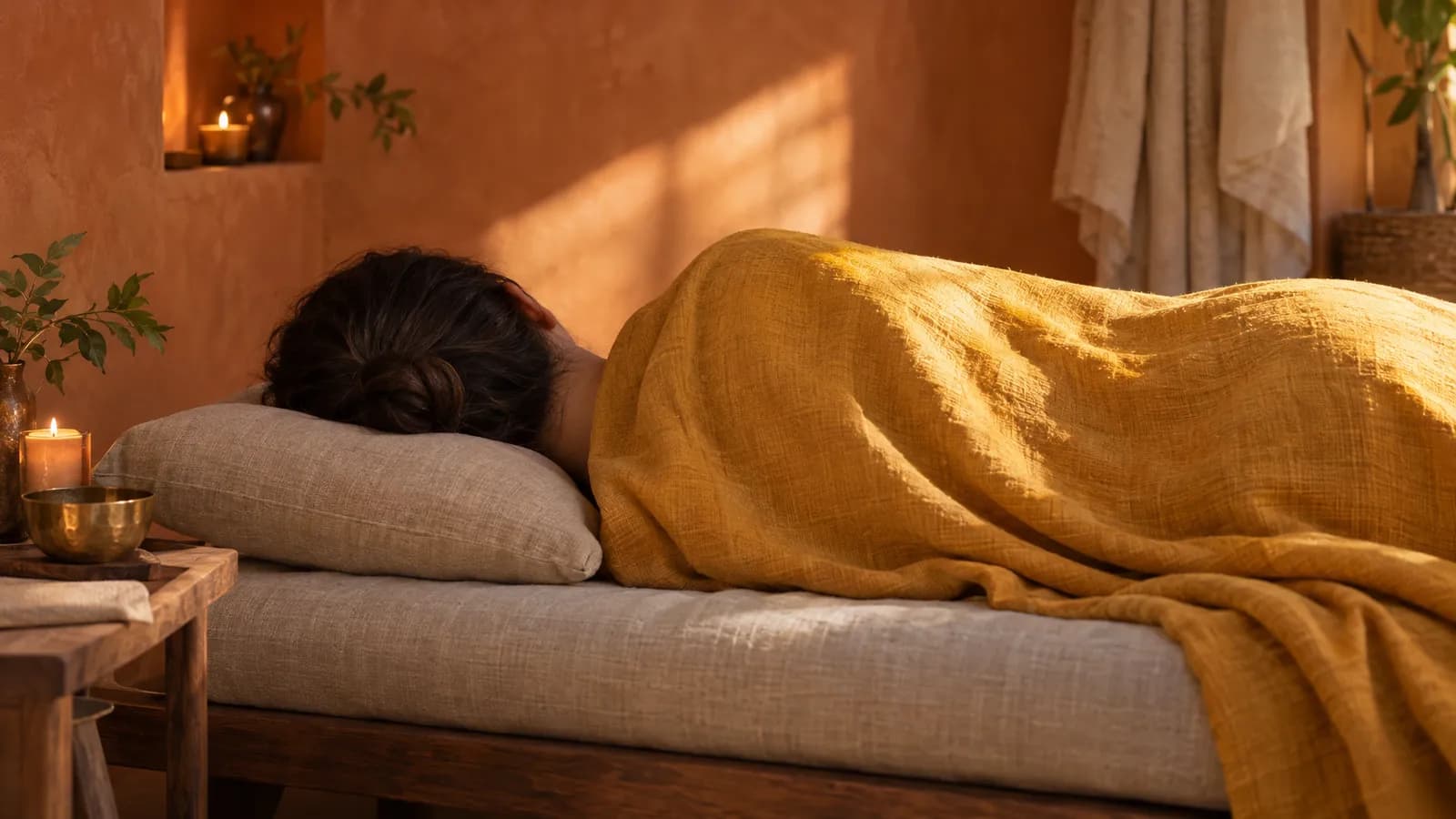
Client receiving a warm oil body massage during an Ayurvedic Abhyanga treatment session

Abhyanga uses warm, herb-infused oil applied with long rhythmic strokes across the entire body. Photo by alan caishan on Unsplash.

How Podikizhi Works: Herbal Bolus Therapy

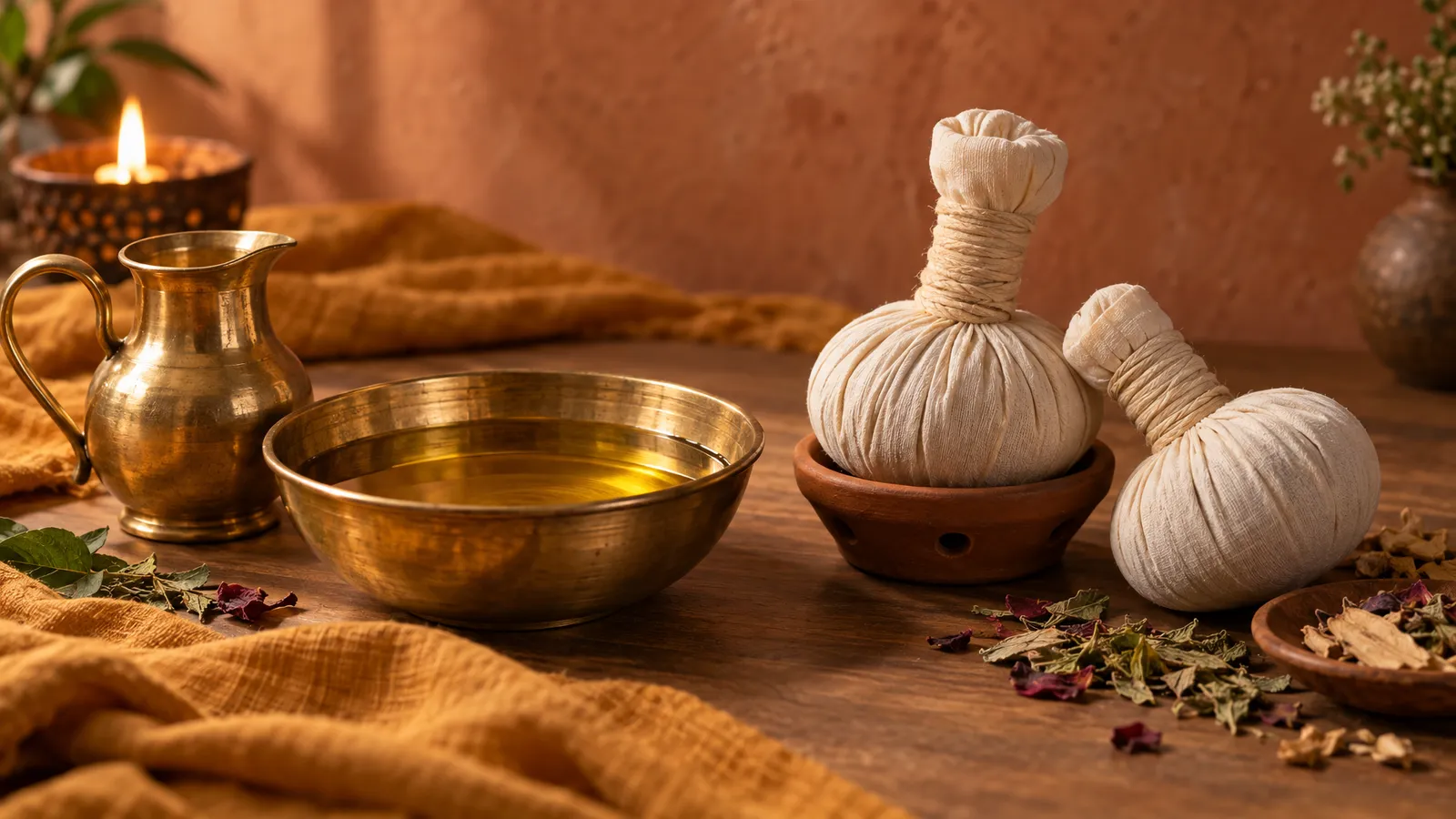
Podikizhi (also called Churna Pinda Sweda in classical Ayurvedic texts) takes a completely different approach from Abhyanga. Instead of flowing oil and hand pressure, the primary tool is a kizhi: a muslin cloth pouch filled with a carefully measured mixture of dried herbal powders, sometimes combined with rice, salt, or sand. The pouch is heated in medicated oil or dry-roasted, then firmly pressed, pounded, and swept across the body in rhythmic patterns.

The herbs inside the pouch vary depending on the condition being treated. At Shanti Dhara, common formulations include:

  • Kolakulathadi Churna (horse gram, castor, drumstick leaf) for Kapha-related conditions like fluid retention, stiffness, and excess weight
  • Rasnadi Churna (rasna, devadaru, ashwagandha) for Vata-dominant pain patterns like nerve pain, lower back tension, and restless legs
  • Jatamayadi Churna (jatamansi, vacha, turmeric) for inflammation-heavy Pitta conditions like localized swelling or burning joint pain

The heat is a key part of the mechanism. When the warmed pouch contacts the skin, it opens the pores and allows the herbal compounds to absorb transdermally. The pounding action creates microfriction that stimulates local blood circulation and helps break up adhesions in the fascia (the connective tissue wrapping around muscles). A 2018 study in the International Journal of Ayurveda Research documented a 41% increase in local skin blood flow within 10 minutes of Podikizhi application, measured using laser Doppler flowmetry, as explored further in our detailed guide to Podikizhi benefits.

Sessions at Shanti Dhara run 45 to 60 minutes. The practitioner works systematically from the extremities toward the core, reheating the bolus every 3 to 4 minutes to maintain consistent temperature. Clients report the sensation as deeply warming and satisfying, like a cross between a hot stone massage and a vigorous deep-tissue treatment. The skin is slightly reddened afterward (a sign of increased circulation, not irritation), and the herbal residue stays on the skin for at least 30 minutes post-treatment for maximum absorption.

Heated herbal poultice bundle being applied during Podikizhi treatment
Podikizhi uses heated herbal poultices to deliver anti-inflammatory compounds through the skin while breaking up fascial adhesions.

Why Practitioners Combine Abhyanga and Podikizhi

Each treatment works well on its own, but combining them in a single session creates a synergistic effect that neither delivers alone. Here's the logic behind the pairing:

Abhyanga goes first. The warm oil softens the skin, relaxes the superficial muscles, and opens the circulatory channels. Think of it as the preparation phase. The oil also acts as a protective layer, preventing the herbal poultice from over-irritating sensitive skin during the Podikizhi portion. Without this oil base, some clients with dry or Vata-type skin would find the friction of the bolus uncomfortable.

Podikizhi follows. With the tissues already warmed and the channels open, the herbal compounds from the bolus penetrate more deeply and effectively. The targeted pounding reaches the deeper myofascial layers that gentle oil strokes can't access. It's the difference between loosening a knot with patience and then working it out with focused pressure.

The combination session at Shanti Dhara takes 75 minutes total: 40 minutes of Abhyanga followed by 35 minutes of Podikizhi. The rhythm feels intentional — you're not being rushed from one technique to the next. The oil portion quiets the nervous system enough that the more vigorous bolus work doesn't trigger a defensive tension response. That's crucial. If your body tenses against the treatment, the therapeutic compounds can't penetrate effectively.

Who books this combination most often? Clients with chronic joint pain (knees, hips, shoulders), IT band tightness, plantar fasciitis, and post-injury recovery. Also, runners and triathletes who need myofascial release but can't tolerate the intensity of foam rolling or deep-tissue massage. The combination of oil lubrication and heat makes the work feel less invasive even when it's reaching deep tissue.

Side-by-Side Comparison

Here's a quick breakdown of how Abhyanga and Podikizhi differ across the dimensions that matter most when you're choosing a treatment:

  • Technique: Abhyanga uses continuous stroking with warm oil and moderate pressure. Podikizhi uses heated herbal pouches applied with firm pounding and sweeping motions.
  • Intensity: Abhyanga is gentle to moderate. Podikizhi is moderate to firm. If you're sensitive to pressure, start with Abhyanga alone.
  • Primary goal: Abhyanga calms the nervous system, nourishes the skin, and improves circulation. Podikizhi reduces inflammation, breaks up fascial adhesions, and delivers herbal compounds transdermally.
  • Best for: Abhyanga is ideal for stress, anxiety, dry skin, and general wellness. Podikizhi is better suited for joint pain, muscle stiffness, chronic inflammation, and sports recovery.
  • Session length: Abhyanga runs 75-90 minutes. Podikizhi runs 45-60 minutes. The combined session is 75 minutes.
  • Aftercare: After Abhyanga, leave the oil on for at least 2 hours (ideally overnight). After Podikizhi, leave the herbal residue on for 30-60 minutes before showering with warm water only (no soap on treated areas).
  • Dosha balance: Abhyanga pacifies Vata and Kapha. Podikizhi primarily addresses Vata and Kapha imbalances, though herbal formulations can be adjusted for Pitta conditions.

Who Should Book Abhyanga Alone

Abhyanga is the right choice if you're dealing with nervous system dysregulation more than structural musculoskeletal issues. Specifically:

You're in a high-stress phase and need deep rest. If your primary complaint is feeling wired, anxious, or unable to sleep, Abhyanga's nervous-system focus will serve you better than the more physically intensive Podikizhi. The long, rhythmic strokes trigger a parasympathetic response (rest-and-digest mode) that high-achievers often struggle to access on their own.

Your skin is dry, flaky, or showing signs of premature aging. Ayurveda views skin health as a direct reflection of tissue hydration and nutrient absorption. Abhyanga with sesame or almond oil nourishes the deepest layers of skin tissue (rasa dhatu in Ayurvedic physiology). A 2019 study in Skin Research and Technology measured a 37% increase in skin hydration after a single 60-minute Abhyanga session, sustained for up to 48 hours.

You're new to Ayurvedic treatments. Abhyanga is gentler and more familiar if you're coming from a Swedish or relaxation massage background. It's a good entry point before trying the more intense Podikizhi work.

You're postpartum or recovering from illness. During periods of physical depletion, the body needs nourishment more than stimulation. Abhyanga's slow, nurturing pace supports recovery without overtaxing an already stressed system.

Who Should Book Podikizhi Alone

Podikizhi is the better standalone choice if your issue is localized pain, stiffness, or inflammation. Here's when to skip the Abhyanga and go straight for the herbal bolus:

You have joint pain that hasn't responded to conventional massage. If you've tried Swedish, deep tissue, and sports massage without lasting relief, the transdermal herbal delivery in Podikizhi targets inflammation pathways that manual pressure alone can't address. The heat and herbal compounds work synergistically to reduce swelling and improve joint mobility.

You're dealing with chronic myofascial restrictions. Plantar fasciitis, IT band syndrome, piriformis syndrome, thoracic outlet syndrome — these are all fascial issues where the connective tissue has tightened and lost its glide. Podikizhi's combination of heat and friction helps restore tissue extensibility in ways that oil massage can't match.

You're an athlete in a heavy training phase. Runners, cyclists, and CrossFit athletes accumulate microtrauma in muscles and tendons faster than the body can repair it. Regular Podikizhi (every 7-10 days during intense training blocks) reduces inflammation and speeds recovery. Many Shanti Dhara clients use this as part of their injury prevention protocol.

You have Kapha-related stagnation. If you tend toward heaviness, fluid retention, or sluggish circulation, Podikizhi's stimulating herbs (like ginger, mustard, or eucalyptus) help mobilize stagnant lymph and metabolic waste. Abhyanga's slower, more grounding energy would worsen Kapha imbalance.

Who Should Book the Combined Session

The Abhyanga + Podikizhi combination makes the most sense when you need both nervous system reset and structural bodywork. Consider it if:

You're dealing with stress-related muscle tension. When anxiety or overwork causes you to chronically clench your jaw, shoulders, or hips, the tension becomes structural over time. Abhyanga calms the nervous system (addressing the root cause), and Podikizhi releases the physical knots that have already formed (addressing the symptom). Treating both layers in one session accelerates progress.

You want the deepest possible relaxation plus therapeutic benefit. Some clients book the combination not because they have acute pain, but because they want the most thorough treatment Shanti Dhara offers. It's a monthly or quarterly self-care ritual rather than a reactive pain-management session.

You're recovering from injury and need both tissue healing and stress management. Post-surgery or post-injury, the body is under dual stress: the physical trauma of the injury plus the psychological stress of recovery timelines and lifestyle limitations. The combination addresses both.

What to Expect During Your First Session

Booking any of these treatments at Shanti Dhara starts with an online appointment through the services page. Here's what happens when you arrive:

Intake (10 minutes): Your first session includes a brief consultation. The practitioner will ask about your health history, current symptoms, sleep quality, digestion, and stress levels. This isn't just paperwork — it determines which oil blend and herbal formulation they'll use. If you already know your Ayurvedic dosha type, mention it. If not, the practitioner will assess it based on your responses.

Abhyanga portion (40-45 minutes): You'll undress to your comfort level (most people keep underwear on) and lie on a padded massage table. The room is warm, around 76-78°F, because Ayurvedic treatments work best when your body isn't trying to conserve heat. The practitioner warms the oil and begins with long strokes down the spine, then works outward to the limbs. The rhythm is hypnotic — steady, predictable, grounding. Most clients fall into a deeply relaxed state within 15 minutes.

Podikizhi portion (30-35 minutes, if booked): If you're doing the combination, the practitioner will bring in pre-heated herbal pouches and begin working systematically across your body. The pressure is firmer than during Abhyanga, and the heat is noticeable but not uncomfortable. You'll hear the pouch being reheated periodically — that's normal. If any area feels too hot, speak up. The practitioner will adjust immediately.

Rest period (5-10 minutes): After the hands-on work, you'll rest on the table while the oil and herbs continue absorbing. This is when the parasympathetic nervous system response deepens. Don't rush this phase. The treatment isn't complete until your body has integrated the work.

Closing instructions: The practitioner will give you specific aftercare guidance. Leave the oil on for at least 2-4 hours (overnight is ideal). Shower with warm water only — no soap on the treated areas for at least the first rinse. Drink plenty of water. Avoid strenuous exercise, alcohol, and heavy meals for the rest of the day.

Aftercare and What to Avoid

Ayurvedic treatments don't stop when you leave the table. The herbs and oils continue working for hours afterward, and how you care for yourself post-session affects the depth and duration of the therapeutic benefit.

Do not shower immediately. This is the single most important aftercare rule. The medicated oils and herbal compounds need time to absorb through the skin layers. Wait at least 2 hours, preferably 4-6 hours. Many clients schedule their session for late afternoon so they can sleep with the oil in overnight.

When you do shower, use warm water first. Hot water strips the oils too quickly and can cause dizziness (the treatments lower blood pressure temporarily). Start with warm water, no soap, and gently rinse. For the second shower later that day, you can use a mild, natural soap if needed.

Drink room-temperature or warm water. Cold drinks shock the system and interfere with the digestive fire (agni in Ayurveda) that's responsible for processing the herbs. Sip water steadily throughout the day rather than chugging large amounts at once.

Avoid heavy, cold, or raw foods for 6-8 hours. Your body is in a deeply restful state post-treatment, and digestion slows down. Stick to warm, cooked, easily digestible meals like soup, steamed vegetables, or kitchari (a traditional Ayurvedic rice and lentil dish). Skip salads, ice cream, and anything fried or greasy.

Rest if you can. The treatments are designed to shift you out of sympathetic (fight-or-flight) mode and into parasympathetic (rest-and-digest) mode. If you immediately jump back into emails or errands, you're working against the treatment. Ideally, keep the rest of your day light. Read, nap, take a slow walk, or do gentle stretching.

Avoid alcohol, caffeine, and intense exercise for 24 hours. All three are stimulants that counteract the calming, grounding effects of Abhyanga and Podikizhi. If you're training for an event, schedule your treatment on a rest day.

Frequently Asked Questions

Will I be naked during the treatment?

You'll undress to your comfort level. Most clients wear underwear during Abhyanga and the combination session. The practitioner uses draping techniques to keep you covered except for the area being worked on. If you're more comfortable staying fully clothed, let the practitioner know — they can work through lightweight clothing, though oil absorption will be limited.

How often should I get Abhyanga or Podikizhi?

For general wellness and stress management, monthly sessions are enough. For chronic pain, inflammation, or active injury recovery, weekly sessions for 4-6 weeks followed by biweekly maintenance is a more effective protocol. In traditional Panchakarma detox programs, these treatments are done daily for 7-21 days, but that's under clinical supervision.

Can I get these treatments if I'm pregnant?

Abhyanga is generally safe during the second trimester, but Shanti Dhara does not offer it during the first trimester or the final month of pregnancy. Certain oils and marma points are contraindicated during pregnancy. Podikizhi is typically avoided during pregnancy due to the intensity of the heat and pressure. Always check with your OB-GYN before booking.

Will the herbal pouches stain my skin?

Temporary redness is normal and expected — it's a sign of increased circulation. The color fades within 2-4 hours. Turmeric-heavy formulations can leave a faint yellow tint for 12-24 hours, but it washes off. If you have a big event the same day, schedule your Podikizhi session for the following day instead.

Can I do Abhyanga or Podikizhi at home?

Self-Abhyanga (called Swa-Abhyanga) is absolutely doable at home and is part of traditional Ayurvedic daily routine (dinacharya). Warm sesame oil, a bathroom that's warm enough, and 10-15 minutes is all you need. You won't hit all the marma points or achieve the depth of a professional session, but it's still beneficial. Podikizhi is harder to DIY — the pouch preparation, temperature control, and technique require training. Save that one for professional sessions.

About the author

Ruby

Owner, Shanti Dhara Wellness

Owner of Shanti Dhara Wellness, a MedSpa in Palo Alto, CA offering traditional Ayurvedic treatments including Abhyanga body treatments, Shirodhara, and herbal scalp therapies.

Published on

May 25, 2026