Ayurvedic Facial vs Regular Facial: Key Differences

Ingredients, techniques, and results compared so you can pick the right facial for your skin goals.

June 1, 2026
Ruby
ayurvedic facialfacial comparisonherbal facialskincarePalo Altodosha skincarenatural facial treatment

The Real Question Behind "Which Facial Should I Get?"

You've probably seen Ayurvedic facials pop up on spa menus alongside the classics — your HydraFacials, microdermabrasions, and chemical peels. At first glance, they all promise the same thing: better skin. But they get there through fundamentally different philosophies, and choosing the wrong one can mean spending $150-$300 on results you didn't want.

A regular facial (let's use that term loosely to mean Western or clinical facials) treats skin as a surface problem. Clogged pores? Extract them. Dull complexion? Exfoliate it. Wrinkles? Stimulate collagen with acids or lasers. It's targeted, symptom-driven, and often technology-heavy. The results are real and sometimes dramatic — there's a reason chemical peels and microneedling have decades of clinical backing.

An Ayurvedic facial treats skin as a reflection of internal health. The logic goes: your skin's condition is connected to your digestion, stress levels, sleep quality, and constitutional type (dosha). So instead of attacking symptoms directly, an Ayurvedic facial works to balance the underlying patterns while using herbs, oils, and manual techniques to address the surface-level concerns. At Shanti Dhara Wellness, the herbal essence facial starts with a dosha assessment before a single product touches your face.

Neither approach is "better." They solve different problems for different people. But most comparison articles online don't give you enough detail to actually decide. This one will.

Ingredients: Herbs and Oils vs. Acids and Retinoids

This is the most obvious difference and the one you'll notice first — the products smell, feel, and work completely differently.

Ayurvedic facial ingredients are plant-based and vary by dosha:

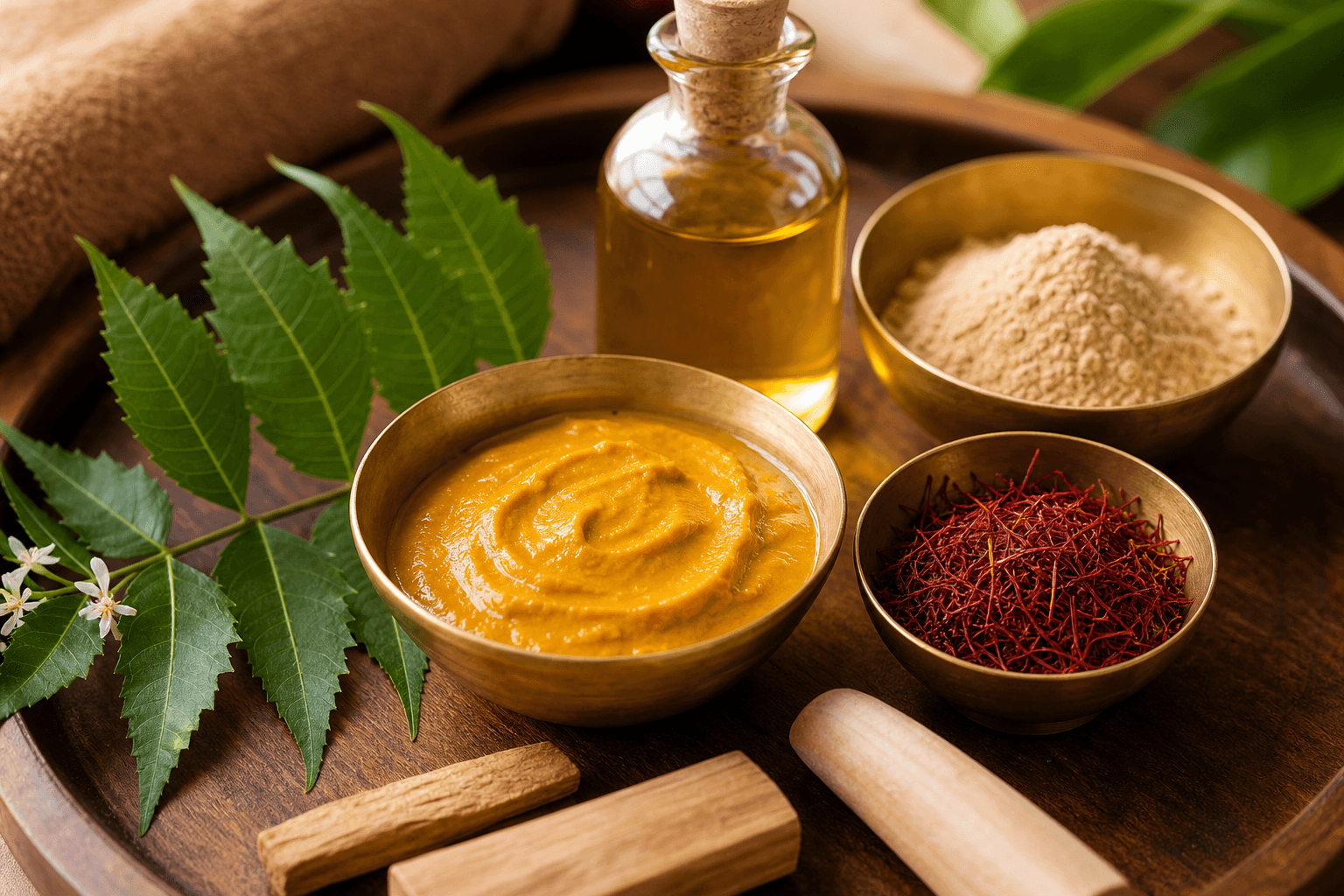
  • Turmeric — anti-inflammatory and brightening. Research in Phytotherapy Research shows curcumin reduces hyperpigmentation by inhibiting melanin production. Used in nearly every Ayurvedic facial at Shanti Dhara.
  • Neem — antimicrobial and astringent. Traditionally used for acne-prone Pitta skin types. Studies show neem leaf extract has antibacterial effects comparable to benzoyl peroxide at lower concentrations.
  • Saffron — antioxidant and complexion-brightening. One gram of saffron costs $8-$15, making it one of the pricier facial ingredients. Shanti Dhara uses it in their herbal facial blends for clients with dull or uneven skin tone.
  • Sandalwood — cooling and anti-inflammatory. The go-to ingredient for reactive, sensitive skin (Pitta imbalance).
  • Sesame or coconut oil base — the carrier oil is chosen by dosha. Sesame for Vata (dry, cold skin), coconut for Pitta (inflamed, reactive skin), and lighter oils like safflower for Kapha (oily, congested skin).

Regular facial ingredients are typically synthetic or concentrated extracts:

  • Glycolic acid (AHA) — exfoliates dead skin cells at pH 3.5-4.0. Concentrations range from 10% (gentle) to 70% (medical-grade peel).
  • Salicylic acid (BHA) — penetrates oil to clear pores. The standard acne facial ingredient.
  • Retinol/retinoids — stimulates cell turnover and collagen production. Can cause irritation for 2-4 weeks during the adjustment period.
  • Hyaluronic acid — holds 1,000x its weight in water for hydration.
  • Vitamin C serums — antioxidant protection and brightening at 10-20% concentration.

The practical difference: Ayurvedic ingredients work gently over multiple sessions. Clinical ingredients often work faster but can cause short-term irritation, peeling, or sun sensitivity. If you have a wedding in 3 days, a regular facial with vitamin C and hyaluronic acid gives you faster surface-level glow. If you're dealing with chronic dullness or sensitivity that hasn't responded to products, the Ayurvedic approach addresses potential root causes. For those exploring comprehensive Ayurvedic wellness, our detailed guide to Ayurvedic herbal facials explains the full ingredient palette and process.

Ayurvedic facial ingredients including turmeric paste, neem, saffron, and sandalwood on a wooden tray

Ayurvedic facials use plant-based ingredients like turmeric, neem, saffron, and dosha-specific carrier oils.

Technique: Marma Point Massage vs. Machine-Based Treatments

Walk into a regular facial appointment and you might encounter a steam machine, an extraction tool, an LED panel, a microcurrent device, or an ultrasonic spatula. Clinical facials rely heavily on technology, and that technology is genuinely effective — LED red light therapy at 630-660nm wavelength has strong evidence for collagen stimulation, and microcurrent devices can temporarily lift facial muscles by up to 0.5mm (measurable, if subtle).

An Ayurvedic facial at Shanti Dhara Wellness uses almost no technology. The primary tool is the practitioner's hands, specifically trained in marma point massage. Marma points are 107 energy points in Ayurvedic anatomy (37 in the face and head alone). The practitioner applies pressure and circular movements to these points using warm, herb-infused oil. Each point corresponds to specific organ systems and functions — the point between the eyebrows (sthapani marma) is associated with the pituitary gland and stress response, for example.

The practical difference in session experience is significant:

  • A regular facial (60 min): cleanse (5 min) → steam (5 min) → exfoliation (10 min) → extraction (10-15 min) → mask (10 min) → serum/moisturizer (5 min). Extractions can be uncomfortable. The focus is on visible results you can photograph immediately.
  • An Ayurvedic facial (60-75 min): dosha assessment (5 min) → oil cleanse (5 min) → herbal scrub (10 min) → marma point massage with warm oil (20-25 min) → herbal mask mixed fresh (15 min) → final oil application (5 min). No extractions. The marma massage portion is deeply relaxing, and many clients fall asleep during it.

Here's the honest trade-off: if you have visible blackheads or congested pores, a regular facial with extractions will address them more directly. Ayurvedic facials work on congestion over time through improved circulation and lymphatic drainage, but they won't manually remove individual blockages in a single session. If relaxation is part of what you're looking for, the Ayurvedic approach is almost meditative.

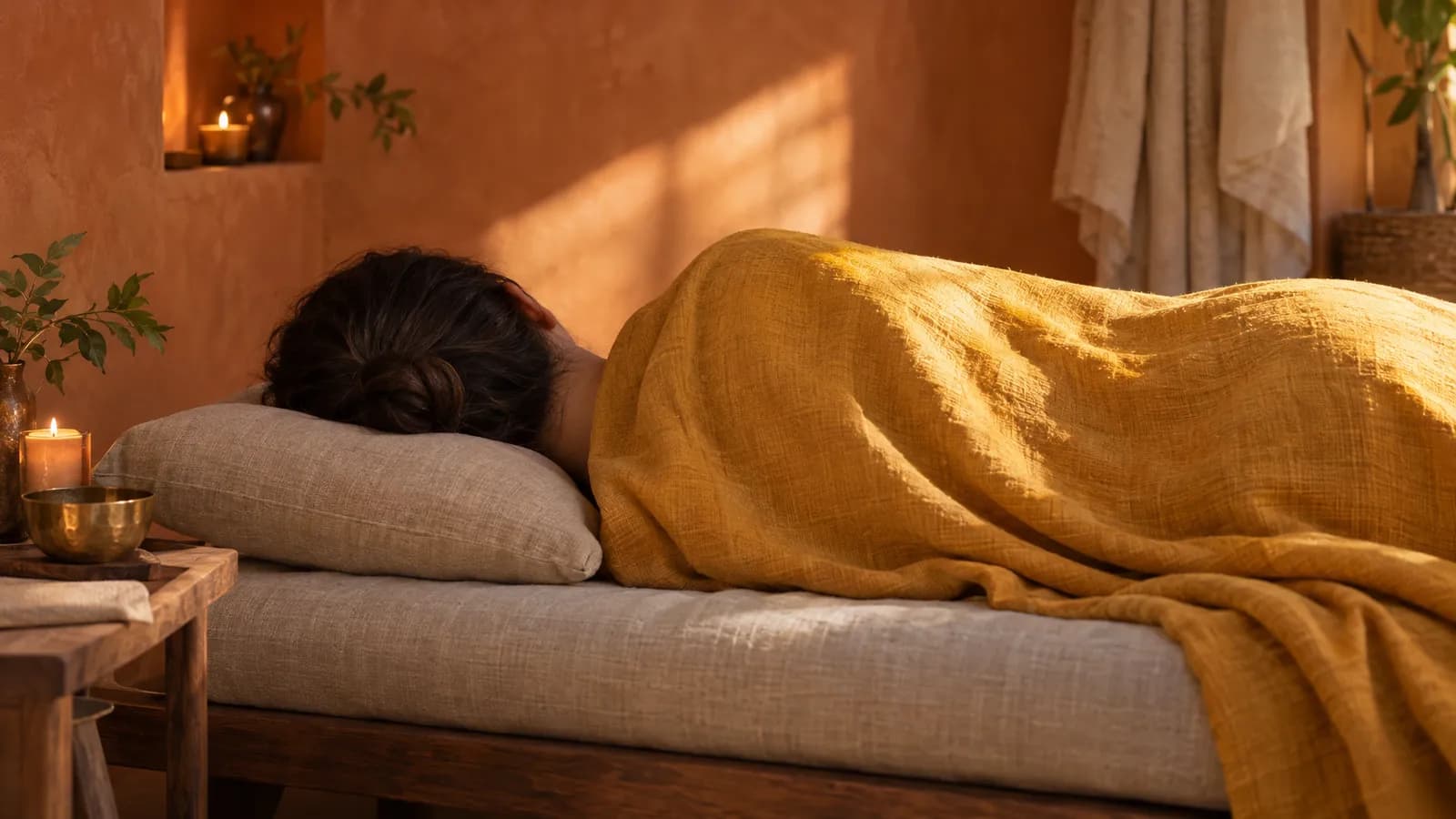
Ayurvedic facial treatment with marma point massage being performed
Marma point massage is the centerpiece of Ayurvedic facials, using warm oils and precise pressure to stimulate energy points and promote relaxation.

Personalization: Dosha-Based vs. Skin-Type Based

Every facial claims to be "customized," but the customization frameworks are completely different.

Regular facials categorize skin into 4-5 types: oily, dry, combination, sensitive, and normal. Some estheticians add "aging" or "acneic" as modifiers. Products are chosen based on what your skin looks like right now — oily skin gets mattifying ingredients, dry skin gets hydrating ones. It's logical, straightforward, and works well for acute concerns. Walk in with redness, walk out with calmer skin.

Ayurvedic facials use the dosha system, which factors in more than current skin appearance. Your dosha (Vata, Pitta, or Kapha) reflects your overall constitution, including your metabolism, stress response, digestion, and sleep patterns. Two people with oily skin might get completely different treatments if one is Pitta-dominant (inflammatory oiliness) and the other is Kapha-dominant (sluggish, congested oiliness).

At Shanti Dhara Wellness, the facial consultation includes questions like:

  • Do you run hot or cold?
  • How's your digestion?
  • Do you get anxious easily?
  • How's your sleep?
  • What time of day do you have the most energy?

These aren't tangential questions. Ayurvedic theory holds that your skin reflects internal balance or imbalance. If your Pitta is aggravated (excess heat), that shows up as redness, inflammation, or breakouts. If your Vata is out of balance (excess dryness and mobility), your skin becomes thin, dry, and wrinkled prematurely. The facial treatment is designed to address both the surface symptoms and the deeper patterns.

Practically speaking, this means:

  • Vata-type facial: Warm sesame oil, grounding massage strokes, hydrating masks with licorice and ashwagandha. Goal: add moisture, warmth, and calm.
  • Pitta-type facial: Cooling coconut oil, soothing strokes, masks with sandalwood and rose. Goal: reduce heat and inflammation.
  • Kapha-type facial: Lighter safflower oil, stimulating massage, detoxifying masks with neem and turmeric. Goal: increase circulation and clear congestion.

It's more holistic than a skin-type-only approach, but that also means it requires more from you as a client. If you're not interested in discussing your digestion or stress patterns during a facial appointment, the Ayurvedic model might feel intrusive. If you've been frustrated by one-size-fits-all treatments that don't account for why your skin behaves the way it does, the dosha framework offers a more individualized path.

Cost and Frequency: One-Off Glow vs. Long-Term Commitment

Pricing for both types of facials in the Bay Area generally falls between $150 and $300 for a 60-75 minute session. Shanti Dhara's herbal essence facial costs $138, which is competitive with mid-range to high-end day spas in Palo Alto.

The real cost difference shows up in recommended frequency:

Regular facials are typically recommended every 4-6 weeks if you're maintaining healthy skin, or every 2-3 weeks if you're targeting active acne or anti-aging. Most people treat them as periodic maintenance or special-occasion pampering. You can go once and get a visible result worth the money.

Ayurvedic facials work best as a series. The first session establishes your baseline and dosha profile. The second and third sessions allow the practitioner to adjust the protocol based on how your skin responded. By the fourth or fifth session, you're seeing cumulative benefits: reduced inflammation that stays reduced, improved texture that persists, better resilience to stress-triggered breakouts.

This is less about upselling and more about how the system is designed. Ayurvedic treatments aim to shift patterns, not just address isolated symptoms. A single Ayurvedic facial will leave you relaxed and glowing, but it won't rebalance your Pitta dosha. A series of six sessions over two months might actually reduce the frequency and severity of your stress-triggered breakouts going forward.

If your budget is $150 once every few months for a feel-good facial, a regular facial is the smarter choice. If you're willing to invest $600-$900 over two to three months to address a chronic skin issue holistically, Ayurvedic facials make more sense.

Results: Immediate Glow vs. Cumulative Improvement

Regular facial results: You walk out glowing. Your skin is smoother, pores look smaller, redness is calmed, and hydration is maxed out. If you took a before-and-after photo, the difference would be obvious within two hours. These results last 3-7 days before your skin returns to baseline. If you have a big event (wedding, photo shoot, date), a regular facial 1-2 days beforehand delivers reliable, visible improvement.

Ayurvedic facial results: Immediately after, you're relaxed and your skin feels soft and hydrated, but the "glow" is more subtle. The cumulative results show up over weeks. Clients report that by the third or fourth session, their skin looks calmer, less reactive, more even-toned, and these improvements persist between sessions. It's not dramatic before-and-after territory. It's a gradual upward trend.

This difference maps directly to the underlying philosophies. Regular facials target surface-level aesthetics with proven actives and technology. They deliver what they promise: better-looking skin, right now. Ayurvedic facials target the root patterns driving your skin's behavior. They deliver slower, more sustainable change.

Neither is wrong. It depends what you're optimizing for. If you need to look great for an event next week, book a regular facial. If you're tired of yo-yoing between clear skin and breakouts and want to find a more stable baseline, commit to an Ayurvedic series.

Who Should Choose Which Facial?

Choose a regular facial if:

  • You need fast, visible results for an upcoming event
  • You have specific acute concerns (blackheads, surface dryness, dullness) that respond well to targeted intervention
  • You prefer technology-assisted treatments with clinical backing (LED, microcurrent, chemical peels)
  • You want a straightforward, no-homework experience where you show up, receive treatment, and leave
  • You're happy with periodic maintenance rather than long-term transformation

Choose an Ayurvedic facial if:

  • You have chronic skin issues (recurring breakouts, persistent redness, sensitivity) that haven't responded to conventional products or treatments
  • You're interested in a holistic approach that factors in your constitution, stress levels, diet, and lifestyle
  • You're willing to commit to a series of treatments and make supportive lifestyle adjustments
  • You value relaxation and nervous system regulation as much as visible skin improvement
  • You want to work with a practitioner who sees your skin as part of a larger health picture

At Shanti Dhara Wellness in Palo Alto, many clients start with a single Ayurvedic facial to experience the approach, then decide whether to commit to a series. That's a low-risk way to test whether the dosha-based model resonates with you before investing in multiple sessions.

Common Questions About Ayurvedic vs. Regular Facials

Can I combine Ayurvedic and regular facials?

Yes, and some people do this strategically. For example, you might get Ayurvedic facials monthly as your baseline maintenance, then add a targeted regular facial (like a chemical peel or microdermabrasion) quarterly to address specific concerns like hyperpigmentation or fine lines. Just space them out — don't get a strong exfoliating treatment within two weeks of an Ayurvedic facial, since the warm oil massage increases circulation and could make your skin more reactive. Ask your Ayurvedic practitioner and esthetician to coordinate if you're layering both approaches.

Are Ayurvedic facials safe for sensitive or acne-prone skin?

Generally yes, because the ingredients are plant-based and non-synthetic, but dosha assessment is critical here. If you have sensitive skin, you're likely Pitta-dominant, and your practitioner will use cooling, anti-inflammatory ingredients like sandalwood, rose, and coconut oil. If you have acne-prone skin, the approach depends on whether it's inflammatory acne (Pitta) or congested acne (Kapha). Neem and turmeric are both antimicrobial and commonly used for acne, but the carrier oil and technique vary. Always disclose your full skin history during the consultation so the treatment can be customized appropriately. If you're currently using prescription retinoids or have active cystic acne, check with your dermatologist before booking.

How long do Ayurvedic facial results last compared to regular facials?

After a single regular facial, visible results (glow, smoothness, hydration) typically last 3-7 days. After a single Ayurvedic facial, the immediate glow is similar (3-5 days), but the cumulative effects build over time. Clients who complete a series of 4-6 Ayurvedic facials over 8-12 weeks often report that improvements in skin clarity, tone, and resilience persist for weeks or months after the series ends, especially if they maintain supportive habits (oil cleansing, dosha-appropriate diet). Think of it this way: regular facials give you a repeatable short-term boost, Ayurvedic facials aim to raise your baseline skin health over time.

Do I need to know my dosha before booking an Ayurvedic facial?

No. Your dosha assessment happens during the pre-treatment consultation at Shanti Dhara. The practitioner will ask about your skin, energy levels, digestion, stress response, and other health patterns, then determine your dominant dosha (or combination of doshas). You don't need to do any research or self-diagnosis beforehand. If you've already had an Ayurvedic consultation elsewhere and know your dosha, bring that information along — it can speed up the intake process and help the practitioner tailor the treatment more precisely.

Can men get Ayurvedic facials, or are they mainly for women?

Ayurvedic facials work the same way regardless of gender. Men's skin tends to be thicker and oilier on average (more Kapha characteristics), so treatments might lean toward stimulating massage and detoxifying masks with neem and clay. But dosha assessment is individual — plenty of men are Vata-dominant and benefit from hydrating, warming treatments. Shanti Dhara sees male clients regularly for facials, Abhyanga massage, and other Ayurvedic treatments. The experience is the same: consultation, customized treatment, no fuss.

Pricing and booking: see current prices, session lengths and packages for Ayurvedic facials in Palo Alto.

About the author

Ruby

Owner, Shanti Dhara Wellness

Owner of Shanti Dhara Wellness, a MedSpa in Palo Alto, CA offering traditional Ayurvedic treatments including Abhyanga body treatments, Shirodhara, and herbal scalp therapies.

Published on

June 1, 2026