Massage Before or After Yoga: The Short Answer
There is no research that settles the order. Pick by goal and practicality: an oil massage before yoga can leave skin slippery on the mat, so a full-body oil massage is often simpler to schedule afterwards, as the relaxing end to the day. Research on massage points to small benefits for flexibility and muscle soreness, not to one best sequence.
Ayurvedic massage, especially Abhyanga with warm herb-infused oil, and yoga are both things people use to feel looser and calmer. It makes sense to ask whether combining them works better one way round. This post covers what research has actually measured, the practical trade-offs of each order, and what Shanti Dhara Wellness in Palo Alto offers on the massage side.
What the Research Shows
No study we know of has compared Ayurvedic massage before yoga with Ayurvedic massage after yoga. What exists is indirect.
Massage and flexibility or soreness. A 2020 systematic review and meta-analysis in BMJ Open Sport & Exercise Medicine (Davis et al.) pooled 29 randomized studies with 1,012 participants. It found "no evidence that massage improves measures of strength, jump, sprint, endurance or fatigue," but massage "was associated with small but statistically significant improvements in flexibility" and in delayed onset muscle soreness (the stiffness that shows up a day or two after exercise). Those are athletes and sports settings, not yoga classes, and the effects were small.
Self-abhyanga and stretching. A 2026 randomized trial gave 42 male college students with tight hamstrings either four weeks of daily Ayurvedic self-massage (Nitya-Abhyanga) plus stretching, or stretching alone. The self-massage group improved more on hamstring flexibility, stiffness and tolerance of stretching. It is one small trial in young men, testing a daily home routine over a month — not a single spa session before a class — but it is the closest study to the question.
Massage and yoga in general. The U.S. National Center for Complementary and Integrative Health (NCCIH) says yoga may help general wellness "by relieving stress, supporting good health habits, and improving mental/emotional health, sleep, and balance," and may help some kinds of pain. For massage, NCCIH describes the pain evidence as mixed, with some short-term benefits. A 2011 pilot study of one hour of abhyanga in 20 adults found lower self-reported stress and heart rate right afterwards, with no control group.
Taken together: massage may help a little with flexibility and soreness, and many people find both practices relaxing. Nothing here shows that one order produces better results than the other.
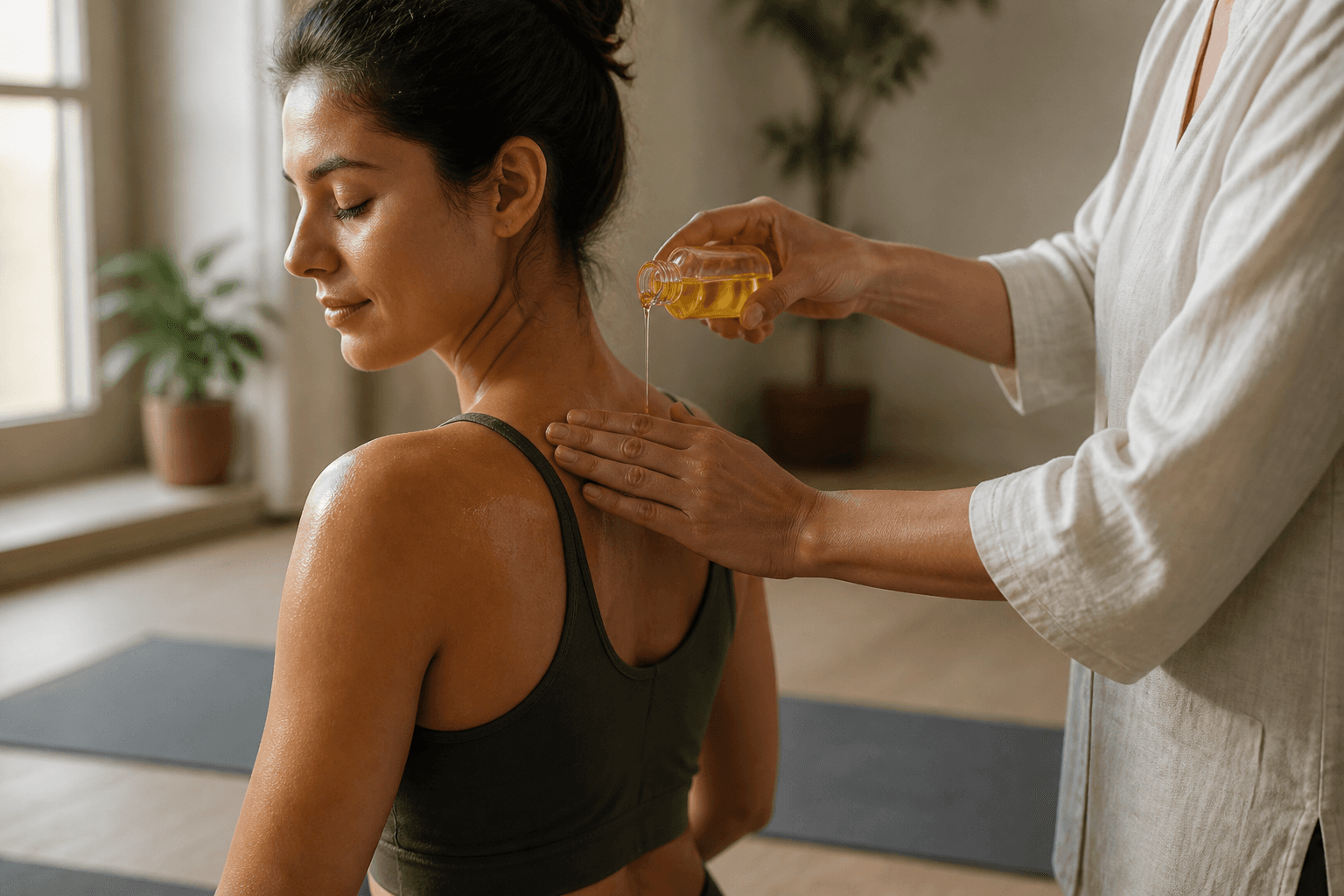
Illustrative image.
Massage Before Yoga: Practical Considerations
If you like to feel warm and loose before you practice, the flexibility findings above give that idea modest, indirect support. If you want massage first, a few practical points matter more than any fixed rule:
- Oil and grip. Abhyanga uses a lot of oil. Oily hands and feet can slip on a mat, which matters most in standing and balancing poses. Wipe or wash off excess oil before you practice, and use a towel over your mat if you need to.
- Don't skip your warm-up. A massage is not a substitute for easing into your practice. Warm up as you normally would.
- Match the practice to how you feel. If a long, slow massage leaves you drowsy, a gentler practice may suit better than a fast, vigorous one straight afterwards.
There is no short pre-class massage on Shanti Dhara's menu — the Abhyanga Body Treatment is 75 or 90 minutes — so massage-then-yoga works best on a day when you have time for both.
Massage After Yoga: Practical Considerations
Having the massage afterwards avoids the grip problem entirely, and it lets the massage be the end of the day rather than something to shake off. Some points to consider:
- Cool down first. Finish your practice, cool down and catch your breath before you lie down for a massage, especially after a heated or vigorous class.
- Soreness. The sports-massage review found a small reduction in delayed onset muscle soreness with massage. If you're new to yoga or trying a harder class, that is a modest reason to book the massage afterwards.
- Evening plans. You'll leave with oil on your skin, so a massage after yoga fits best when you're heading home rather than back to work.
If you practice yoga earlier in the day, an Abhyanga session afterwards can be the relaxing half of the day. Shanti Dhara closes by 6:00 PM (4:30 PM on Tuesdays and Sundays), so plan the yoga for the morning or midday.
Illustrative image.
What About Your Dosha?
In Ayurvedic tradition, treatments are tailored to a person's constitution, described through three doshas — vata, pitta and kapha — and practitioners in the tradition may choose warming or cooling oils with those qualities in mind. If you enjoy thinking about your routine this way, it can help you notice what you prefer: some people like warmth and slowness, others like something brisker.
Treat it as a tradition, not a prescription. A 2025 critical review in Frontiers in Medicine found that no tool for assessing constitution fully met standard validation criteria, and there is no research on dosha-based ordering of massage and yoga. Our guide to understanding your dosha explains the tradition, and you can mention your preferences — oil, warmth, pressure — when you book.
Safety: Who Should Check First
NCCIH describes serious harm from either practice as uncommon, but neither is risk-free. NCCIH says yoga injuries are generally rare, most often affect the knee or lower leg, and are more common in older adults; it advises that "pregnant women, older adults, and people with health conditions should talk with their health care providers and the yoga instructor about their individual needs," and recommends avoiding hot yoga during pregnancy. For massage, NCCIH says the risk of harm "appears to be low," with rare reports of serious side effects such as a blood clot, nerve injury or bone fracture.
If you're recovering from an injury, follow your clinician's advice on when to return to yoga and whether massage suits you. If you're pregnant, check with your OB-GYN before booking either and tell the studio.
What Shanti Dhara Offers
Shanti Dhara Wellness in Palo Alto doesn't teach yoga classes; it offers the massage side of the pairing. The Abhyanga Body Treatment, which the menu describes as "a flowing warm herbal oil massage," is 75 minutes ($228) or 90 minutes ($268). The Abhyanga + Podikizhi combination, which adds warm herbal bundles pressed across the body, is 75 minutes ($258) or 90 minutes ($298). There is more about that treatment on our Podikizhi page.
The studio is at 2875 Middlefield Rd, Suite 8 (2nd floor), Palo Alto, open Tuesday through Sunday and closed Mondays. Tell the studio about any health conditions, injuries or allergies when you book.
FAQ: Massage and Yoga Timing
Is it better to get a massage before or after yoga?
We found no study comparing the two orders. Massage after yoga avoids an oily grip on the mat and lets the massage end your day; massage before yoga suits people who like to feel warm and loose first, as long as they wipe off excess oil and still warm up.
How long should I wait between an Ayurvedic massage and yoga?
There is no research-based interval. Before yoga, wait until you've removed excess oil and your grip feels secure. After yoga, cool down and catch your breath before the massage. Follow your instructor's and practitioner's advice.
Can I do a vigorous yoga practice right after a full-body oil massage?
It's not ideal. Oily skin can slip on the mat, and a long massage can leave you drowsy. If you do, remove excess oil first and ease in with your usual warm-up.
Does my dosha affect which order I should choose?
Ayurvedic tradition tailors treatments to constitution, but there is no research on dosha-based ordering of massage and yoga, and constitution assessment itself isn't validated. Go by what feels right and what works on the day.
What type of Ayurvedic massage pairs with yoga?
Whichever you enjoy. At Shanti Dhara, the Abhyanga Body Treatment is 75 minutes ($228) or 90 minutes ($268), and the Abhyanga + Podikizhi combination, which adds warm herbal bundles, is 75 minutes ($258) or 90 minutes ($298).