How Sound Frequencies Affect the Body
Sound healing is based on the idea that sound can influence how we feel: some practitioners and small studies suggest it can help calm the nervous system. The research is still early, so it's best understood as a complementary practice rather than a treatment.
Brainwave rhythms are often part of the conversation. Alpha activity (8-12 Hz) is associated with relaxed wakefulness, and practitioners of sound healing techniques like singing bowl therapy aim to help listeners settle into that kind of calm.
A 2020 systematic review in Complementary Therapies in Medicine found just four peer-reviewed studies of singing bowls. They reported improvements in measures such as anxiety, tension, fatigue, blood pressure, and heart rate, but the authors judged the studies too few and too prone to bias to recommend singing bowl therapy yet, and called for more rigorous research.
Cleveland Clinic makes the same point about sound baths: there isn't much research behind them yet, and they shouldn't replace any medical treatment you're having, though many people find them calming as a complementary practice.
Research Studies on Sound Therapy
Research on sound therapy is growing, but most studies are small, and many have no control group. Here's what a few of them actually found.
A 2017 observational study of 62 adults found that after a single singing bowl meditation, participants reported significantly less tension, anger, fatigue and depressed mood, and people new to this kind of meditation reported a bigger drop in tension than experienced participants. It compared people before and after the session, without a separate control group.
Other trials have explored binaural beats, an auditory illusion created when two tones of slightly different frequencies are played, one to each ear. A 2026 systematic review of 13 randomized trials of theta-range (4-8 Hz) binaural beats found low-certainty evidence that they reduced pain compared with controls; results for anxiety and memory were too varied to pool.
These findings are a reason for more research, not proof that sound heals, which is how the reviewers themselves frame them.
Types of Sound Healing — Bowls, Gongs, Tuning Forks, Voice
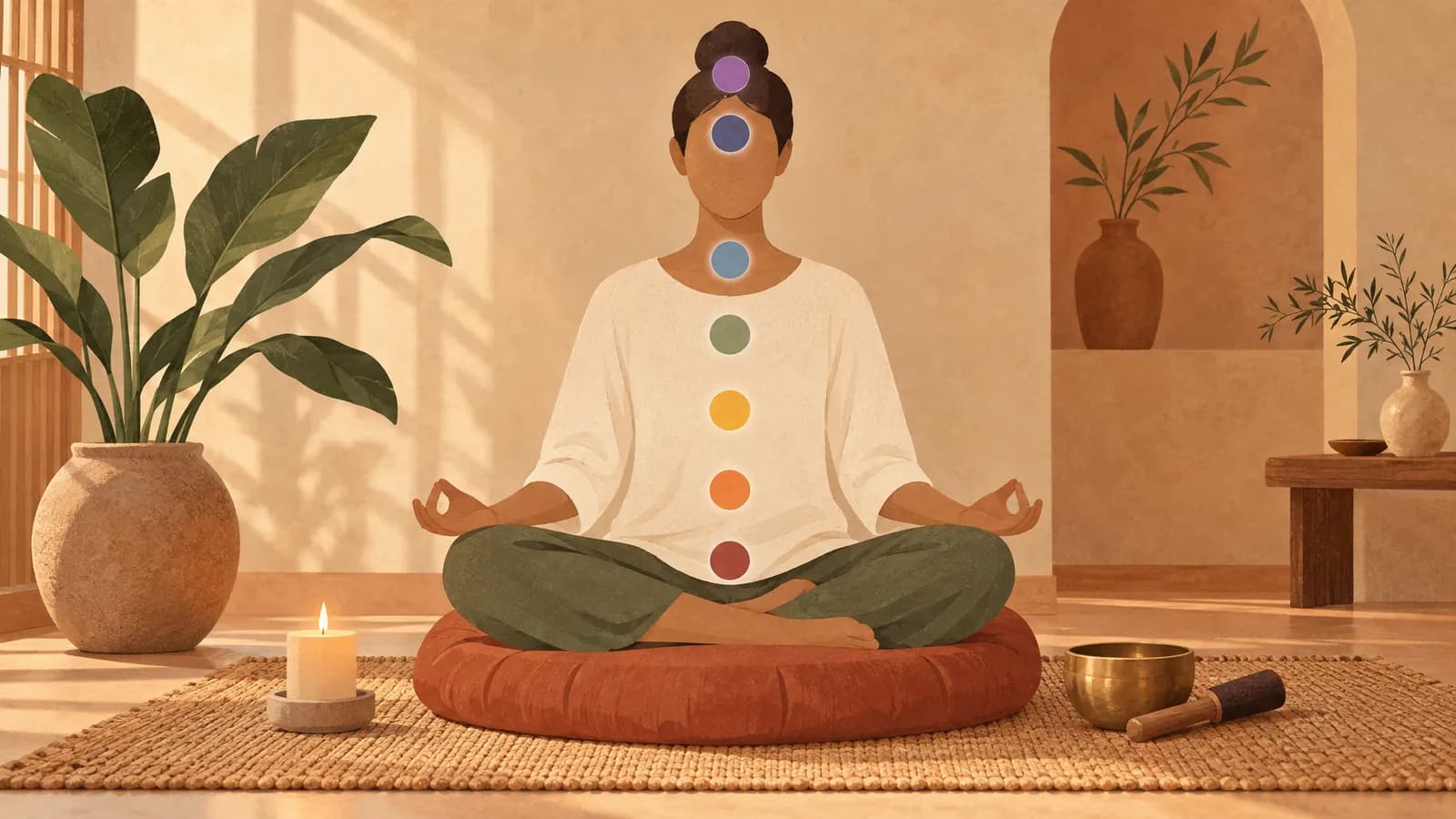
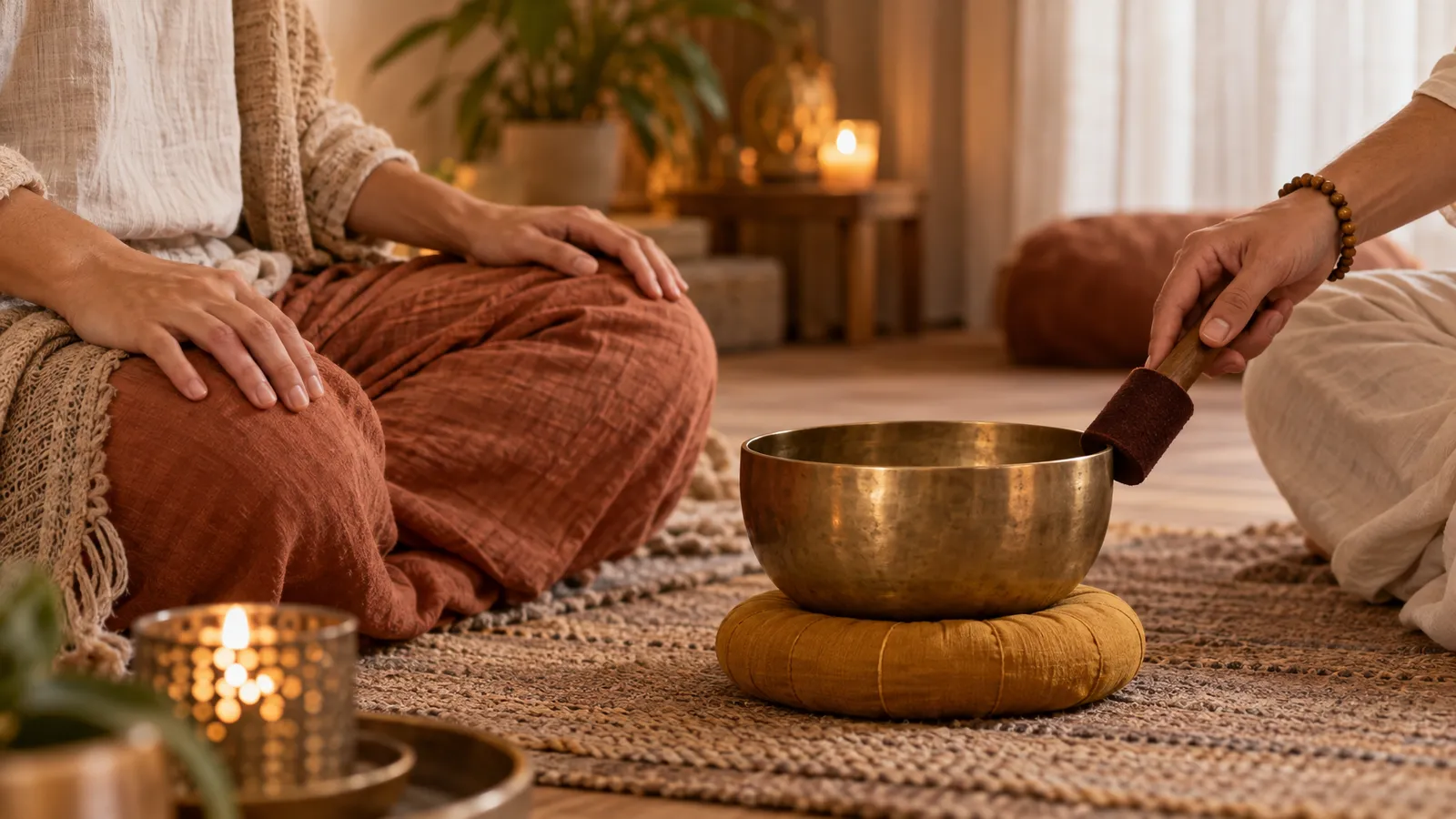
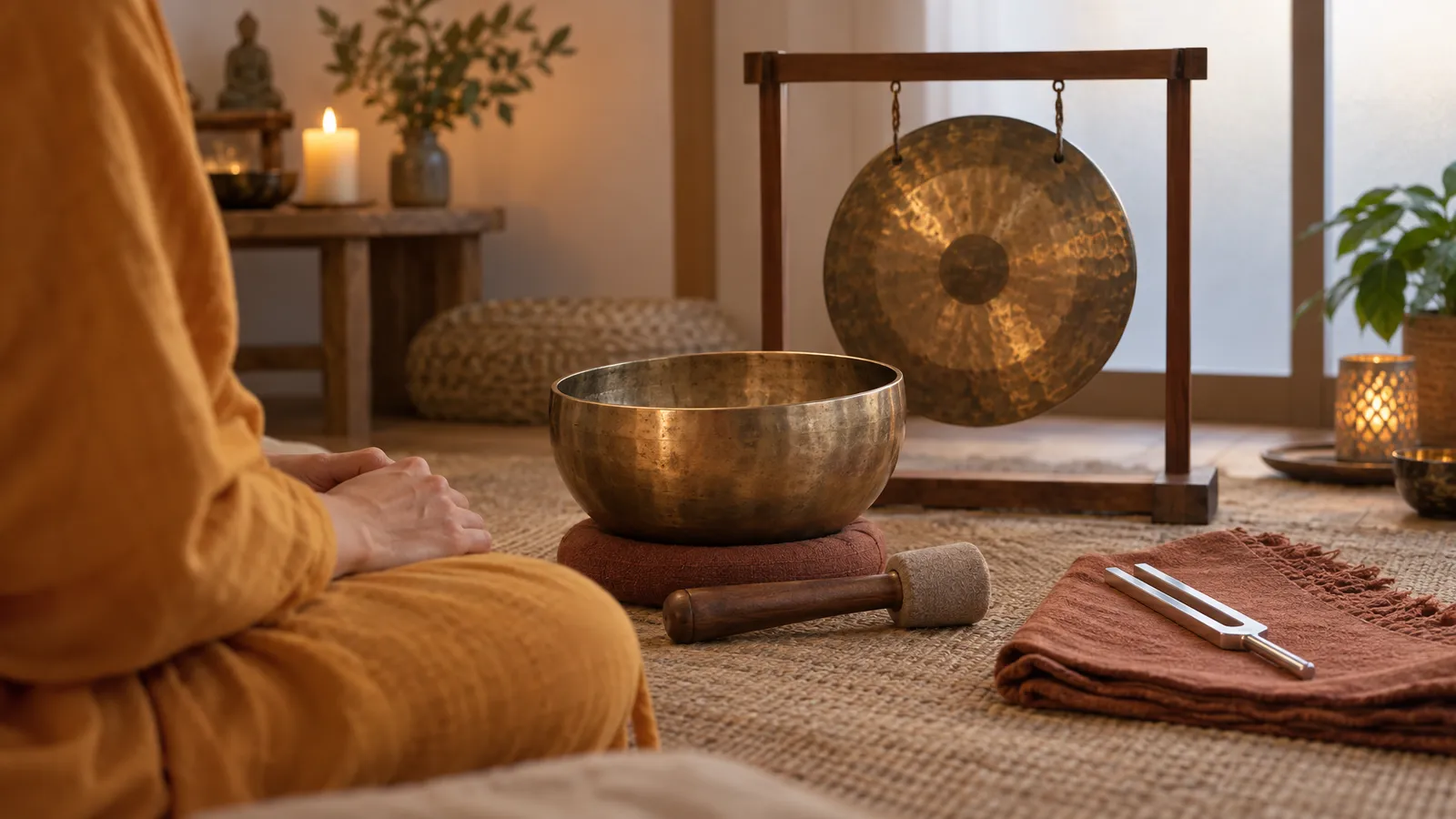
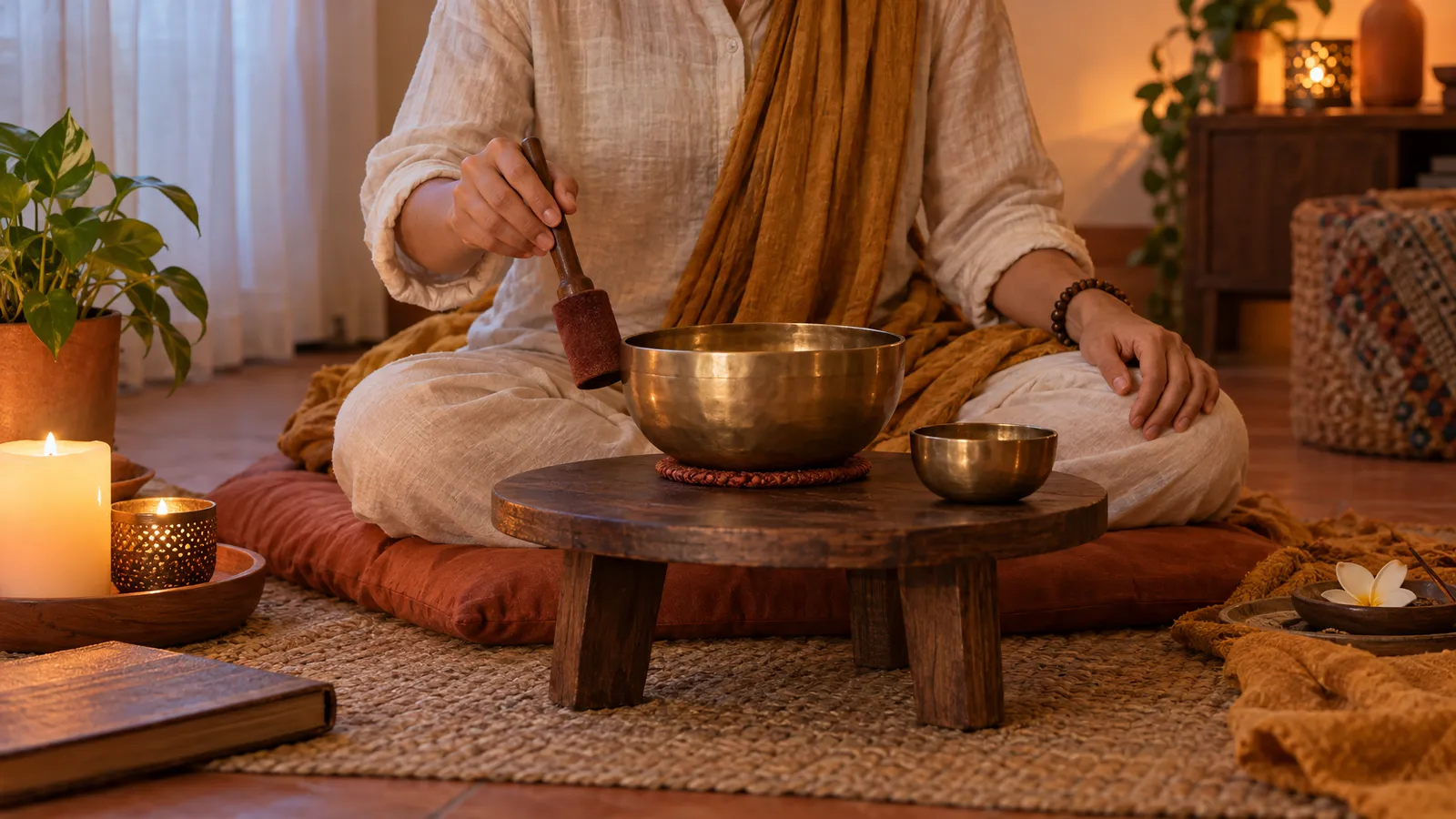
Sound healers use a range of instruments, and each one sounds and feels different to listen to. Singing bowls, often crafted from Tibetan metal or crystal, produce sustained tones; in chakra-based traditions, their sound is associated with the body's energy centers, much as in crystal energy healing.
Gongs, with their ancient roots, can create a wave of sound that envelops the listener, and some listeners find the layered overtones relaxing.
Tuning forks produce a single, precise tone. Sound healers strike them near the ears or place them on the body, following the energy-based traditions they work in.
Lastly, the human voice is used in sound healing through chanting, toning, and mantra recitation. Some people find that voicing or listening to a steady tone gives them something to focus on, the way a mantra does in meditation; the studies discussed on this page did not test voice practices.
Each method is simply a different way of creating a calm, absorbing sound environment.
What are the benefits of sound healing therapy?
Small studies report people feeling less tense, anxious, and fatigued after sessions, but systematic reviews rate the evidence as limited. How people experience a session varies.
How does sound therapy work scientifically?
The mechanisms aren't well established. The leading ideas involve relaxation of the nervous system and focused attention, similar to meditation.
Are there any side effects of sound healing?
Research on side effects is limited. It may be uncomfortable for people with sound sensitivities. Cleveland Clinic advises checking with your doctor first if you live with a psychiatric disorder, the same rule as for starting meditation.
How can I incorporate sound healing into my daily routine?
You can incorporate sound healing by listening to calming music or frequencies during meditation, yoga practice, or even before sleeping to enhance relaxation and mindfulness.
Integrating Sound Healing into Everyday Life
Sound healing is not limited to professional sessions in wellness centers; you can also try it at home in simple ways. For individuals looking to incorporate sound healing into their wellness routine based on Ayurvedic principles, there are several ways to begin:
1. Morning Meditation: Start your day with a brief morning meditation accompanied by soft soundscapes or singing bowls. Some people find it sets a calmer tone for the day.
2. Focused Breathing Exercises: Pair breathing exercises with binaural beats or nature sounds if you find they help you settle.
3. Evening Wind-down: Relax after a busy day by listening to calming music or audio tracks made for winding down before sleep.
4. Live Sessions: Try a live session with real instruments. At Shanti Dhara in Palo Alto, singing bowl therapy is part of Relax Therapy (60 min, $158) and Chakra Therapy (75 min, $198).
These simple practices bring calming sound into everyday life.
What is the importance of using different instruments in sound healing?
Different instruments in sound healing, such as singing bowls, gongs, and tuning forks, produce different tones and textures of sound, and practitioners mix them to shape the experience. There's no good evidence that particular instruments target particular health problems.
Can everyone benefit from sound healing?
Some people find it relaxing, and experiences vary. People with sound sensitivity, or with a psychiatric condition (per Cleveland Clinic's advice), should check with their healthcare provider beforehand.
How often should one engage in sound healing sessions for optimal benefits?
There's no established schedule; research hasn't tested ideal frequency. Go as often as you find it helpful.
What can I expect during a typical sound healing session?
During a session, you can expect to lie down comfortably while various instruments produce soothing sounds and frequencies around you. The experience is meant to be relaxing, though how it feels varies from person to person.
The Science Behind Brainwave Entrainment
Brainwave entrainment is the idea that external rhythmic stimuli can synchronize with the brain's natural electrical activity. The brain does produce measurable electrical responses that follow rhythmic sounds, recorded through EEG (electroencephalography). Whether that reliably shifts people into meditative states is still being studied.
EEG activity is conventionally grouped into frequency bands, and the exact boundaries differ slightly between sources. One standard summary, the electroencephalography entry on Wikipedia, lists delta (below 4 Hz) as normally seen in adult slow-wave sleep, theta (about 4-7 Hz) with drowsiness, alpha (8-12 Hz) with being relaxed or reflecting and with closing the eyes, and beta (13-30 Hz) with active thinking and focus. These are broad associations seen on a recording, not settings that a particular sound can switch on.
Binaural beats are one way people try to guide the brain toward a particular rhythm; as noted above, a 2026 review of theta-range binaural beats rated the evidence for pain relief as low-certainty.
At Shanti Dhara Wellness, singing bowl therapy is part of Relax Therapy (60 min, $158) and Chakra Therapy (75 min, $198), alongside meditation and Veda-Tea. Relax Therapy starts at 12:30 PM for up to 2 guests; Chakra Therapy starts at 2:00 PM for 1 guest. The Herbal Essence Facial (75 min, $258) also includes sound bowl or music healing.
FAQ: Sound Healing and the Science
What are the proven benefits of sound healing therapy?
"Proven" is too strong a word. A 2017 study of 62 adults found less tension, anger, fatigue and depressed mood after a single singing bowl meditation, and a 2020 systematic review found small studies reporting improvements in anxiety, tension, blood pressure and heart rate. The review's authors still concluded the evidence was too thin to recommend singing bowl therapy, pending better-designed studies. Some people simply find that the sound gives them an easier anchor for attention than silent meditation.
How does sound therapy work from a scientific perspective?
The current scientific position is that the mechanisms aren't established. The brain does produce electrical responses that follow rhythmic sound, measurable on EEG. Beyond that, claims about specific frequencies repairing cells or tissues aren't supported by research.
Are there any contraindications or side effects of sound healing?
Safety research on sound healing is limited, and a few situations call for caution. If you have sound sensitivity, tinnitus, or another ear condition, a medical implant, epilepsy, or you're pregnant, check with your doctor and tell the practitioner before the session. Cleveland Clinic also advises checking with your doctor first if you live with a psychiatric disorder, since meditation can heighten some symptoms. Research on the safety of sound healing is limited, and responses vary from person to person, so stop or step out if a session feels uncomfortable.
Can I practice sound healing at home, or do I need a professional?
You can absolutely practice sound healing at home using recorded sound baths, binaural beats, nature sounds, or simple instruments like tingsha bells or a small singing bowl. Apps and streaming platforms offer sound healing tracks aimed at relaxation, sleep, focus, and meditation, and you can try playing them during your morning routine, yoga practice, or before bed to see whether they help you settle. A sound bath practitioner quoted by Cleveland Clinic says a sound bath can be done with a recording, but that in person is the best way. A live session gives you real instruments and a quiet, distraction-free room, which is hard to recreate while multitasking at home. If you're near Palo Alto, Shanti Dhara's Relax Therapy and Chakra Therapy include live singing bowl therapy with meditation and Veda-Tea.