Choose Kati Vasti when you want warm herbal oil held still over the lower back rather than hands-on pressure; choose a regular back massage when you want muscles worked directly. Little research compares the two for pain relief, and back pain that persists, worsens or runs down the leg needs a doctor's evaluation before either.
Low Back Pain and Where Kati Vasti Fits
Low back pain is common: it affected about 619 million people worldwide in 2020, according to the World Health Organization. People try many things for it, from massage to exercise to heat, and some look for a slower, warmer treatment.
The WHO notes that about 90% of low back pain is non-specific, meaning the pain can't be confidently explained by an underlying disease or structural problem. It lists low physical activity, smoking, obesity and high physical stress at work as risk factors for non-specific low back pain. Some people who want a slow, warm treatment look at an Ayurvedic option like Kati Vasti.
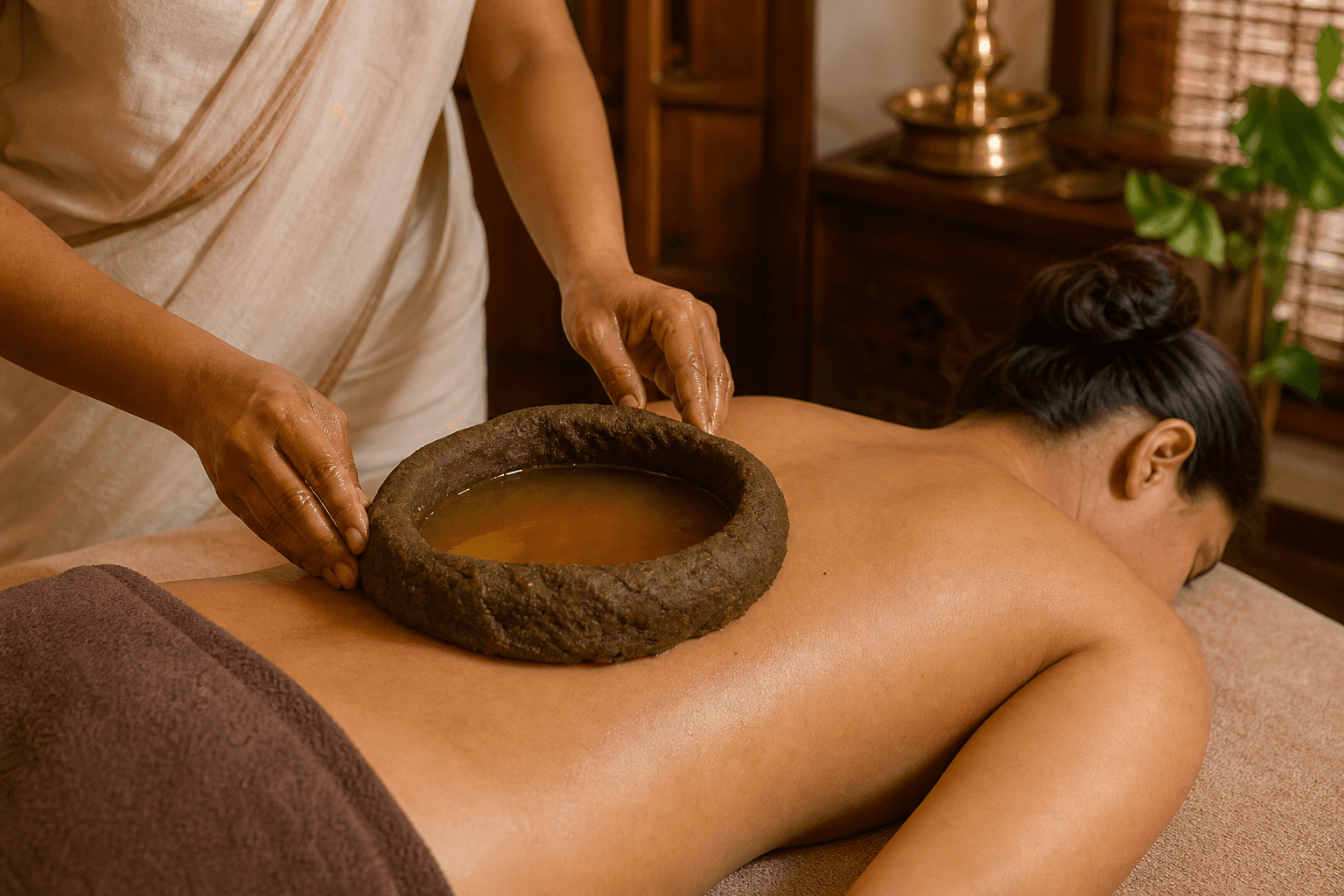
Kati Vasti is an Ayurvedic treatment that pools warm herbal oil over the lower back inside a dough ring. It isn't a massage technique; it's closer to a localized warm oil soak for your lumbar region.
How Kati Vasti Works
The setup is simple. In the procedure described in a 2024 clinical trial published in the Journal of Ayurveda and Integrative Medicine, the person lies face-down, black gram powder and water are mixed into a thick dough, and the dough is shaped and secured with a ring to form a reservoir over the lower back. Oil heated over a water bath is then poured gradually into the ring, and the person lies with the oil in place.
The oils used at Shanti Dhara Wellness are warm Ayurvedic herbal oils rather than plain massage oil.
On Shanti Dhara's menu, Kati Vasti is offered as part of an Abhyanga + Kati Vasti treatment, which combines the warm oil massage with the oil pooling over the lower back. It's offered as a 75-minute ($258) or 90-minute ($298) session.
Warm herbal oil is pooled inside a dough ring over the lower back.
When to Consider Kati Vasti Instead of Regular Massage
Kati Vasti isn't a replacement for back massage, and there's little research comparing the two. The clearest difference is in what you feel: a massage works the muscles with hands and pressure, while the Kati Vasti part of a session is warm oil held in one place with the body at rest. Here's when people consider it:
- Chronic lower back stiffness: Shanti Dhara's menu describes Abhyanga + Kati Vasti as a lower back therapy that relieves Vata-related tension. Some people prefer sustained warmth to firm pressure when they feel stiff.
- Desk-related lumbar discomfort: If you sit most of the day and want a slow, warm treatment focused on the lower back rather than a full deep-tissue session, Kati Vasti is one option, as explored in our guide to Ayurvedic treatments for desk workers.
- Pain that radiates down the leg: Pain running from the lower back into the buttock or leg can mean nerve involvement. See a doctor first, and follow their advice on whether bodywork is appropriate.
- After an injury: Once your doctor or physical therapist is fine with heat and bodywork, some people prefer a warm, low-pressure treatment to firm massage.
Whichever you choose, pain that is sudden, severe, spreading, or not improving belongs with a doctor or physical therapist before any spa treatment. Neither massage nor Kati Vasti is a diagnosis.
What the Evidence Says
Research on Kati Vasti is thin. One small randomized trial, published in 2024, gave 40 people with chronic low back pain a one-week residential yoga program; half also received Ayurvedic therapy including Kati Basti with Ksheerabala oil. Both groups improved in pain, disability and depression at one week and three months, and the researchers found no significant differences between the groups on those measures. With a sample that small and yoga in both arms, it doesn't show what Kati Vasti adds on its own.
That's why it makes sense to treat Kati Vasti as a warm, relaxing treatment rather than a fix. The WHO lists physical therapies, exercise, and psychological and social support among the treatments for non-specific low back pain; a spa session can sit alongside those, not replace them.
What to Know Before Your Session at Shanti Dhara Wellness
Shanti Dhara's menu describes Abhyanga + Kati Vasti as a lower back therapy combining Abhyanga, a flowing warm herbal oil massage, with Kati Vasti, where warm herbal oil pools over the lumbar area. That's what the booking includes; the order of the two parts, the pressure used and how the session wraps up are details to ask the studio about.
Before your session, tell the studio about your back pain, any diagnosis, and anything else in your health history that matters, such as a recent injury, pregnancy or skin sensitivity. If you have a preference for lighter or firmer pressure during the massage portion, say so.
During the Kati Vasti portion you lie still while the warm oil sits on your lower back. If the oil feels too hot or anything is uncomfortable, tell the practitioner right away.

Abhyanga + Kati Vasti at Shanti Dhara is a 75- or 90-minute session.
How Many Sessions (And What It Costs)
There's no good research on how many sessions help. In the 2024 trial above, Kati Basti was part of a one-week residential program, which is very different from an occasional spa visit. One option is to book a single session first to see how it feels.
At Shanti Dhara Wellness, Kati Vasti is offered as part of an Abhyanga + Kati Vasti combination: $258 for 75 minutes or $298 for 90 minutes.
Other Treatments on the Menu
If your back is only part of what you're looking for, here are other treatments on the menu to know about:
Abhyanga + Podikizhi: If your stiffness is spread across the body rather than focused on the lower back, Abhyanga + Podikizhi combines the Abhyanga massage with warm herbal bundles gently pressed across the body ($258 for 75 minutes, $298 for 90). It's a separate booking, not an add-on to Kati Vasti.
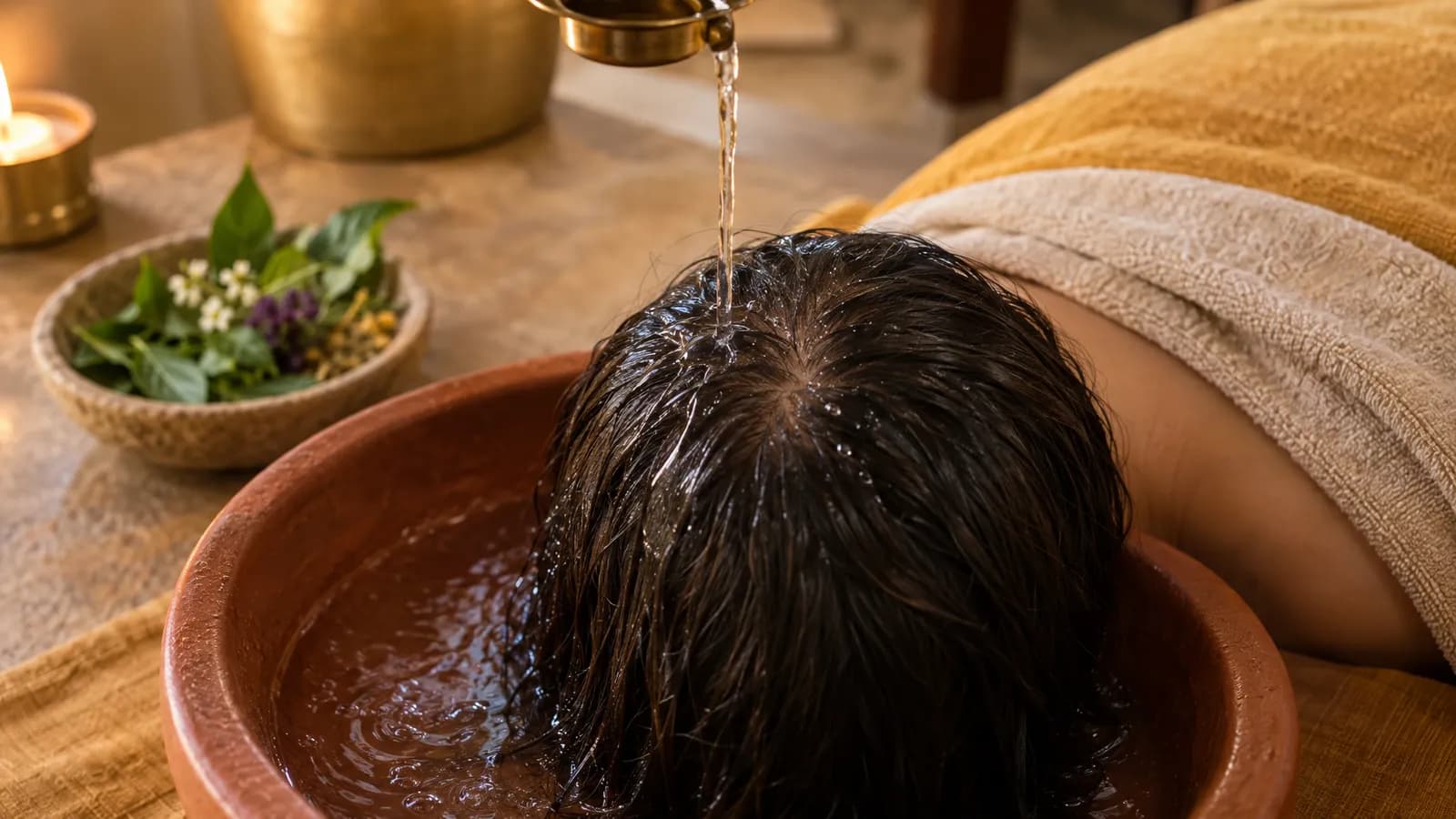
Sacred Shirodhara Therapy: A separate treatment in which, as the menu puts it, gently heated oil flows steadily onto the Ajna Chakra (third eye) (75 minutes, $288). Some people book it on another day if they're after a quiet, head-focused treatment.
Abhyanga on its own: The warm herbal oil massage without the oil pooling, as a 75-minute ($228) or 90-minute ($268) session.
Booking Kati Vasti at Shanti Dhara Wellness
Kati Vasti is available at Shanti Dhara Wellness, 2875 Middlefield Rd, Suite 8 (2nd floor), Palo Alto. Hours: Tuesday and Sunday 10:00 AM - 4:30 PM, Wednesday-Saturday 10:30 AM - 6:00 PM; closed Monday.
Book the 75-minute session or the 90-minute session online, or call the studio at (650) 283-9121. Wear or bring comfortable, loose clothing, since oil treatments can leave some oil on your skin.
If you're unsure which treatment fits, call the studio before booking to ask whether Abhyanga + Kati Vasti, Abhyanga on its own, or Abhyanga + Podikizhi fits what you're looking for.
FAQ: Kati Vasti vs Regular Back Massage
Does Kati Vasti hurt?
It's meant to feel comfortably warm, but everyone's tolerance for heat differs. If the oil feels too hot, or anything is uncomfortable during the session, tell the practitioner right away.
How soon will I feel relief?
There's no good research on how quickly or how much Kati Vasti relieves back pain; in the one small trial we found, adding Ayurvedic therapy that included Kati Basti to a yoga program made no statistically significant difference in pain compared with yoga alone. Treat it as a warm, relaxing treatment rather than a promised fix, and see a doctor for pain that persists.
Can I do Kati Vasti if I have a herniated disc?
Kati Vasti is not a treatment for a herniated disc; get your doctor's clearance first, and tell the studio when you book.
Will the dough ring leave a mark on my skin?
Anything pressed against the skin for a while can leave a mark. If you notice a mark that doesn't fade, irritation, or discomfort afterward, let the studio know, and check with a doctor if it persists.
How long should I wait between sessions?
There's no research-based schedule. Ask the practitioner, and follow your doctor's advice for a diagnosed condition.
If you are ready to book, Kati Vasti in Palo Alto covers current pricing and the safety notes worth reading first.