If you're new to Ayurvedic treatments, start with the one that matches what you want from a session: a warm oil stream on the forehead (Shirodhara), a full-body warm oil massage (Abhyanga), a treatment focused on the lower back (Kati Vasti), or a facial or meditation session if you'd rather not start with bodywork. Below is what each involves, what it costs at one Palo Alto studio, and what to ask before you book.
What Ayurveda Is, and What a Treatment Menu Looks Like
Ayurveda is a traditional medical system from India. The U.S. National Center for Complementary and Integrative Health (NCCIH) describes Ayurvedic medicine as "one of the world's oldest medical systems" and notes that it remains one of India's traditional health care systems. Ayurvedic practice combines plant-based products, diet, lifestyle, yoga and hands-on therapies; this guide sticks to the hands-on treatments you can book at a spa or studio.
Menus vary from place to place, so read what each treatment actually includes. As a concrete example, Shanti Dhara Wellness in Palo Alto lists Shirodhara, Abhyanga, Abhyanga combined with Podikizhi or Kati Vasti, herbal facials, and meditation and singing bowl sessions, each with a set duration and price.
The Main Ayurvedic Treatments
If you've never tried Ayurvedic wellness before, the menu can feel overwhelming. Here's what each major treatment involves, so you can figure out which one fits before you book.
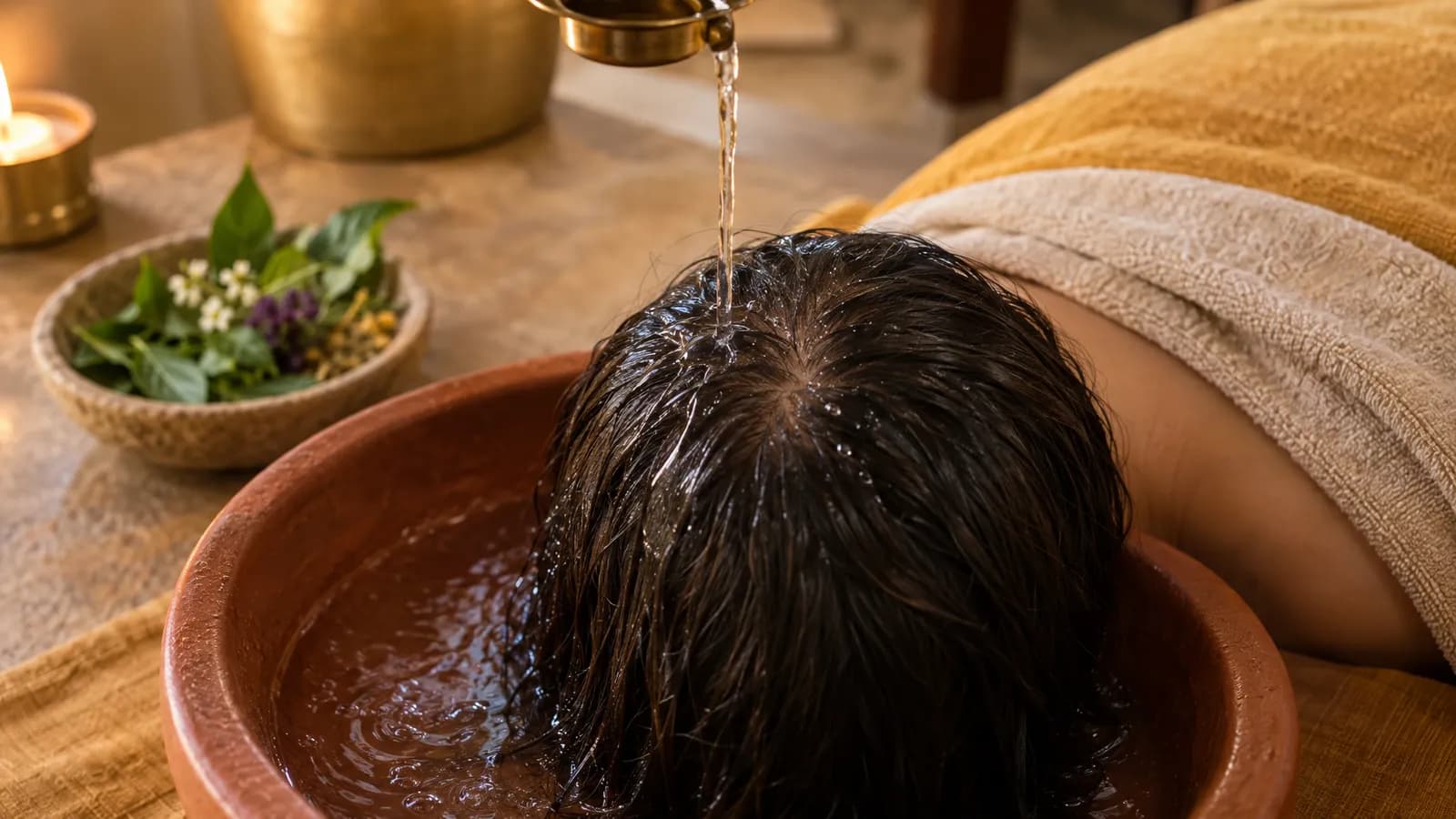
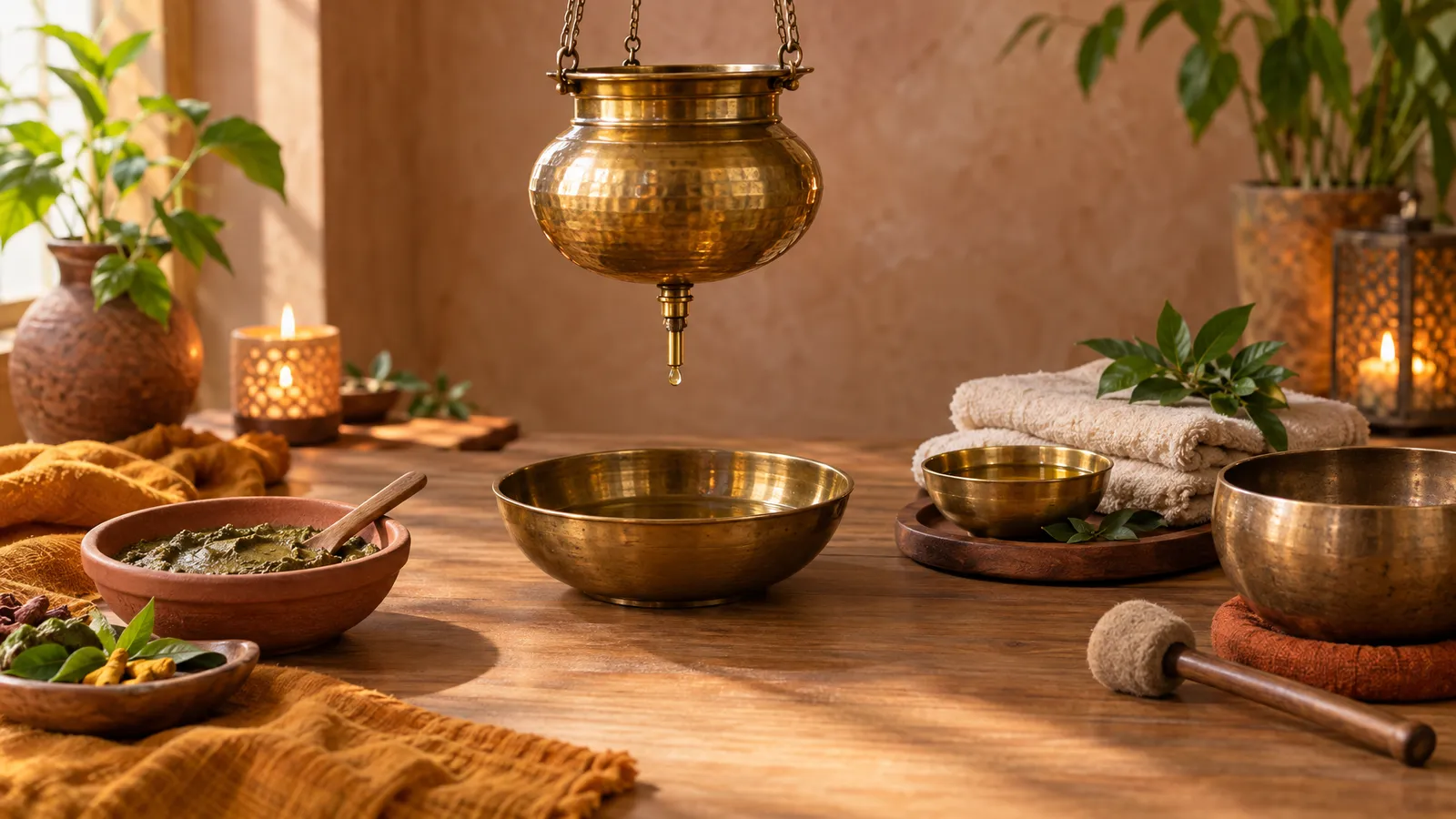
- Shirodhara. A steady stream of gently heated oil flows onto the forehead, the area traditionally called the third eye. Shanti Dhara's menu describes it flowing "onto the Ajna Chakra (third eye)". It's booked there as a 75- or 90-minute session.
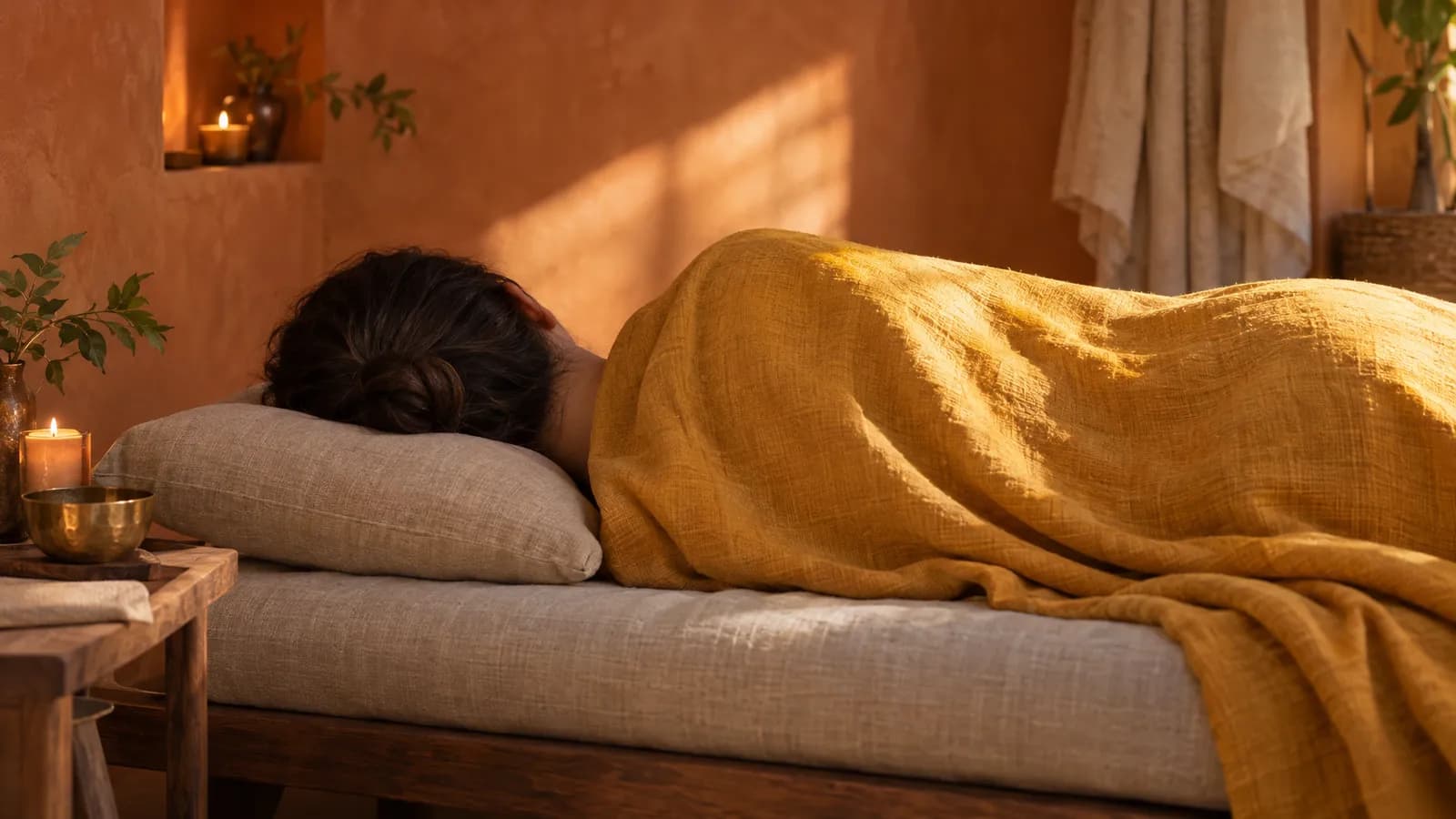
- Abhyanga. A full-body massage with flowing strokes and warm herbal oil. It's a different experience from a deep tissue massage, which works firmly on specific muscles. At Shanti Dhara it's a 75- or 90-minute session.
- Podikizhi. Warm herbal bundles are gently pressed across the body. Shanti Dhara's menu describes the treatment as aimed at Vata-related muscle stiffness and joint discomfort, and offers it combined with Abhyanga. Our page on Podikizhi in Palo Alto covers it in more detail.
- Kati Vasti. Warm herbal oil is pooled inside a dough ring over the lower back. In the procedure described in a 2024 clinical trial, the ring is made from black gram powder and water, and heated oil is poured into it gradually. Our post on Kati Vasti for back pain goes further. At Shanti Dhara it's combined with Abhyanga in a 75- or 90-minute session. Sciatica or disc problems need a doctor's assessment first.
- Ayurvedic herbal facials. Facials built around herbal oils rather than a standard product line. At Shanti Dhara, the Herbal Essence Facial (75 min) includes herbal essence oils and sound bowl or music healing, and the 90-minute Full Experience adds, in the menu's words, a "chest/arm herbal compress or eye/scraping care."

How to Pick Your First Ayurvedic Treatment
Pick based on what kind of session you want, not on which one sounds most "Ayurvedic" or exotic. And if you have a health problem, see a doctor first: NCCIH advises not to use Ayurvedic medicine to postpone seeing a conventional health care provider about a medical problem.
If you want a quiet, head-focused treatment: Consider Shirodhara. People often look at it when stress or poor sleep is on their mind, but the evidence is limited: a 2026 systematic review of Ayurvedic interventions for primary insomnia in older adults, which included Shirodhara studies, found most reported benefit but noted small samples, missing comparators and a scarcity of high-quality trials. At Shanti Dhara Wellness, Sacred Shirodhara Therapy runs 75 minutes ($288), and the 90-minute Full Experience ($328) adds a deeper head massage and scalp care. If insomnia persists, talk with your doctor.
If you want a full-body oil massage: Start with Abhyanga. Shanti Dhara offers 75-minute ($228) and 90-minute ($268) Abhyanga sessions.
If you'd like warm herbal bundles added: Shanti Dhara's Abhyanga + Podikizhi combination runs 75 minutes ($258) or 90 minutes ($298).
If your lower back is the main focus: Look at Kati Vasti, with a pool of warm oil held over the lower back. At Shanti Dhara it comes as Abhyanga + Kati Vasti, 75 minutes ($258) or 90 minutes ($298).
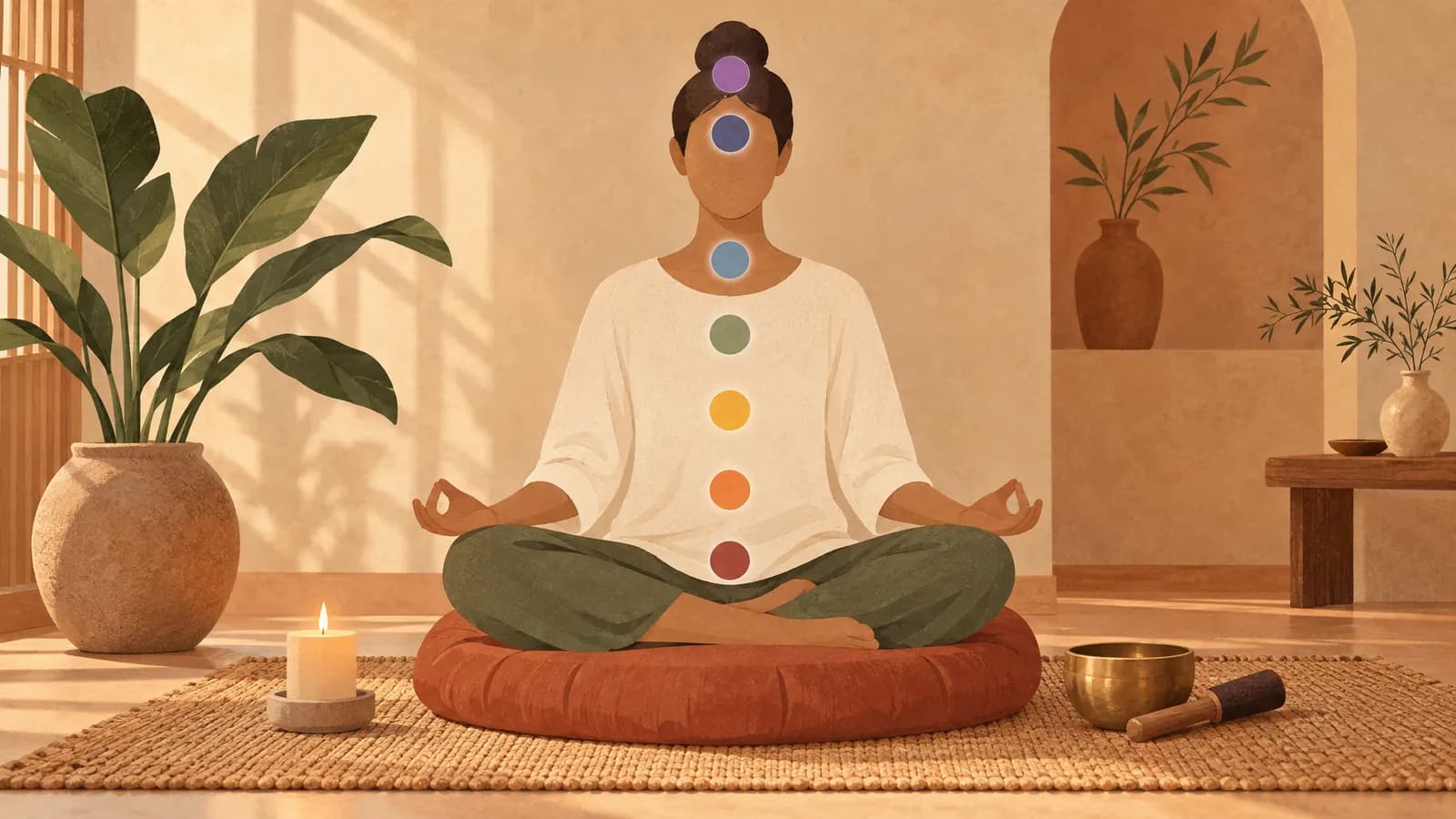
If you're curious but nervous about bodywork: Try the Herbal Essence Facial or the 60-minute Relax Therapy (meditation, singing bowl therapy, Veda-Tea; $158). Both let you try the setting without committing to a full-body treatment. Relax Therapy starts at 12:30 PM and takes up to 2 guests.
How to Choose an Ayurvedic Wellness Center
Quality varies, and there is little outside oversight. According to NCCIH, "There is no significant regulation of Ayurvedic practice or education in the United States, and no state requires a practitioner to have a license." That puts the work of checking on you. These questions help:
Who will do the treatment, and what training do they have? Since there's no licensing requirement, ask directly where the practitioner trained and how long they've practiced this specific treatment.
What oils and ingredients are used? Ask what goes into the oils and whether they differ from person to person. This matters most if you have allergies, sensitive skin or a skin condition.
What happens before the treatment? Some providers ask about your health, sleep, stress and preferences before starting; others work from a set menu. Either can be fine, but you should be able to share health information and have the treatment adjusted if something doesn't suit you.
How is the signature treatment done? For Shirodhara, ask how the oil temperature and flow are controlled. For Kati Vasti, ask how the dough ring is made and how the oil is kept warm.
Warning signs: Pressure to buy supplements, promises to "cure" a chronic condition, no clear pricing, or aggressive upselling during a session. A trustworthy provider is clear about what a treatment can and can't do.
What Ayurvedic Treatments Cost in the Bay Area
Prices vary from studio to studio, so compare what's included and how long each session runs. For a concrete reference, here's what the main treatments cost at Shanti Dhara Wellness in Palo Alto:
- Shirodhara: Sacred Shirodhara Therapy is $288 (75 minutes); The Full Experience is $328 (90 minutes, with a deeper head massage and scalp care).
- Abhyanga: $228 for a 75-minute session and $268 for 90 minutes.
- Abhyanga + Podikizhi: $258 for 75 minutes or $298 for 90 minutes.
- Abhyanga + Kati Vasti: $258 for 75 minutes or $298 for 90.
- Herbal Essence Facial: $258 for 75 minutes, or $298 for the 90-minute Full Experience.
If you're hoping to use insurance, an HSA or an FSA, ask your insurer or plan administrator before you book rather than assuming either way. For HSA and FSA purposes, IRS Publication 502 says medical care expenses "must be primarily to alleviate or prevent a physical or mental disability or illness" and "don't include expenses that are merely beneficial to general health."
The Most Affordable Way to Start
If you want an Ayurvedic massage, the lowest-priced one on Shanti Dhara's menu is the 75-minute Abhyanga Body Treatment at $228. The Abhyanga combinations with Podikizhi or Kati Vasti start at $258, and Shirodhara at $288.
If you'd rather start with something shorter and lower-priced than a massage, the same menu lists three other sessions. Here is each one as the menu describes it:
- Experience Crystal Energy: 30 minutes, $38 for non-members (free for members). The menu describes it as a hands-on session where you create your own energy jewelry, with up to 4 participants.
- Nap Break: 30 minutes at 8:30 AM, $98, for up to 3 guests. The menu gives no further detail, so ask the studio what the session involves before you book.
- Relax Therapy: 60 minutes at 12:30 PM, $158, for up to 2 guests, including meditation, singing bowl therapy and Veda-Tea.
None of these three is a massage, so if bodywork is what you're after, Abhyanga is the place to start.
Fitting Treatments Into a Busy Schedule
There's no required schedule for spa treatments, and no good research on an ideal frequency. A few practical approaches:
A regular appointment. Some people like a standing booking, such as once a month, so the treatment becomes a routine rather than something to plan each time.
Occasional sessions around busy periods. Others book when they know a demanding stretch is coming. If sleep or anxiety is the issue, involve your doctor too.
Seasonal routines. Ayurveda has a tradition of seasonal routines, called ritucharya, that adjust diet and daily habits through the year. Our post on ritucharya explains it; some people use the change of season as a reminder to book.
At home between sessions. Some people do a simple self-massage with warm oil at home. If you have a skin condition or allergies, check the oil with a doctor first.
FAQ: Getting Started with Ayurvedic Wellness
Do I need to know my dosha before booking?
No. If you know it, you can mention it when you book. Our guide to understanding your dosha explains the idea, but it's not required.
What should I wear to an Ayurvedic treatment?
Ask the studio when you book how clothing and draping work for the treatment you've chosen. Oil treatments can leave oil on your skin and hair, so wear clothes you don't mind getting a little oily afterward, and ask whether to remove jewelry or contact lenses.
Can I combine Ayurvedic treatments with other therapies?
Spa treatments can sit alongside other care, but they shouldn't replace medical care. If you're seeing a doctor, physical therapist or other provider for a condition, tell them what you're doing, and tell the studio about your condition too. NCCIH also advises talking with your conventional health care provider before using Ayurvedic products if you have a health condition.
How do I know if a treatment is helping?
Keep simple notes before and after a few sessions. For sleep: time to fall asleep and nighttime waking. For stress: a 1 to 10 rating each day. For physical discomfort: pain and mobility before a session and a few days later. Notes won't prove the treatment caused a change, but they'll help you decide whether to continue, and they're useful to share with your doctor.
Do I have to believe in Ayurveda to book a treatment?
No. You don't need to adopt any beliefs to book a treatment. The physical experience of warm oil, warmth and slow touch is the same either way.