Marma point therapy is an Ayurvedic practice of stimulating "marma" points, 107 vital regions of the body described in classical Ayurvedic texts. Tradition treats them as seats of prana (life force); clinical research on the therapy is still sparse. Here's what the tradition says, what studies do and don't show, and how it compares with acupressure.
What Is Marma Point Therapy?
Marma are vital points of the body described in Ayurveda. According to a 2021 case report in the Journal of Ayurveda and Integrative Medicine, "Ancient Ayurvedic literature described 107 vital regions of the body and considered them as a seat of prana (life force)," and these points "have been elaborately described in Sushruta Samhita," one of Ayurveda's classical texts. The same paper notes that, as per Ayurvedic literature, marma regions are the confluence of mamsa (muscles), sira (vessels), snayu (ligaments and tendons), asthi (bone) and sandhi (joints).
The original interest in these points was protective. Classical texts describe marma as sites where injury can lead to pain, disability or even death, and advise protecting them from trauma. A 2015 anatomical study of Adhipati marma, a point at the top of the skull, describes it as one of the 107 marma listed in the classical texts and discusses it in exactly that sense: as a site where trauma can be fatal.
Marma therapy, sometimes called marma chikitsa, is the applied side of the concept. The 2021 paper describes it as practice in which these points "are stimulated in different ways to treat different diseases." In practice that usually means manual pressure or massage on specific points, sometimes with oil, and it is often discussed alongside other Ayurvedic bodywork rather than as a standalone system. How a practitioner works varies considerably, which is why it's worth asking questions before you book (more on that below).
The Traditional Concepts Behind It
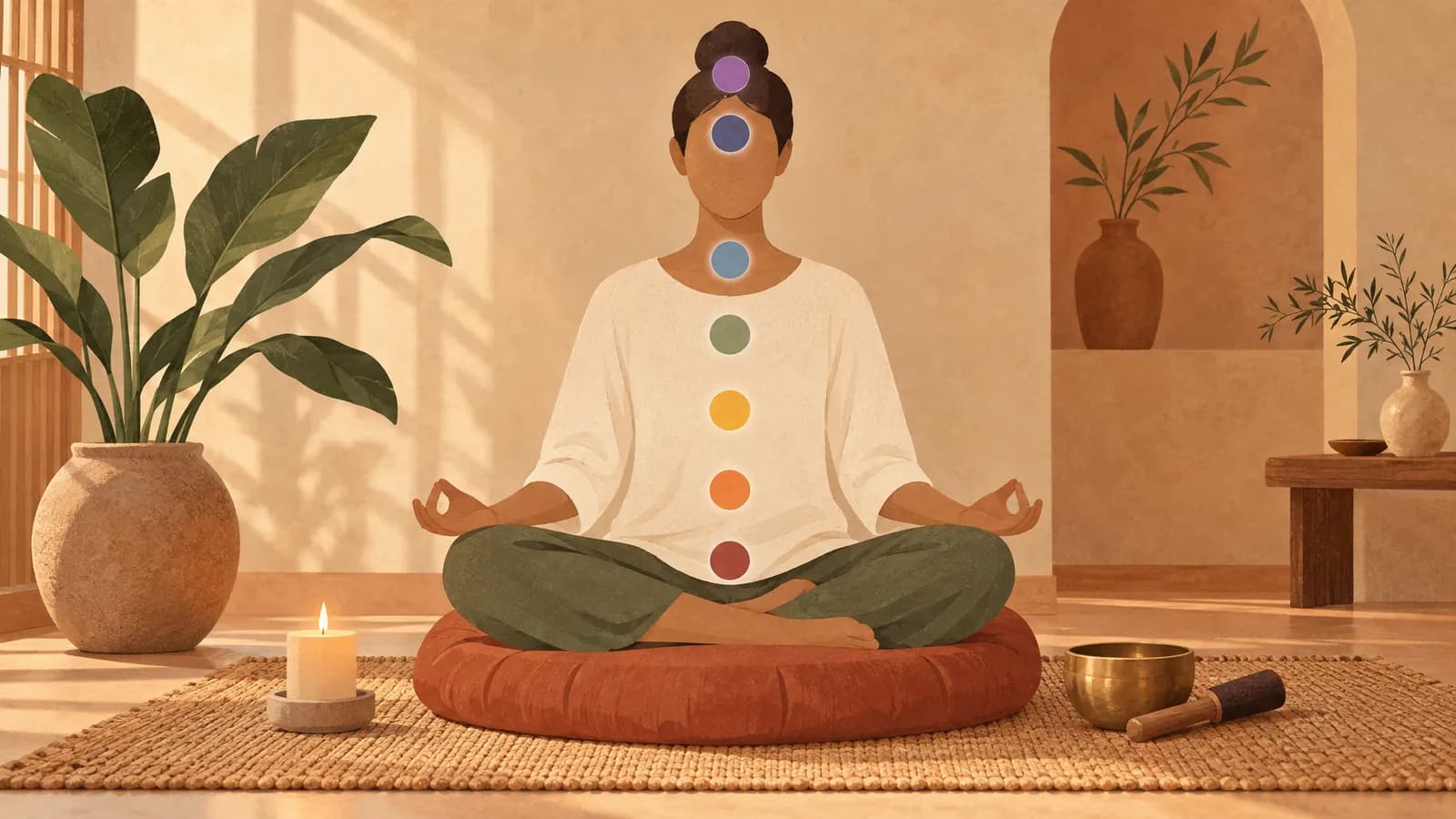
Marma therapy is explained in Ayurveda's own terms, and it helps to read those as traditional concepts rather than as established physiology. In the tradition, marma points are places where prana is concentrated, and they are linked to the three doshas, Vata, Pitta and Kapha, that Ayurveda uses to describe a person's constitution and current state. Practitioners working within the tradition may choose points, pressure and oils with a person's dosha in mind.
These ideas shape how a session is planned, but they haven't been confirmed as mechanisms by clinical research. There's no validated test that shows "blocked energy" at a point, and claims that stimulating a particular marma affects a specific organ system or emotion come from traditional teaching, not from studies that have measured it.
If you want to understand the dosha vocabulary a practitioner may use, our guide to understanding your dosha explains it. You don't need to know your dosha, or accept the framework, to decide whether a hands-on treatment appeals to you.
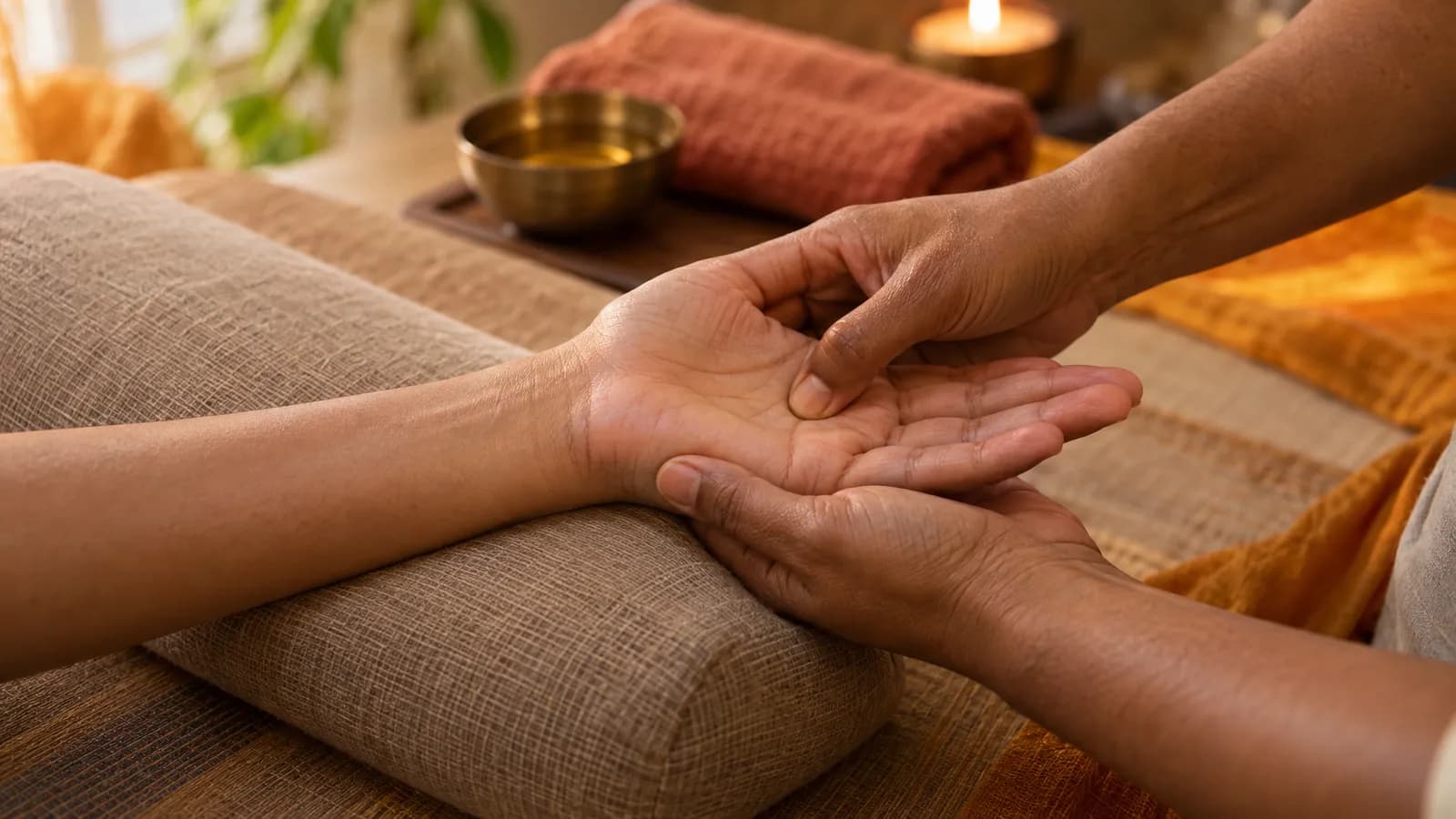
Marma work involves focused pressure on specific points rather than the broad strokes of a full-body massage.
What the Research Shows
Not much yet. The 2021 case report on marma therapy states plainly that "clinical data regarding efficacy of this therapy is very sparse." Much of what exists is individual case reports, which can describe what happened to one patient but can't show that the therapy caused it.
Larger trials are only starting. A randomized controlled trial protocol published in 2026 by researchers at India's Central Council for Research in Ayurvedic Sciences notes that "no randomized controlled trials have evaluated" marma therapy's efficacy and safety for pain from lumbar disc herniation with radiculopathy. That trial compares four weeks of marma therapy with physiotherapy; as of the protocol's publication, 90 patients had been enrolled and results were not yet reported.
Marma has also appeared as one part of broader programs. A 2020 University of California San Francisco pilot study gave 32 breast cancer survivors a four-month individualized Ayurvedic program that included nutrition and lifestyle counseling, yoga and marma ("like acupressure"). The program was feasible and acceptable, and symptom scores improved, but the study had no control group and combined several elements, so it can't tell you what marma contributed on its own.
Put simply: people seek out marma therapy for relaxation, tension and other complaints, and the tradition describes many uses, but there isn't yet good clinical evidence that it treats any particular condition.
What a Session May Involve
There's no single standard session. Depending on the practitioner, marma work might be a short sequence within a longer oil massage or a session of its own, done with fingertips or thumbs, with or without oil. Before you book, ask:
- What training the practitioner has in marma therapy specifically. The U.S. National Center for Complementary and Integrative Health (NCCIH) notes that "There is no significant regulation of Ayurvedic practice or education in the United States, and no state requires a practitioner to have a license."
- How long the session is, which areas will be worked, and whether oil is used.
- What you'll wear and how draping is handled.
- How to tell them if pressure feels too strong. Discomfort is a reason to speak up straight away.
Afterward, reactions vary from person to person. Leave yourself a little time before going back to a busy schedule, especially the first time.
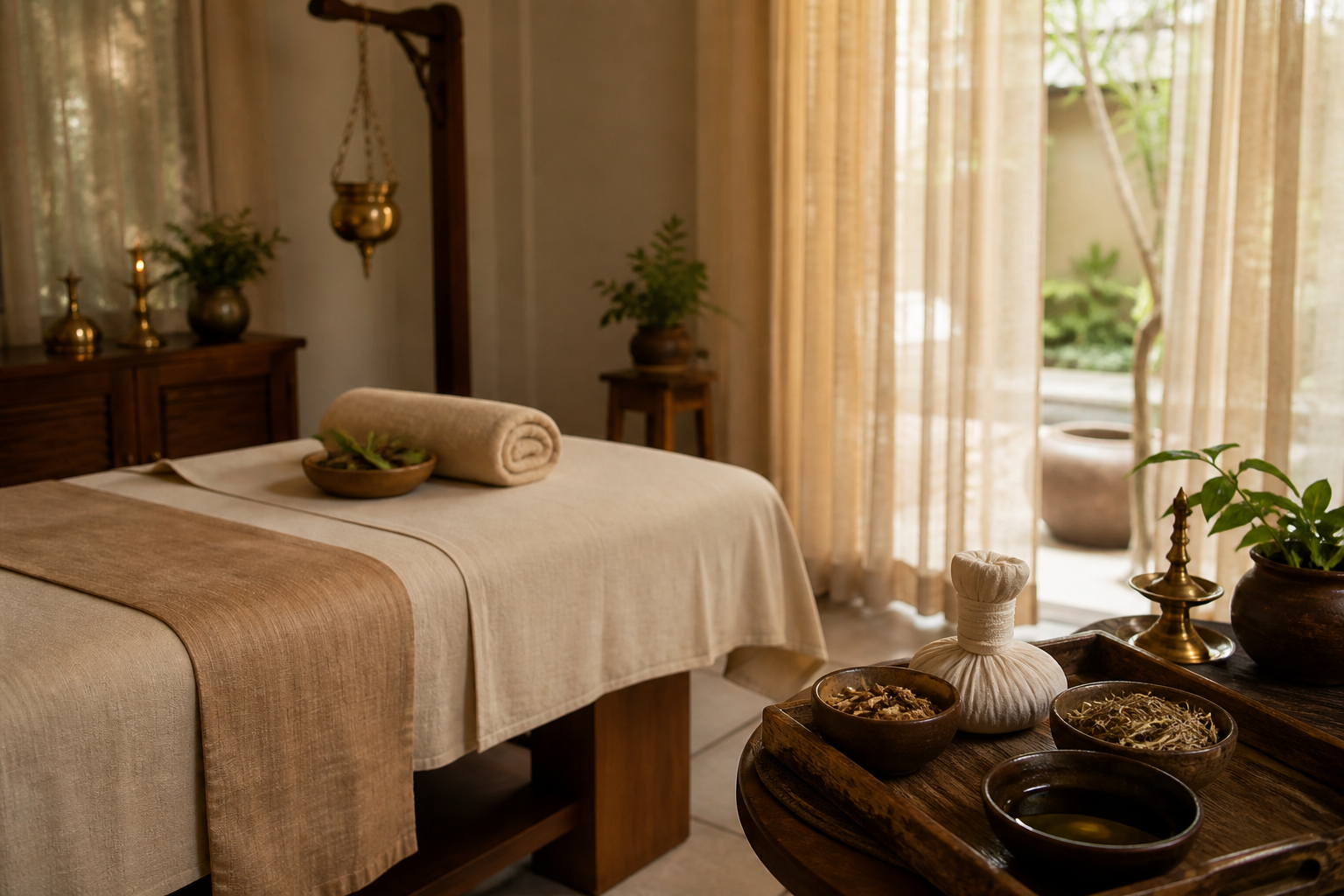
Point-by-point bodywork is usually done in a quiet treatment room like this one.
Marma Therapy vs. Acupressure and Acupuncture
People often ask how marma compares with acupressure or acupuncture, since all three involve specific points on the body. The main difference is the map each tradition uses. Marma follows the 107 points described in Ayurvedic texts. Acupressure, as a 2016 review in the Journal of Traditional and Complementary Medicine describes it, originated in ancient China and is based on activating acupoints along meridians. The two traditions describe different points and different underlying concepts, although both are applied by hand.
Acupuncture is different again because it uses needles, and in California it can only be performed by people the law authorizes. According to the California Acupuncture Board, that means acupuncturists licensed by the board and physicians and surgeons licensed by the Medical Board or Osteopathic Medical Board of California, while licensed dentists and podiatrists may practice it only within their scope. Marma therapy and acupressure are needle-free.
Neither marma nor acupressure has been shown to be better than the other. If you've enjoyed acupressure, you may find marma work familiar in feel; just keep in mind that the evidence for both as treatments for specific conditions is limited.
Safety and When to Check With a Doctor First
NCCIH advises: "Don't use Ayurvedic medicine to postpone seeing a conventional health care provider about a medical problem." Marma therapy is a complementary practice, not a replacement for medical treatment of a diagnosed condition such as an anxiety disorder or joint damage.
Check with your doctor before hands-on point work if you're pregnant, have a heart condition or pacemaker, have had recent surgery, have an active skin condition, or have a bleeding or clotting disorder or take blood thinners. Then tell the practitioner about it before the session. How any given practitioner adapts a session for these conditions isn't standardized, so ask directly what they would do differently, and don't go ahead if the answer doesn't satisfy you or your doctor.
Marma and the Treatments at Shanti Dhara
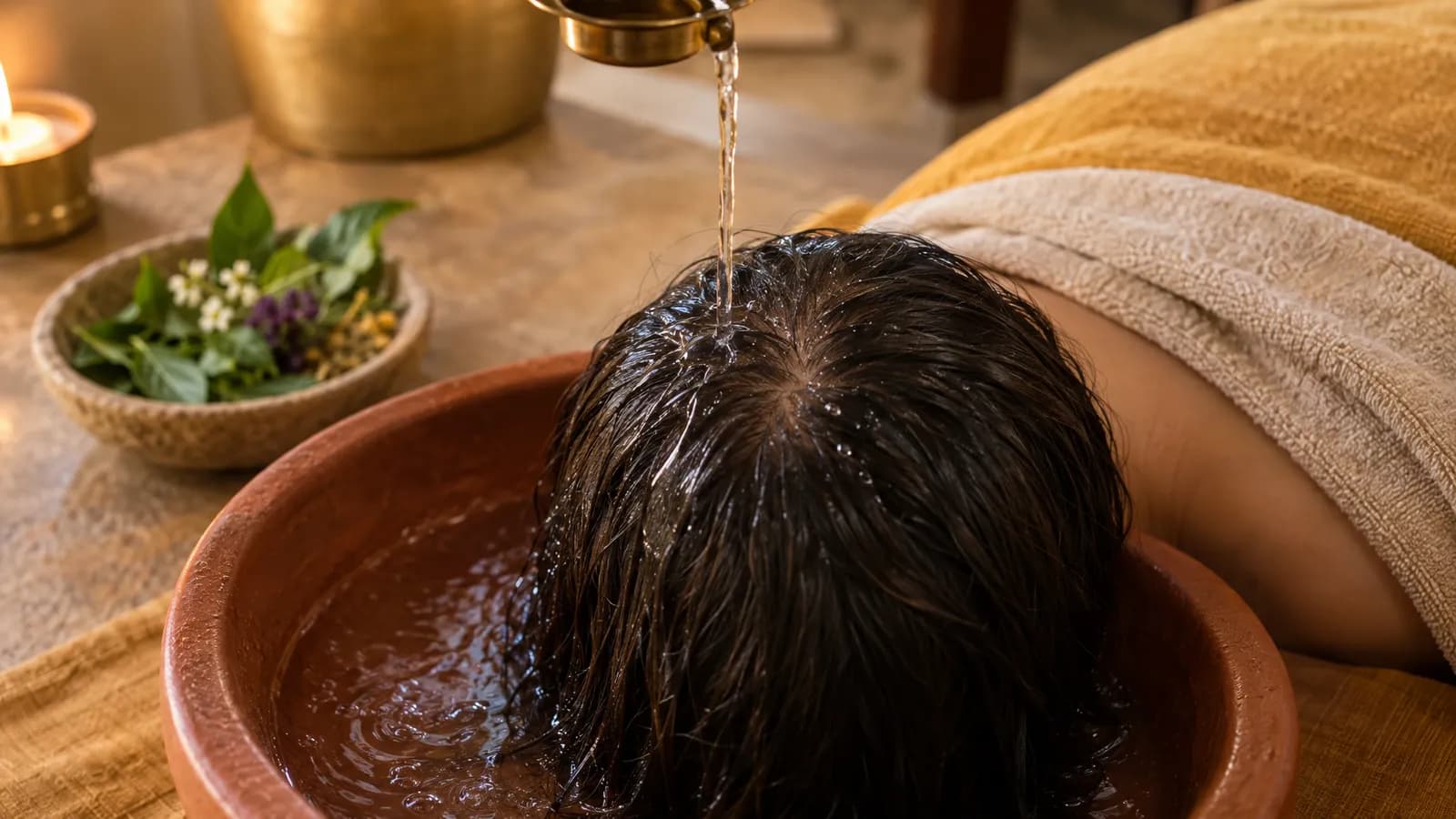
Shanti Dhara Wellness in Palo Alto doesn't offer a standalone marma session. If you're looking for warm-oil bodywork there, the closest option is the Abhyanga Body Treatment (75 minutes, $228; 90 minutes, $268), a full-body warm herbal oil massage. If the lower back is your main concern, Abhyanga + Kati Vasti ($258 for 75 minutes, $298 for 90) pools warm herbal oil over the lower back; get your doctor's clearance first if you have a diagnosed spine condition.
If you're new to Ayurvedic treatments, our first visit guide covers what to expect, and the treatment menu lists current session lengths and prices.
FAQ: Marma Point Therapy
How many marma points are there on the body?
Classical Ayurvedic literature describes 107 marma points, elaborated in the Sushruta Samhita. The points are described as confluences of muscles, vessels, ligaments and tendons, bone and joints (mamsa, sira, snayu, asthi and sandhi). Adhipati, at the top of the skull, is one of the 107.
Is Marma point therapy painful?
It's generally meant to be done with pressure you can tolerate, but practitioners and pressure vary. If anything feels painful, tell the practitioner right away so they can ease off or stop.
How often should I get Marma therapy?
There's no research-based schedule. Ask the practitioner you see, and follow your doctor's advice if you have a diagnosed condition.
Can Marma therapy help with anxiety?
There isn't good clinical evidence that it treats anxiety. Some people find hands-on treatments relaxing, but marma therapy shouldn't replace care from a mental health professional for an anxiety disorder.
Is Marma point therapy the same as acupressure?
No. Both use manual pressure on specific points, but marma follows the 107 points of Ayurvedic texts, while acupressure comes from the Chinese tradition of acupoints along meridians. The maps and the concepts behind them differ.