Abhyanga Massage: Benefits, Process, and Guide
Learn what Abhyanga oil massage is, how it works for each dosha, and what to expect at your first session in Palo Alto.
What Is Abhyanga? The Ayurvedic Oil Massage Explained
Abhyanga (pronounced "ah-bee-YAHN-gah") is a full-body warm oil massage rooted in Ayurveda, the 5,000-year-old Indian medical system. The word comes from Sanskrit: "abhi" means "into" and "anga" means "limb." Literally, it's the practice of anointing every part of the body with oil.
What makes Abhyanga different from a Swedish or deep tissue massage? Three things stand out immediately. First, the oil isn't a lubricant — it's the treatment. In a typical spa massage, a small pump of lotion helps hands glide over muscles. In Abhyanga, warm herbal oil is applied generously across the entire body because the oil itself delivers therapeutic compounds through the skin. Second, the oil is matched to your individual constitution, or "dosha." There's no one-size-fits-all bottle. Third, the stroke patterns follow marma points — 107 energy intersections mapped in Ayurvedic anatomy — rather than targeting muscle knots or fascial tension.
The Charaka Samhita, one of Ayurveda's foundational texts written around 300 BCE, prescribes daily self-massage with warm oil as part of "Dinacharya" (daily routine). It describes Abhyanga as a practice that promotes longevity, improves sleep, strengthens skin, and builds resistance to stress. Modern practitioners have adapted this into professional treatment sessions ranging from 60 to 90 minutes, where a trained Ayurvedic therapist applies dosha-specific herbal oils using rhythmic, flowing strokes.
At Shanti Dhara Wellness in Palo Alto, Abhyanga is the foundational body treatment. It's the starting point most practitioners recommend for first-time clients, and it's also the treatment that repeat clients come back to most consistently.
The Science-Backed Benefits of Abhyanga Massage
Ayurvedic tradition lists dozens of benefits for regular Abhyanga, and modern research is starting to validate many of them. Here's what the evidence supports:
Stress and cortisol reduction. A 2011 study published in the Journal of Alternative and Complementary Medicine found that participants who received Abhyanga showed significant decreases in heart rate and subjective stress scores compared to a control group. The warm oil, rhythmic pressure, and extended skin contact activate the parasympathetic nervous system — the "rest and digest" mode that counteracts the fight-or-flight response most desk workers live in.
Improved circulation. The long, directional strokes used in Abhyanga push blood toward the heart and stimulate lymphatic flow. Clients routinely report feeling warmth in their extremities during and after treatment, even if they came in with chronically cold hands and feet. This circulatory boost is especially relevant for people who sit 8+ hours daily (which describes about 68% of Bay Area tech workers, according to Stanford occupational health data).
Skin nourishment. Sesame oil — the most commonly used Abhyanga base oil — contains linoleic acid, vitamin E, and sesamol (a potent antioxidant). Applied warm and left on the skin, these compounds penetrate the epidermis more effectively than cold topical application. Many clients notice softer, more hydrated skin within days of their first treatment, particularly during dry California fall and winter months.
Better sleep quality. Anecdotal reports are overwhelming on this one: most Abhyanga clients sleep more deeply the night after treatment. The mechanism likely involves the combination of parasympathetic activation, reduced muscle tension, and the grounding effect of warm oil on Vata dosha (which governs the nervous system in Ayurvedic theory).
Joint and muscle support. While Abhyanga isn't sports massage, the warm oil application reduces stiffness and increases range of motion. Shanti Dhara's practitioners frequently see clients with chronic neck and shoulder tension from computer work, and a 75-minute Abhyanga session addresses those areas with sustained, penetrating warmth that cold-pressed massage can't replicate.
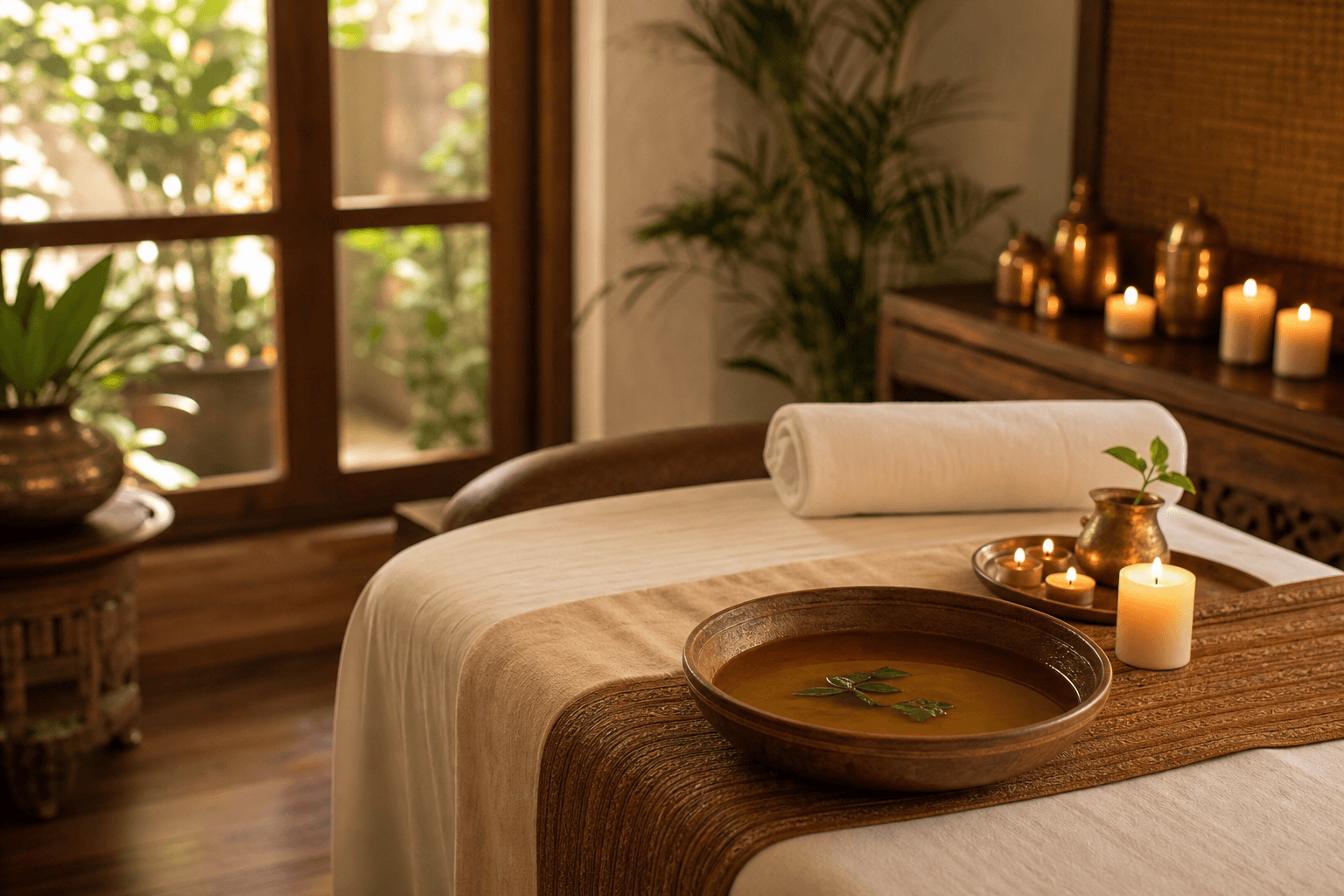
Warm, herb-infused sesame oil is the most commonly used base for Abhyanga — the oil itself is part of the treatment, not just a lubricant.
How Dosha Determines Your Abhyanga Experience
One of the biggest misconceptions about Abhyanga is that every session is the same. It's not. The oil, pressure, speed, and focus areas all change based on your Ayurvedic constitution, or dosha. At Shanti Dhara, every Abhyanga treatment starts with a brief dosha assessment — your practitioner asks about your sleep, digestion, stress patterns, skin type, and energy levels, then observes physical markers like skin texture, body temperature, and build.
Here's how the three doshas shape your session:
- Vata (air and space). Vata types tend toward dry skin, cold extremities, anxiety, and restless sleep. Their Abhyanga uses warm sesame oil (the heaviest, most grounding base oil), with slower strokes and heavier pressure. The session emphasizes the lower body — hips, legs, and feet — because Vata accumulates in the pelvic region. Herbs like ashwagandha and bala are often infused in the oil. If you're a tech professional who runs cold, sleeps poorly, and overthinks, you're likely Vata-dominant.
- Pitta (fire and water). Pitta types run warm, have sensitive or reactive skin, and tend toward irritability under stress. Their Abhyanga uses cooling coconut or sunflower oil at a moderate (not hot) temperature. Strokes are moderate in speed and pressure. Cooling herbs like brahmi and neem may be infused. The session gives extra attention to the abdomen and liver area, where Pitta accumulates. Competitive, driven personalities who feel overheated or snappy often test Pitta-dominant.
- Kapha (earth and water). Kapha types have naturally oily skin, heavier builds, and a tendency toward sluggishness or congestion. Their Abhyanga uses lighter oils like safflower or mustard, applied warm with vigorous, stimulating strokes. Less oil is used overall. The session emphasizes the chest, upper back, and head — where Kapha stagnates. Energizing herbs like eucalyptus and ginger may be added. If you feel heavy, unmotivated, or congested despite sleeping plenty, Kapha may be your primary dosha.
Most people aren't purely one dosha. Dual-dosha constitutions (like Vata-Pitta or Pitta-Kapha) are common, and your practitioner blends the approach accordingly. The dosha assessment takes about 5-10 minutes and doesn't require any preparation on your part.
What Happens During an Abhyanga Session: Step by Step
If you've never had Abhyanga before, knowing the timeline helps you relax into it rather than wondering what comes next. Here's the typical flow at Shanti Dhara Wellness:
Minutes 0-10: Arrival and assessment. You'll change into a robe or drape and sit with your practitioner for the dosha assessment. They'll ask about your current state — not just your constitution, but how you're feeling today. Had a terrible night of sleep? They'll adjust the session to emphasize calming strokes. Feeling sluggish? They'll use more invigorating techniques. This isn't a scripted questionnaire; it's a conversation that shapes the next 60-75 minutes, as detailed in our preparation guide.
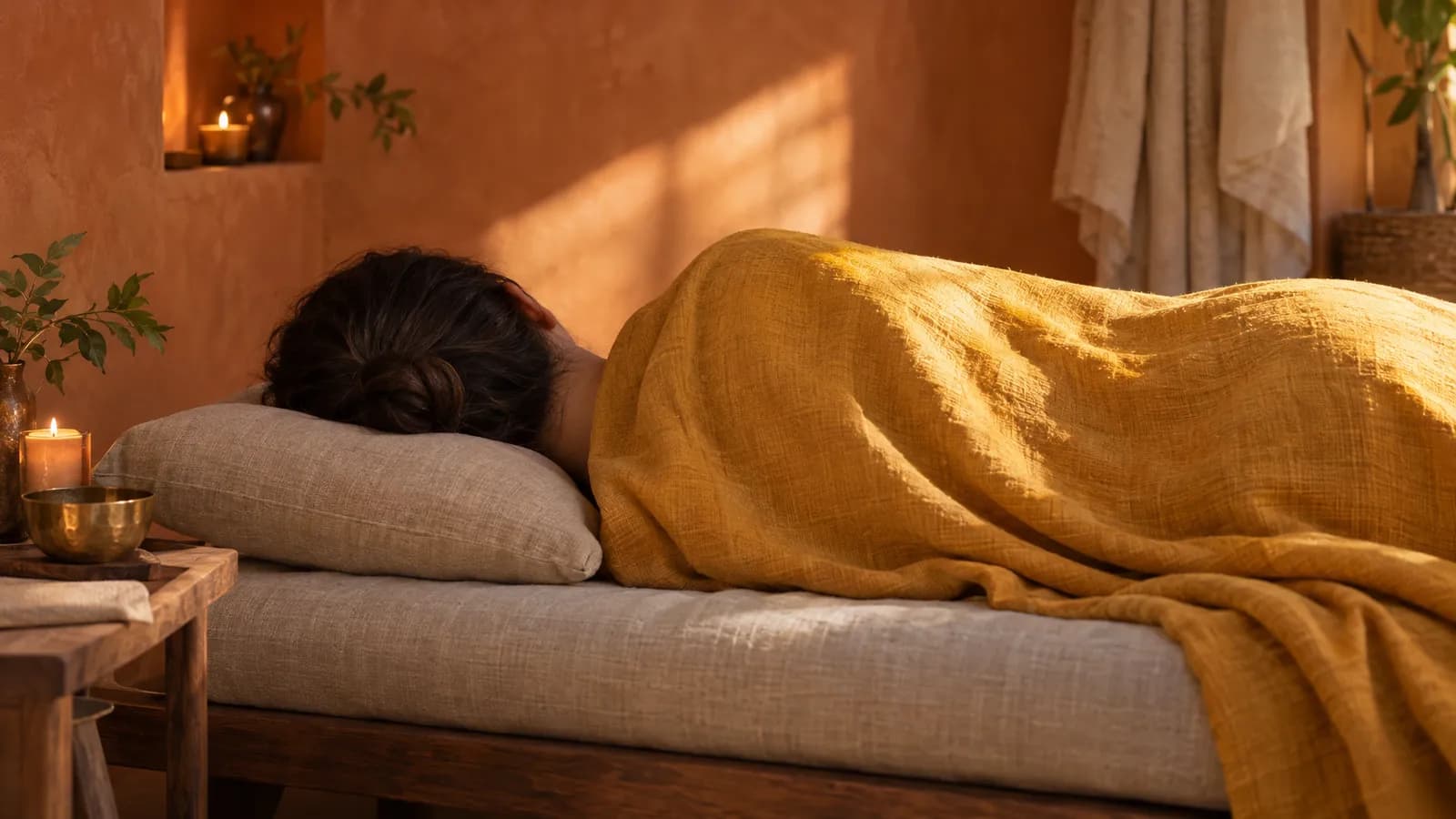
Minutes 10-60: The massage. You'll lie on a massage table designed to handle oil (these aren't standard drape-covered tables; they have channels for oil drainage). Your practitioner warms the selected oil to about body temperature, then begins with long, rhythmic strokes. Unlike Swedish massage, where pressure varies by body part, Abhyanga pressure stays consistent within your dosha profile. Vata clients get deep, slow strokes throughout; Pitta clients get moderate, steady pressure; Kapha clients get brisk, vigorous work. The practitioner will massage head to toe, including the scalp, face, ears, hands, and feet — all areas that correspond to marma points. Most clients report entering a deeply relaxed, almost meditative state 15-20 minutes in. Don't be surprised if you drift off.
Minutes 60-75: Rest and transition. After the massage, you'll rest on the table for 5-10 minutes with a warm towel over you. The oil continues to absorb during this time. Shanti Dhara's practitioners often leave a small amount of oil on the skin intentionally — you don't shower immediately after Abhyanga the way you might after a lotion-based massage. The oil keeps working for hours. You'll receive instructions for home care before you leave.
What to Expect After: The Day-After Effect
Most clients notice the effect of Abhyanga doesn't peak during the session — it peaks 6 to 12 hours later. Here's what's common:
Deep sleep that night. This is the most consistent post-Abhyanga effect. Clients who normally wake multiple times or take 30+ minutes to fall asleep often report single-wake nights or falling asleep within minutes. The effect seems strongest after your first few sessions and can diminish slightly if you do weekly Abhyanga, though sleep quality typically remains better than baseline.
Skin softness for days. The oil doesn't wash off completely after one shower. You'll notice residual softness and hydration for 2-4 days, especially if you use gentle, non-stripping soap. Some clients describe their skin as "glowing," which likely reflects improved circulation plus the antioxidant compounds in the oil.
Increased energy (for Vata and Kapha types). Vata clients often describe feeling "grounded but awake" the next day — less scattered, more present. Kapha clients report reduced sluggishness and clearer sinuses. Pitta types may not notice an energy shift, but they often report feeling less irritable or reactive to stress.
Temporary oiliness. Your skin and hair will feel oily for 12-24 hours, even after showering. This is normal and intentional. If you have a major event the next day, schedule Abhyanga accordingly. Most clients find the tradeoff (oily hair for one day, amazing sleep and skin for three) worth it.
Occasional detox symptoms. A small percentage of clients — usually those with high Pitta or significant toxin buildup — report mild headaches, increased thirst, or digestive shifts the day after Abhyanga. This is considered a normal part of the body processing and eliminating ama (toxins in Ayurvedic terms). Drinking extra water the day after your session minimizes this.
Who Should Get Abhyanga (and Who Shouldn't)
Abhyanga is safe and beneficial for most people, but there are a few situations where it's not recommended or should be modified:
Ideal candidates:
- People with chronic stress, anxiety, or insomnia (Vata imbalance)
- Desk workers with stiff joints, poor circulation, or cold extremities
- Anyone with dry, flaky, or aging skin
- Individuals recovering from burnout or overwork (Pitta exhaustion)
- People with seasonal sluggishness or congestion (Kapha accumulation)
Not recommended for:
- Anyone with an active fever, infection, or acute illness
- People in the first trimester of pregnancy (second and third are usually fine with practitioner approval)
- Those with severe skin conditions like eczema flare-ups or open wounds
- Individuals with uncontrolled high blood pressure (warm oil can temporarily increase circulation)
- Anyone undergoing cancer treatment without oncologist clearance
If you're unsure, Shanti Dhara's intake form asks about all relevant health conditions, and your practitioner will review it before your first session. They can often modify the session (cooler oil, lighter pressure, avoiding certain body areas) to work with most conditions.
Abhyanga vs. Other Massage Types: Key Differences
Clients often ask how Abhyanga compares to other bodywork modalities. Here's the short version:
Abhyanga vs. Swedish massage: Swedish uses lotion for glide and focuses on muscle relaxation through kneading and percussion. Abhyanga uses generous warm oil as the therapy itself, with rhythmic strokes that follow energetic pathways rather than muscle groups. If you want muscle knot release, Swedish is more direct. If you want systemic stress relief and skin nourishment, Abhyanga wins.
Abhyanga vs. deep tissue: Deep tissue targets chronic muscle tension with intense, focused pressure. Abhyanga uses moderate, consistent pressure tailored to your dosha. Deep tissue can leave you sore; Abhyanga leaves you deeply relaxed. Some clients alternate between the two — deep tissue for specific problem areas, Abhyanga for overall maintenance.
Abhyanga vs. Thai massage: Thai massage is done clothed, on a mat, with stretching and acupressure. Abhyanga is done unclothed, on a table, with warm oil. Thai is invigorating and flexibility-focused; Abhyanga is calming and circulation-focused. They serve different purposes.
Abhyanga vs. aromatherapy massage: Aromatherapy adds essential oils to a standard massage for mood effects. Abhyanga uses herb-infused base oils chosen for constitutional effects, not just scent. The herbal compounds in Abhyanga oil (like ashwagandha or brahmi) have documented physiological effects beyond aroma.
How Often Should You Get Abhyanga?
Traditional Ayurvedic texts recommend daily self-massage with warm oil, but few modern professionals have time for that. For professional Abhyanga sessions at a studio like Shanti Dhara, here's the typical guidance:
- Once a month: Maintenance for generally healthy people. Keeps skin soft, sleep consistent, stress manageable.
- Every 2 weeks: Ideal for people with moderate Vata imbalance (anxiety, restless sleep, dry skin) or Kapha sluggishness. Most Shanti Dhara regulars fall into this cadence.
- Weekly: Recommended during times of acute stress, seasonal transitions (especially fall and early winter, when Vata peaks), or when recovering from burnout. Some clients do a 4-6 week intensive series, then drop to monthly.
- Seasonally: A minimum approach. Get Abhyanga at the start of each season to help your body adapt to weather shifts. This aligns with Ayurvedic ritucharya (seasonal routine) principles.
Your practitioner will suggest a frequency based on your dosha assessment and current needs. There's no hard rule.
Preparing for Your First Abhyanga Session
A few practical tips make the experience smoother:
- Don't eat a heavy meal within 2 hours of your session. A light snack is fine, but a full stomach makes lying face-down uncomfortable and can interfere with the relaxation response.
- Wear clothes you don't mind getting a bit oily. Even though you'll change into a robe, some oil may transfer to your clothing afterward. Dark, loose fabrics are safest.
- Plan to shower later, not right after. You'll leave with oil on your skin. Most practitioners recommend waiting at least 2-4 hours before showering to let the oil fully absorb. If you must shower sooner, use warm water and gentle soap, and don't scrub aggressively.
- Block out the rest of your day if possible. Abhyanga isn't a "quick refresh and back to work" treatment. It's deeply sedating. If you can, schedule it on a day when you can go home, rest, and let the effects integrate.
- Hydrate well before and after. The oil stimulates circulation and lymphatic drainage, which can dehydrate you slightly. Drink extra water the day of and day after your session.
Shanti Dhara's intake form asks about allergies, skin sensitivities, and health conditions. Fill it out completely. If you're allergic to sesame or nuts, they'll use alternative oils. If you have a specific area of discomfort (frozen shoulder, lower back pain), mention it — the practitioner can adjust the session without losing the Abhyanga structure.
Frequently Asked Questions
Will I be fully undressed during Abhyanga?
Yes, Abhyanga is performed without clothing to allow full-body oil application. You'll be draped with towels for modesty and warmth, with only the body part being massaged exposed at any time. If you're uncomfortable with full undressing, let your practitioner know — they can work with undergarments in place, though oil coverage will be less complete.
What kind of oil is used, and can I choose?
The base oil is chosen based on your dosha. Sesame oil is most common (for Vata), but coconut, sunflower, safflower, and mustard oils are also used. Herbal infusions are added depending on your needs. You don't pick from a menu, but you can request changes if you have allergies or strong preferences.
Is Abhyanga safe during pregnancy?
Generally yes, especially in the second and third trimesters. First trimester is more cautious due to increased miscarriage risk with any bodywork. Always inform your practitioner if you're pregnant. They'll adjust positioning (side-lying instead of face-down), avoid certain marma points, and use pregnancy-safe oils.
Can I do Abhyanga at home, or does it require a professional?
You can absolutely do simplified self-Abhyanga at home. Warm about ¼ cup of sesame oil (or your dosha-appropriate oil) to body temperature, apply it all over your body with long strokes on limbs and circular motions on joints, let it sit for 10-20 minutes, then shower. It won't replicate the marma point expertise of a professional session, but it's still beneficial. Many Shanti Dhara clients do self-Abhyanga between professional sessions.
How is Abhyanga different from a regular oil massage?
Three main differences: (1) The oil is the treatment, not just a lubricant. It's chosen for your constitution and often herb-infused. (2) The stroke patterns follow Ayurvedic energetic pathways (marma points) rather than muscle anatomy. (3) The goal is systemic balance and nervous system regulation, not localized muscle tension release. A Swedish massage might target your tight shoulders; Abhyanga treats your whole system, which may ease your shoulders as a side effect.
Will I feel results immediately, or does it take multiple sessions?
Most people feel deeply relaxed and sleep better the first night after Abhyanga. Skin softness is noticeable within 1-2 days. For more systemic effects — like reduced baseline anxiety, improved digestion, or consistent energy — most practitioners suggest 3-4 sessions spaced 1-2 weeks apart. The effects are cumulative.
Can Abhyanga help with specific conditions like arthritis or eczema?
Abhyanga isn't a medical treatment, but many clients with arthritis report reduced stiffness and better range of motion after regular sessions. For eczema, it depends on the severity. Mild, stable eczema may benefit from the skin hydration, but active flare-ups should heal first. Always consult your doctor if you have a chronic condition, and inform your Abhyanga practitioner so they can adjust the approach.
Pricing and booking: see current prices, session lengths and packages for Abhyanga massage in Palo Alto.
About the author
Ruby
Owner, Shanti Dhara Wellness
Owner of Shanti Dhara Wellness, a MedSpa in Palo Alto, CA offering traditional Ayurvedic treatments including Abhyanga body treatments, Shirodhara, and herbal scalp therapies.