What Abhyanga is
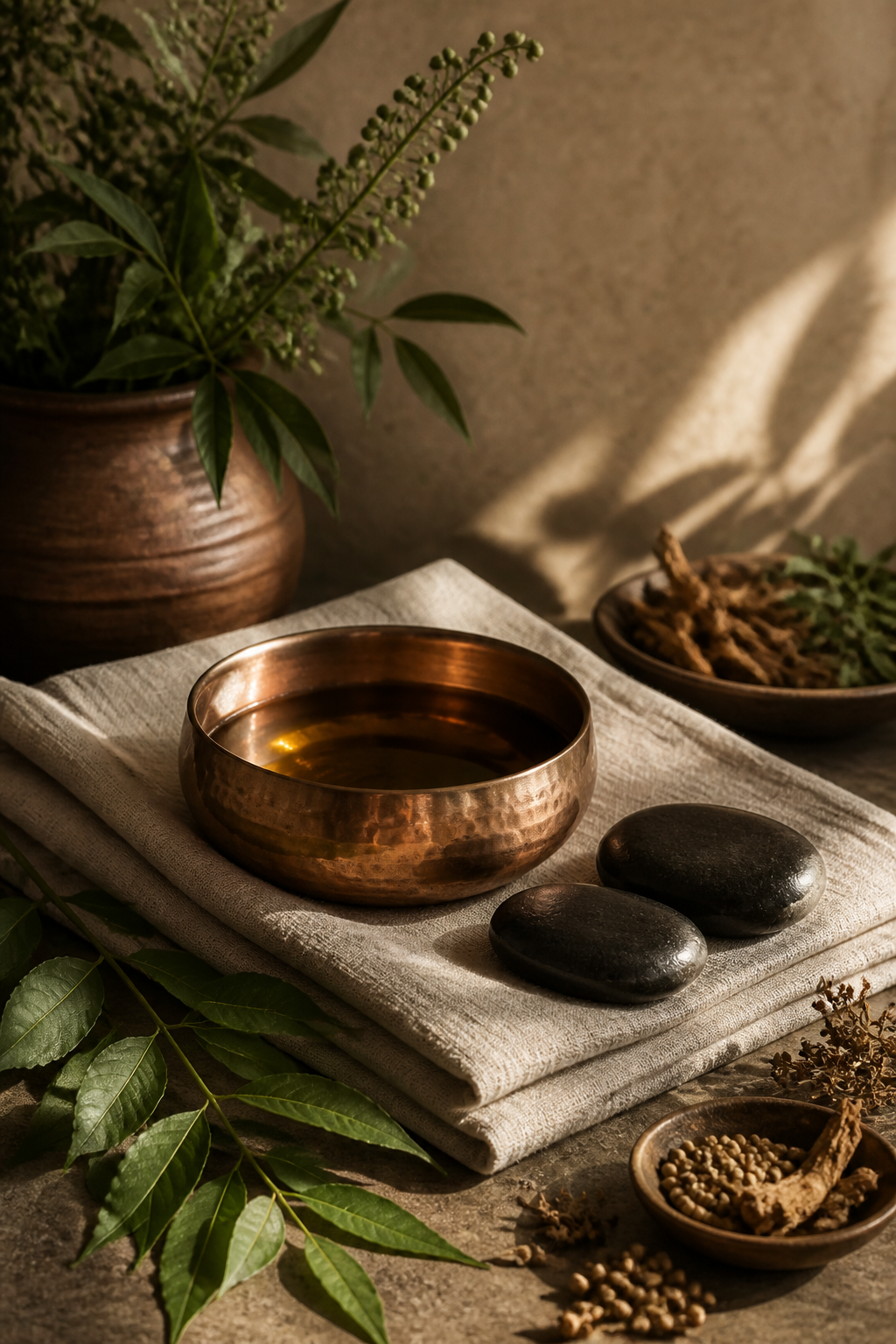
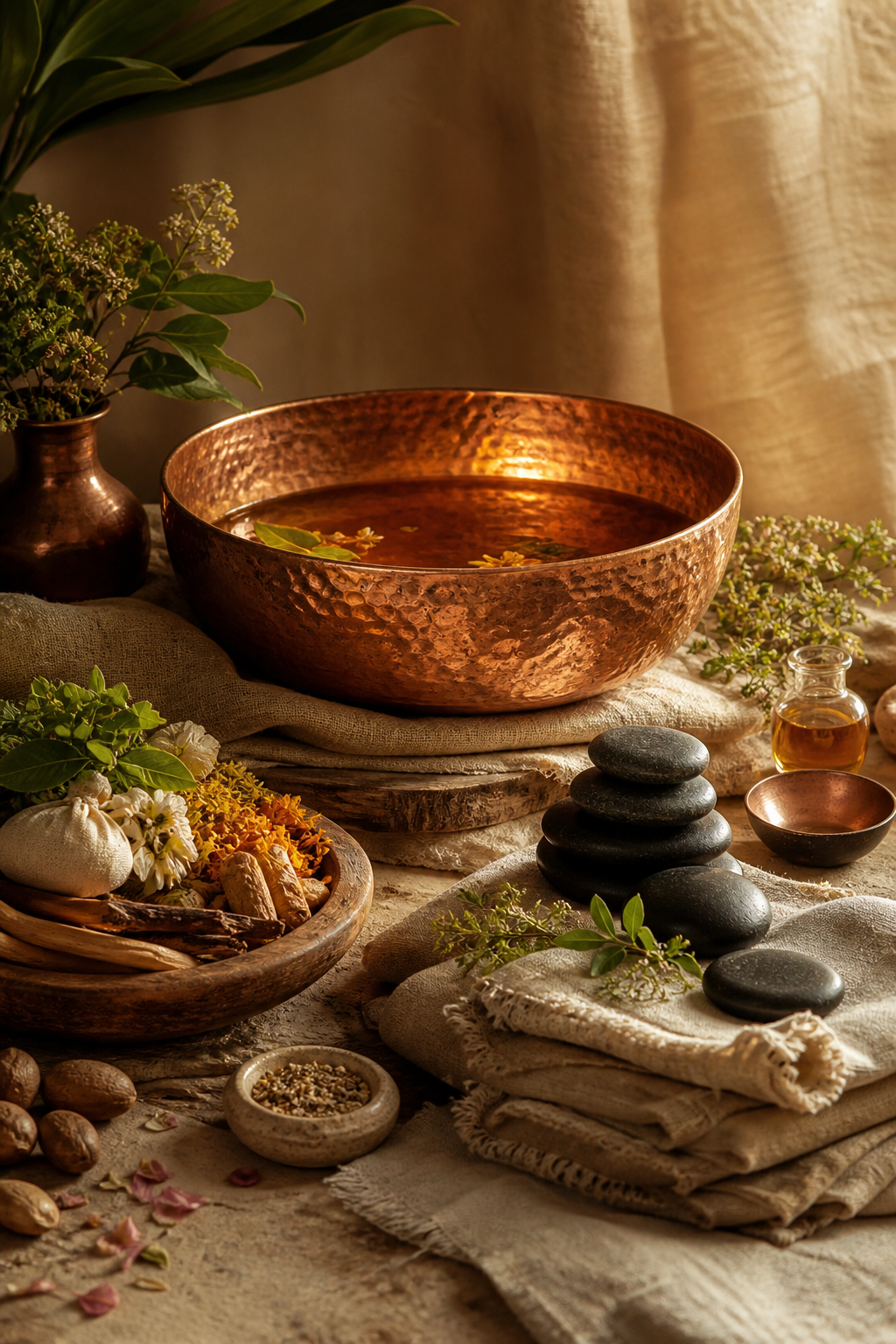
Kerala Ayurveda Academy defines Abhyanga as the Ayurvedic art of massage with healing oils. Sesame and coconut oils have been used for it in India for thousands of years: sesame is considered warming, and coconut cooling. Our menu describes the treatment in Ayurvedic terms as a flowing warm herbal oil massage that balances the doshas and enhances ojas, or vitality.
What sets it apart is the warm herbal oil, used generously and meant to stay on the skin, and its roots in Ayurveda, which frames the massage in terms of the doshas. The strokes are long and flowing, and the aim is deep relaxation rather than working specific knots. It is not a deep-tissue massage, which NCCIH lists among the more vigorous types of massage.
The options
- Abhyanga, 75 minutes, $228 / 90 minutes, $268. The full-body oil treatment. For a first visit, the 90-minute session gives a slower pace with more time on each area.
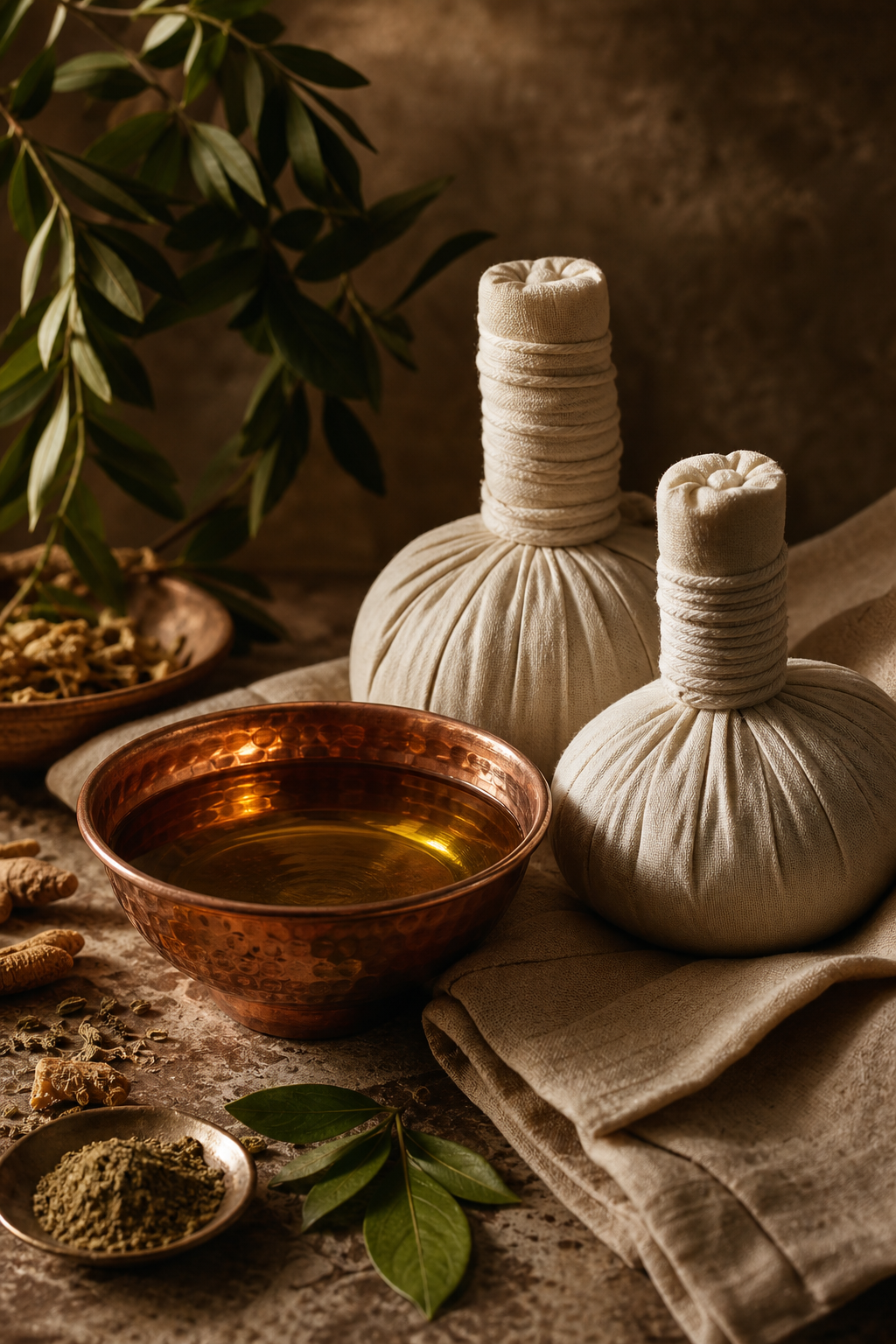
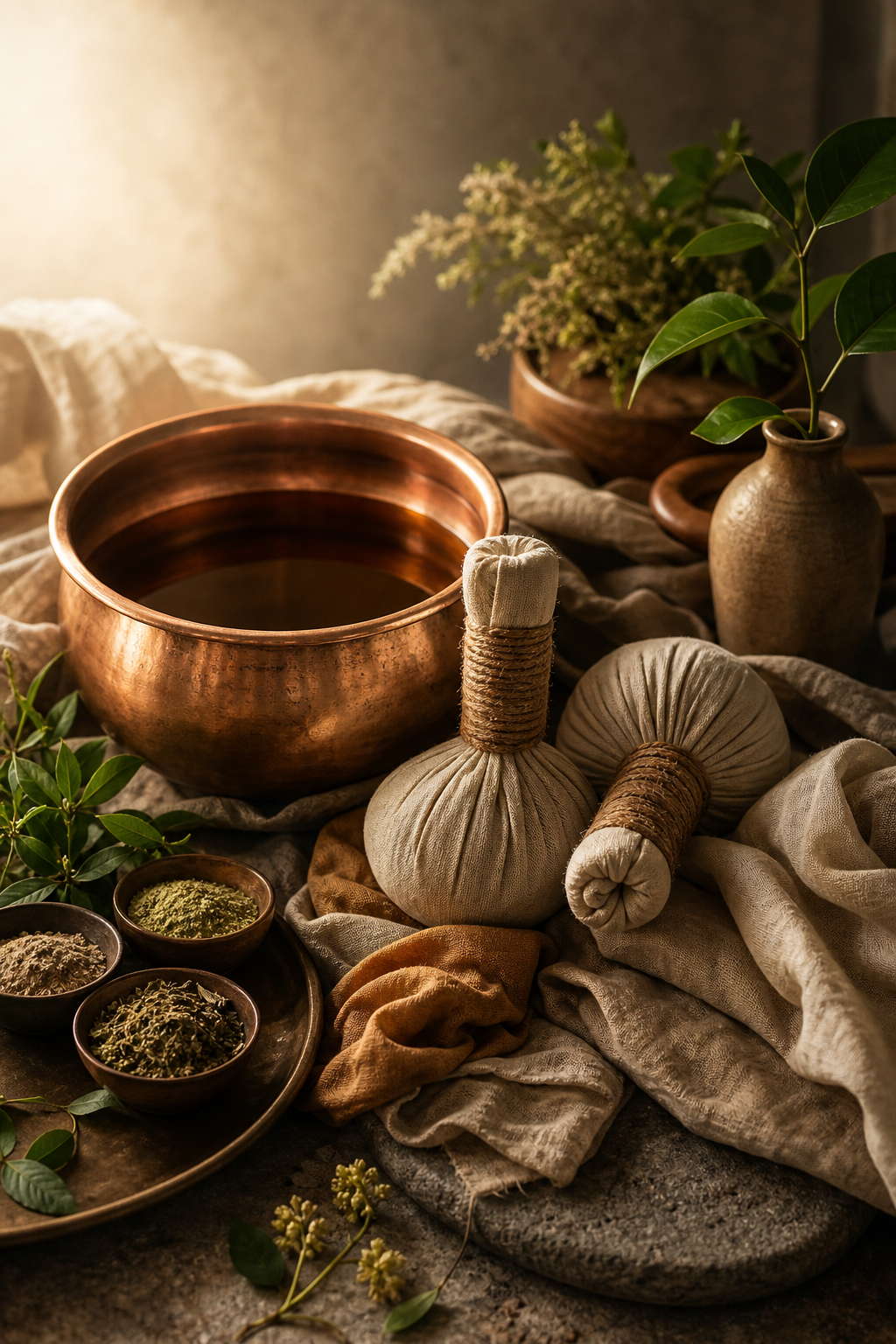
- Abhyanga + Podikizhi, $258 / $298. Combines warm-oil massage with warm cloth bundles of powdered herbs gently pressed across the body. Chosen for muscle stiffness and joint discomfort.
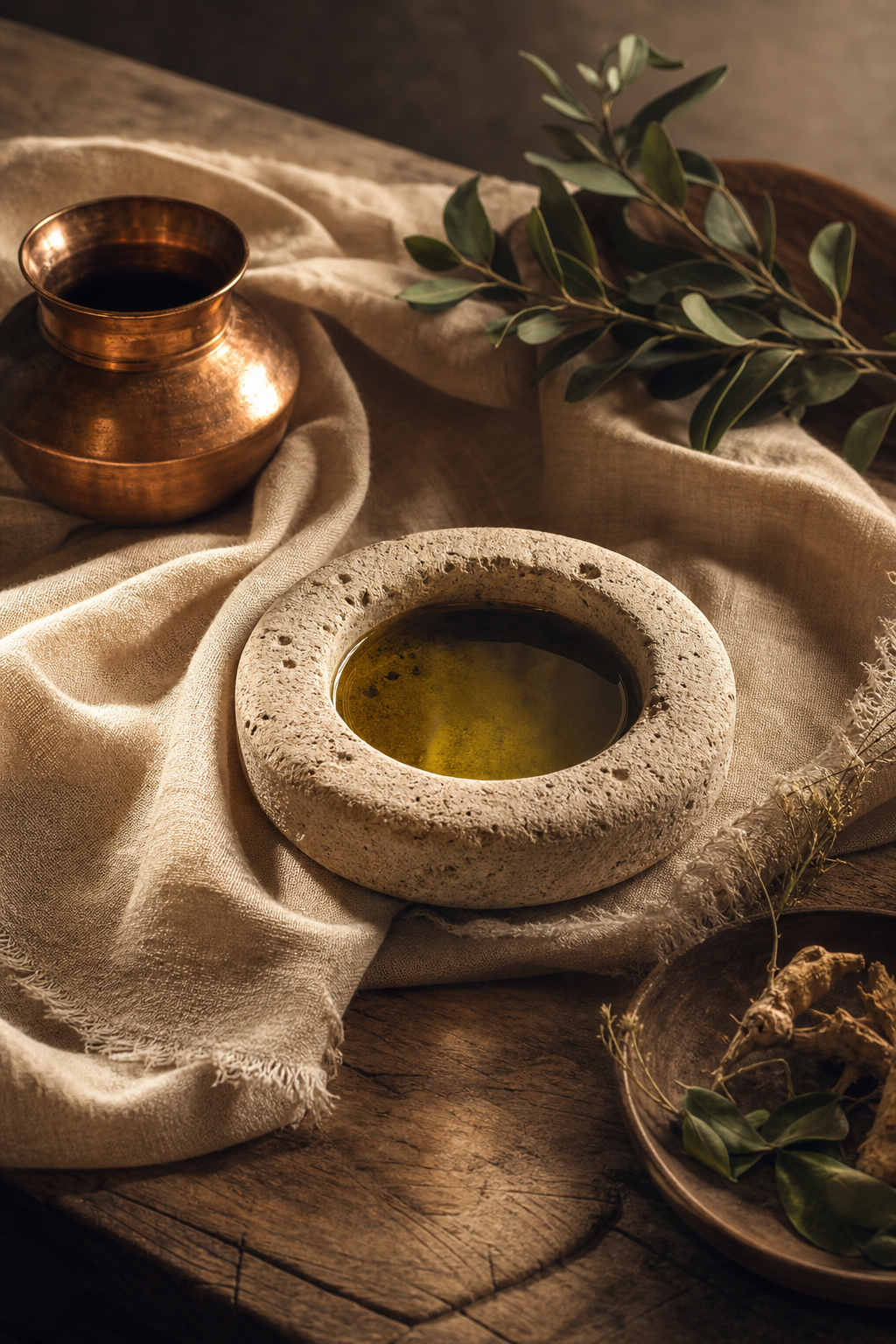
- Abhyanga + Kati Vasti, $258 / $298. Adds warm oil held over the lower back inside a dough ring. Chosen specifically for the lower back.
Abhyanga is often paired with Shirodhara, body treatment first. Researchers who studied Shirodhara note that classical practice treats Abhyanga as a preparatory step before it. Our Shirodhara vs Abhyanga and Abhyanga vs Podikizhi guides go deeper on each choice.
What the research says
There isn't much. The main study is a 2011 pilot in which 10 women and 10 men had a one-hour Abhyanga. Self-reported stress and heart rate fell right after the massage, and blood pressure dropped only in the participants who started with borderline-high readings. There was no comparison group, and the author called for more rigorous research. A 2026 review of Ayurvedic sleep treatments added that Abhyanga and Shirodhara trials are small and hard to blind, so the effects of warmth, touch and attention can't be separated from the treatment itself.
For massage in general, NCCIH reports only short-term benefit for neck, shoulder and low-back pain, from studies of limited quality. So book Abhyanga to rest and unwind. It is a wellness therapy, not treatment for a diagnosed condition, and it sits alongside your doctor's care rather than replacing it.
Who should wait or check first
Skip it if you have a fever, an acute infection or broken skin. Tell us before booking if you are pregnant, take blood thinners or are being treated for a circulatory condition. NCCIH describes the risk of harm from massage as low, but notes that rare serious problems, including blood clots, nerve injury and fractures, have been reported. Sesame is one of the nine major food allergens the FDA recognizes, so mention any sesame or nut allergy.
Before and after your treatment
A generous amount of warm oil is used, and it is meant to stay on the skin to keep absorbing. Wear clothes you don't mind oiling and plan a shower later rather than immediately.
Oil massage at home
Daily self-Abhyanga with sesame or coconut oil is a long-standing home practice in India, and Kerala Ayurveda Academy suggests sesame for colder seasons and people who run cold, and coconut for warmer months and people who run hot. If you have sensitive skin or allergies, try a new oil on a small patch of skin first.
Where to find us
Shanti Dhara Wellness is at 2875 Middlefield Rd, Suite 8, 2nd floor, Palo Alto, CA 94306. Open Tuesday and Sunday 10:00 am to 4:30 pm, and Wednesday through Saturday 10:30 am to 6:00 pm; closed Mondays. Book from the treatment menu or call (650) 283-9121. All of our body treatments are compared on the Ayurvedic massage page.