Ayurvedic Massage Oils: How to Choose for Your Dosha

Complete guide to Ayurvedic massage oils—sesame, coconut, sunflower, almond—and how to match the right oil to your Vata, Pitta, or Kapha constitution.

July 2, 2026
Ruby
ayurvedic oilsmassage oil guidevata pitta kaphasesame oil massageayurvedadosha types

Why Oil Choice Matters in Ayurvedic Massage

In Ayurvedic medicine, the oil isn't just a lubricant—it's the primary therapeutic agent. When you receive an Abhyanga massage in Palo Alto or practice self-massage at home, the type of oil matters as much as the technique. Each oil has unique properties: heating or cooling, heavy or light, nourishing or stimulating. These properties interact with your dosha (your mind-body constitution) to either bring you into balance or, if mismatched, aggravate existing imbalances.

Think of it this way: if you're already feeling hot, inflamed, and irritable (signs of excess Pitta), slathering on warming sesame oil will make things worse. You'll feel itchy, overheated, and more agitated. But if you use cooling coconut oil, your skin and nervous system calm down. The same logic applies to Vata (dry, anxious, scattered) and Kapha (heavy, sluggish, congested) imbalances. The right oil anchors you. The wrong oil throws you further off.

Ayurvedic texts describe oils as "sneha," which translates to both "oil" and "love." The act of massage with warm oil is considered one of the most loving, nourishing practices you can offer yourself or receive from a practitioner. At Shanti Dhara Wellness, every massage begins with a dosha consultation to select the ideal oil for your current state—not just your baseline constitution, but how you're feeling today. Stress, season, diet, sleep, and climate all shift which oil serves you best.

This guide breaks down the six most common Ayurvedic massage oils—sesame, coconut, sunflower, almond, jojoba, and castor—plus herb-infused variations. You'll learn which oils suit each dosha, how to choose based on season and symptoms, and how to properly warm and apply them at home. By the end, you'll know exactly which oil to reach for whether you're booking a professional treatment at the Shanti Dhara treatment menu or practicing self-care in your bathroom.

Sesame Oil: The Classic Vata Balancer

Sesame oil is the gold standard in Ayurveda, mentioned in virtually every classical text as the most versatile and nourishing oil for massage. It's the default choice for Vata types and anyone experiencing Vata imbalance: dry skin, anxiety, insomnia, cold hands and feet, constipation, restless mind, joint cracking. Sesame oil is warming, grounding, and deeply penetrating. It soothes the nervous system and lubricates tissues—exactly what Vata needs.

The oil is rich in antioxidants (sesamin, sesamolin, vitamin E) that reduce inflammation and oxidative stress. A 2023 study in the Journal of Ethnopharmacology found that topical sesame oil reduced markers of inflammation in arthritis patients by 26% after six weeks. The oil's molecular structure allows it to penetrate multiple layers of skin, carrying its medicinal properties deep into joints and muscles.

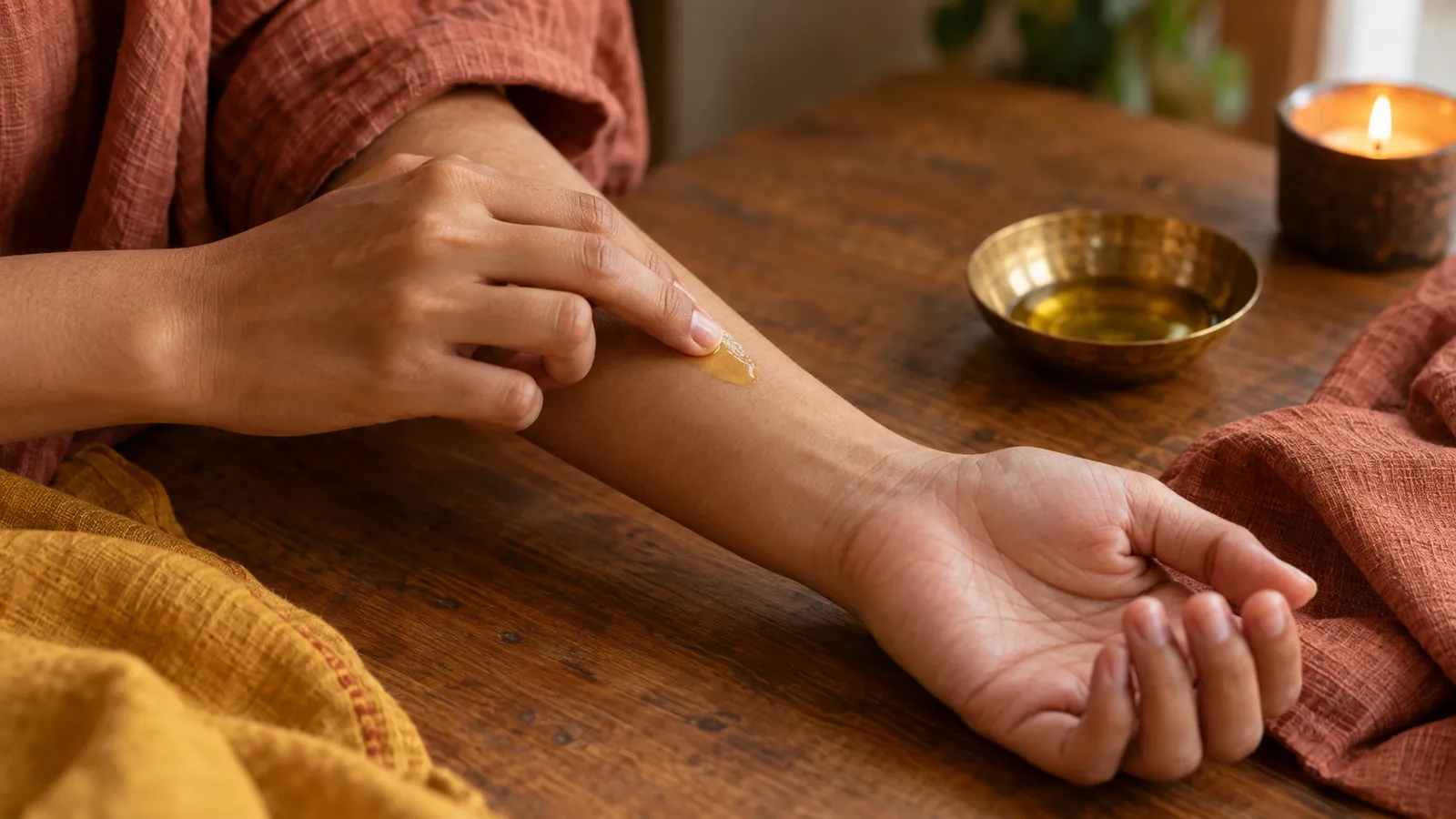
For self-massage, use unrefined, organic sesame oil from a health food store (not the toasted kind you cook with). Warm it gently in a bowl over hot water or in a bottle under warm tap water—never microwave, which destroys some of the beneficial compounds. The oil should feel pleasantly warm to the touch, not hot. Apply generously, using long strokes on limbs and circular motions on joints. Let it soak in for 10-20 minutes before showering.

Sesame oil works year-round but is especially valuable in fall and winter when Vata season peaks (cold, dry, windy weather). If you live in the Bay Area where fog and wind dominate much of the year, sesame oil can be your daily go-to. However, if you're a Pitta type in summer or dealing with heat-related symptoms (rashes, acne, hot flashes), sesame oil may feel too heavy and warming. In that case, switch to coconut or sunflower.

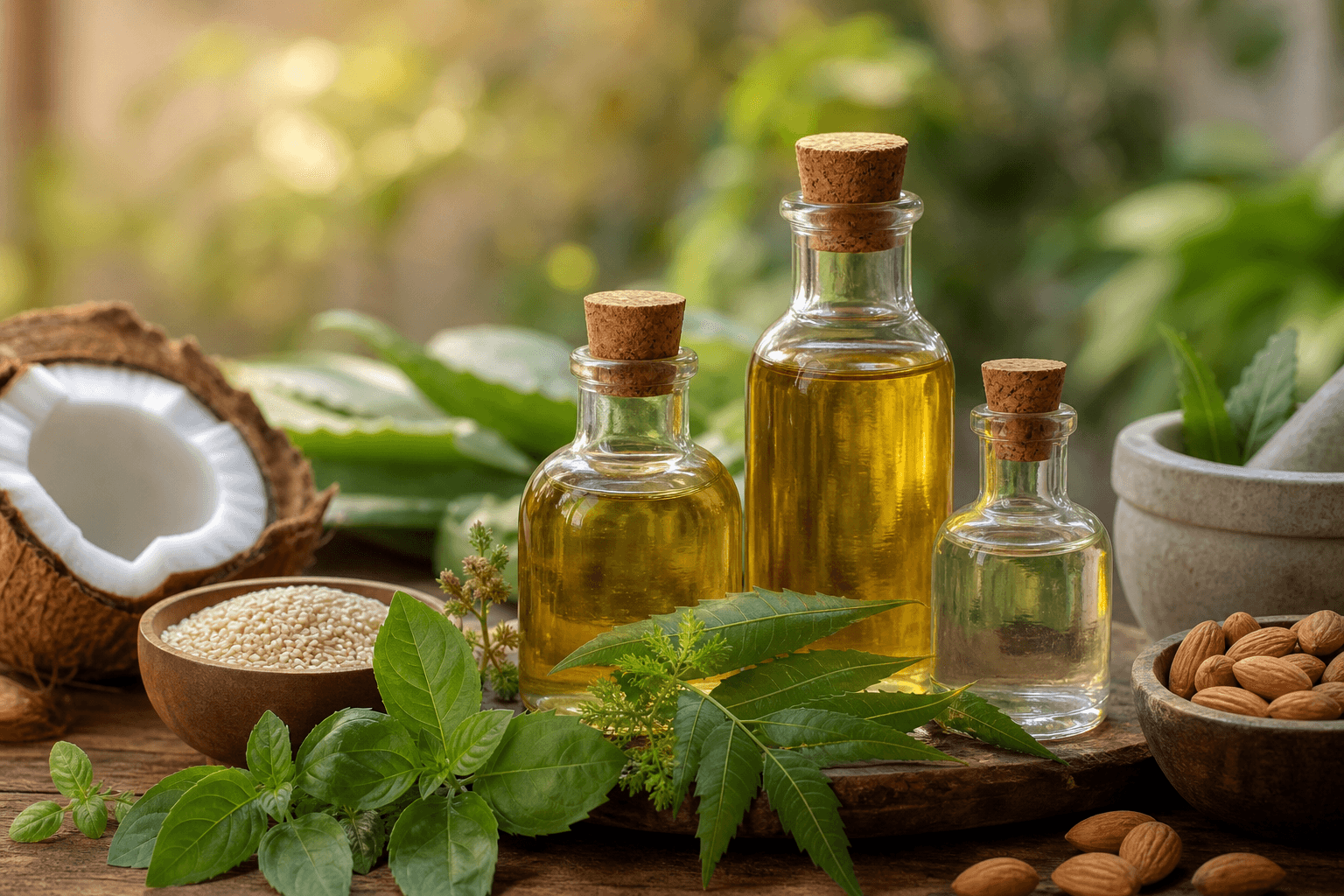
Bottles of different Ayurvedic massage oils displayed with herbs

Coconut Oil: Cooling Relief for Pitta

Coconut oil is the go-to oil for Pitta types and anyone experiencing heat-related symptoms: inflammation, skin irritation, anger, hot flashes, acid reflux, redness, or burning sensations. It's cooling, soothing, and light enough that it won't clog pores or feel heavy on the skin. If you're prone to breakouts or rashes, coconut oil is a safer bet than sesame. It calms both the skin and the mind.

The oil is naturally antimicrobial thanks to lauric acid, which makes up about 50% of its fatty acid profile. This is why coconut oil is often recommended for people with acne, eczema, or fungal skin conditions. A 2022 study published in Dermatologic Therapy found that virgin coconut oil improved skin barrier function and reduced inflammation in patients with atopic dermatitis within two weeks of daily application.

Coconut oil is solid at room temperature, so you'll need to warm it before use. Scoop a few tablespoons into a small bowl and place it over warm water, or hold the jar under hot tap water until it melts. The melted oil should feel cool or neutral to the touch—not hot. Apply it to slightly damp skin after a shower for better absorption. It absorbs faster than sesame oil, so you may need less time before rinsing.

Use coconut oil in spring and summer, or anytime you're feeling overheated. It's ideal for Pitta-dominant people, but Vata types can use it during hot weather to avoid aggravating heat. Kapha types should generally avoid coconut oil—it's too heavy and cooling for their already sluggish, cold constitution. If you're a Kapha type dealing with acne (which can happen), use a lighter oil like sunflower or jojoba instead.

At Shanti Dhara, coconut oil is often blended with cooling herbs like neem, brahmi, or rose for extra Pitta-pacifying effects. If you're making your own oil at home, you can infuse coconut oil with rose petals or mint by gently heating the oil with the herbs over low heat for 20-30 minutes, then straining. This creates a custom blend that amplifies the cooling properties.

Sunflower and Almond Oils: Balanced Options for All Doshas

Sunflower oil is a neutral, light oil that works for all three doshas. It's slightly warming but not as much as sesame, slightly cooling but not as much as coconut. This makes it a safe choice when you're unsure of your dosha or when you're experiencing a mixed imbalance. Sunflower oil is especially good for Pitta types who need some warmth (like in winter) but can't tolerate sesame's intensity.

The oil is high in linoleic acid, an omega-6 fatty acid that supports skin barrier function and reduces transepidermal water loss (TEWL)—the rate at which your skin loses moisture. A 2024 study in Pediatric Dermatology found that sunflower oil improved skin hydration and reduced eczema severity in infants better than mineral oil. It's gentle, non-irritating, and absorbs relatively quickly.

Almond oil (sweet almond, not bitter) is another versatile option. It's nourishing like sesame but lighter and less heating, making it suitable for all doshas with a slight edge for Vata and Pitta. Almond oil is rich in vitamin E, oleic acid, and proteins that soften and strengthen the skin. It's particularly good for facial massage and delicate areas because it's hypoallergenic and non-comedogenic (won't clog pores).

Both oils are excellent for people new to Ayurvedic self-massage who don't yet know their dosha. They're mild enough that you're unlikely to aggravate any imbalance while you figure out what works best. If you're getting professional Abhyanga at Shanti Dhara and you're unsure about oil choice, mention that you want a neutral option—sunflower or almond are likely candidates.

One caveat: if you have a nut allergy, avoid almond oil entirely and stick with sunflower, safflower, or jojoba. Always patch-test a new oil on your inner forearm before using it all over your body, especially if you have sensitive skin or a history of allergies.

Jojoba and Castor Oils: Specialty Choices

Jojoba oil isn't technically an oil—it's a liquid wax ester that closely mimics human sebum (the oil your skin naturally produces). This makes it incredibly skin-friendly. It absorbs quickly, doesn't clog pores, and works for all skin types, including acne-prone and oily skin. Jojoba is neutral to slightly cooling, making it a good choice for Pitta and Kapha types, though Vata types may find it too light for full-body massage.

Jojoba is ideal for facial massage, scalp treatments, and targeted application on inflamed areas. It's anti-inflammatory, antimicrobial, and won't oxidize or go rancid (unlike most plant oils). If you're practicing daily self-massage and need an oil that won't stain your clothes or feel heavy, jojoba is a smart option. However, it's more expensive than sesame or sunflower, so many people reserve it for face and scalp use rather than full-body application.

Castor oil is thick, viscous, and deeply penetrating. It's heating, heavy, and best suited for Vata and Kapha types, especially when dealing with joint pain, constipation, or stagnant lymph. Castor oil is rarely used alone for full-body massage because of its thickness—it's usually blended 1:3 or 1:4 with a lighter oil like sesame or sunflower.

The oil is famous for castor oil packs, a traditional Ayurvedic therapy where oil-soaked cloth is placed over the abdomen or liver to promote detoxification and relieve digestive issues. For massage, castor oil is excellent for targeting specific problem areas: arthritic joints, sore muscles, or areas with poor circulation. Warm the oil thoroughly before use and expect it to be slow to absorb. You'll need to shower after castor oil application—it's too sticky to leave on.

Castor oil should be avoided by Pitta types or anyone with hot, inflamed conditions. It's too heating and can aggravate redness, irritation, or anger. Stick with cooling oils like coconut or sunflower if you're running hot.

Herb-Infused Oils: Amplifying Therapeutic Effects

Traditional Ayurvedic massage often uses medicated oils—base oils infused with specific herbs to target particular imbalances. At Shanti Dhara, practitioners use professionally prepared herbal oils like Dhanwantaram (for Vata disorders), Brahmi (for mental clarity and cooling), and Mahanarayan (for joint and muscle pain). These oils take weeks to prepare using traditional methods, but you can make simple herb-infused oils at home for added benefit.

Here's how to make a basic infused oil:

  • Choose your base oil (sesame for Vata, coconut for Pitta, sunflower for balance)
  • Add dried herbs—1/4 cup herbs per 1 cup oil. Good options: lavender for calming, ginger for warming and pain relief, rose petals for cooling, tulsi for stress relief, neem for skin conditions
  • Warm gently on the stovetop in a double boiler or slow cooker on low heat for 2-4 hours. The oil should stay warm but never boil
  • Strain through cheesecloth or a fine mesh strainer
  • Store in a dark glass bottle away from heat and light. Use within 2-3 months

The herbs release their medicinal compounds into the oil, creating a synergistic effect stronger than either the herb or oil alone. For example, sesame oil infused with ashwagandha creates a powerful Vata-balancing oil that's especially good for anxiety and insomnia. Coconut oil infused with rose petals is deeply cooling and soothing for inflamed, reactive skin.

If you don't have time to make your own, look for Ayurvedic herbal oils online or at specialty health stores. Brands like Banyan Botanicals and KHUS + KHUS make high-quality medicated oils. Just make sure the ingredients list shows the actual herbs used, not just "fragrance" or "essential oils."

How to Warm Oil Properly for Massage

Oil temperature matters in Ayurvedic massage. Warm oil penetrates deeper, feels more soothing, and has stronger therapeutic effects than room-temperature oil. But overheating destroys beneficial compounds and can burn your skin. Here's how to get it right:

Hot water bath method (best): Place your bottle or jar of oil in a bowl of hot tap water. Let it sit for 3-5 minutes, swirling occasionally. Test the temperature by dripping a little on your inner wrist—it should feel comfortably warm, like bathwater, not hot.

Warm running water method: Hold your oil container under warm tap water for 1-2 minutes, rotating to warm evenly. This works well for small bottles.

Stovetop method: Pour the amount of oil you need into a small glass or stainless steel bowl. Place the bowl over a pot of warm water (double boiler style) on low heat. Warm for 2-3 minutes, stirring gently. Remove from heat before applying.

What NOT to do: Never microwave oil. Microwaves heat unevenly and can destroy the antioxidants and beneficial compounds in Ayurvedic oils. Never heat oil directly in a pan on the stovetop—it can overheat quickly and lose its therapeutic properties.

Always test the oil temperature before applying to your body. Oil that feels warm in your hand might feel hot on more sensitive areas like your face or inner thighs. Start with slightly cooler oil and add warmth gradually if needed.

Seasonal Oil Recommendations

Ayurveda recognizes that your needs change with the seasons. The oil that serves you in summer might aggravate you in winter. Here's a seasonal guide:

Fall and early winter (Vata season): Cold, dry, windy weather increases Vata. Use warming, heavy oils like sesame or sesame blended with a little castor. Apply oil generously and frequently—daily if possible. Focus on keeping your skin moist and your joints lubricated.

Late winter and spring (Kapha season): Cold, damp weather increases Kapha. Use lighter, more stimulating oils like sunflower, safflower, or mustard seed. Apply less oil and massage more vigorously to promote circulation and warmth. You might even skip full-body oil massage some days and just do dry brushing instead.

Summer (Pitta season): Hot, intense weather increases Pitta. Use cooling oils like coconut, sunflower, or almond. Apply oil after your evening shower rather than in the morning so you don't feel hot and sticky during the day. Focus on calming, gentle massage rather than vigorous rubbing.

If you live in the Bay Area, the seasons are less extreme than in other climates, but you'll still notice shifts. The cold, foggy summer mornings call for slightly warming oils even in July. The dry, windy fall days call for extra moisture. Pay attention to how your skin and energy feel, and adjust your oil choice accordingly.

How to Practice Self-Abhyanga at Home

Self-massage with warm oil (self-Abhyanga) is one of the most accessible Ayurvedic self-care practices. You don't need special training or equipment—just 10-20 minutes, some oil, and a warm bathroom. Here's a simple routine:

1. Warm your oil using one of the methods above. You'll need about 1/4 cup for a full-body massage.

2. Stand on a towel (oil will drip) in your bathroom with the space heater on or after a hot shower when the room is warm.

3. Start with your scalp. Pour a small amount of oil on your crown and massage in circular motions. Don't worry about getting oil in your hair—that's good for your scalp and hair health.

4. Move to your face and ears. Use gentle upward strokes on your face and circular motions around your ears.

5. Massage your limbs using long, brisk strokes on the long bones (arms and legs) and circular motions on the joints (shoulders, elbows, wrists, hips, knees, ankles).

6. Massage your torso in circular motions, always moving clockwise on your abdomen to follow the direction of your colon.

7. Finish with your feet. Sit on the edge of the tub or on your towel and spend extra time massaging your soles, toes, and ankles.

8. Let the oil soak in for 10-20 minutes if possible. Some people do gentle yoga or meditation during this time. Then shower with warm water and mild soap. You'll still feel slightly oily after one wash—that's fine.

Practice self-Abhyanga 2-7 times per week depending on your needs. Daily practice is ideal but not always realistic. Even once a week makes a difference. For those interested in professional treatments to complement their home practice, our guide to Abhyanga massage for better sleep explores how regular sessions can address specific health concerns.

Choosing Oil for Specific Concerns

Beyond dosha, you can choose oils based on specific symptoms or health goals:

For anxiety and stress: Sesame oil or sesame infused with ashwagandha or brahmi. The grounding, warming quality of sesame calms the nervous system.

For insomnia: Sesame or almond oil, especially massaged into the scalp and feet before bed. The oil's weight and warmth signal your body that it's time to rest.

For joint pain and arthritis: Sesame with a little castor oil (1 part castor to 3 parts sesame), or professionally prepared Mahanarayan oil. Warm the oil well and massage deeply into affected joints.

For skin inflammation, eczema, or rashes: Coconut oil or sunflower oil, possibly infused with neem or turmeric. Avoid heating oils like sesame or mustard, which will aggravate inflammation.

For dry, aging skin: Almond oil, sesame oil, or a blend of the two. Both are deeply nourishing and support skin elasticity.

For acne-prone or oily skin: Jojoba oil or sunflower oil. Avoid heavy oils like sesame or castor, which can clog pores.

For lymphatic support and detox: Sesame with castor oil, massaged toward the heart and toward lymph nodes (underarms, groin, behind knees).

If you're unsure which oil to choose, start with sunflower or almond—they're the most universally tolerated. After a few weeks, notice what you're drawn to and how your skin and energy respond. Your body often knows what it needs better than any chart or guideline.

When to Avoid Oil Massage

While Ayurvedic oil massage is safe for most people, there are times when you should skip it or modify your approach:

  • Active fever or infection: Oil massage can spread infection through your lymphatic system. Wait until you're fully recovered.
  • Right after eating: Wait at least 2-3 hours after a meal before oil massage, especially if it includes abdominal work.
  • During acute inflammation: If you have a fresh injury, burn, or acute skin infection, avoid oil massage on that area until it heals.
  • Pregnancy (first trimester): Some practitioners recommend avoiding full Abhyanga in the first trimester. After that, it's generally safe and beneficial, but consult your healthcare provider and let your Ayurvedic practitioner know.
  • Right before or during menstruation (according to traditional practice): Some Ayurvedic texts suggest avoiding strong oil massage during menstruation because it can increase flow. Light self-massage is usually fine.

If you have a chronic health condition (autoimmune disease, cancer, heart disease), talk to both your doctor and your Ayurvedic practitioner before starting regular oil massage. In most cases it's beneficial, but modifications may be needed.

Frequently Asked Questions

Can I use regular cooking oil for massage?

Not ideal. Cooking oils are often refined, processed, and stripped of beneficial compounds. For massage, use cold-pressed, organic, unrefined oils labeled for topical use or food use. The oil you massage into your skin will be partially absorbed, so quality matters.

How do I know my dosha if I've never been assessed?

Take a dosha quiz online (Banyan Botanicals has a good one) or book a consultation with an Ayurvedic practitioner. In the meantime, start with a neutral oil like sunflower or almond. Notice how you feel—if you're often cold, dry, and anxious, you're likely Vata. If you're often hot, irritable, and inflamed, you're likely Pitta. If you're often sluggish, congested, and gain weight easily, you're likely Kapha.

Can I mix different oils together?

Yes. Many people blend sesame with a lighter oil like sunflower to balance warmth with absorption. A common blend is 2 parts sesame to 1 part coconut for balanced Vata-Pitta types. Experiment and see what feels best on your skin.

How long does oil last before it goes bad?

Most massage oils last 6-12 months if stored in a dark glass bottle away from heat and light. Sesame oil is very stable and can last up to a year. Coconut oil lasts indefinitely if kept sealed. Almond and sunflower oils are more prone to oxidation—use within 6 months and refrigerate if you're in a hot climate. If your oil smells rancid or off, discard it.

Will oil clog my shower drain?

Not if you rinse your body well and use soap to emulsify the oil before it goes down the drain. Most of the oil absorbs into your skin during the waiting period before you shower. The amount that washes off is minimal and won't cause issues if you're using it 1-3 times per week. If you're concerned, wipe excess oil off with a towel before showering.

Ayurvedic herb-infused massage oils in amber glass bottles with fresh herbs
Herb-infused Ayurvedic oils combine base oils with medicinal herbs to create targeted therapeutic blends for specific conditions.

Quick Reference: Which Oil Matches Your Dosha

Ayurvedic massage oil selection comes down to one core rule: pick an oil whose qualities counter your current imbalance. Sesame is warming and grounding, so it pacifies Vata. Coconut is cooling and light, so it pacifies Pitta. Sunflower and almond sit in the middle and work as safe, all-dosha defaults. Castor and jojoba serve narrower purposes, deep tissue work and oily-skin balance. Use this table as a fast lookup before you reach for a bottle.

  • Vata (dry, anxious, cold): Sesame oil, warmed, applied generously with long strokes.
  • Pitta (hot, inflamed, irritable): Coconut oil, kept cool to neutral, applied to damp skin.
  • Kapha (heavy, sluggish, congested): Light stimulating oils like sunflower or mustard-infused blends, applied briskly.
  • Unsure of your dosha: Sunflower or sweet almond oil, both safe across constitutions.
  • Chronic joint or muscle pain: Castor oil or a warm sesame-castor blend, left on longer before rinsing.

If you'd rather skip the trial and error, a dosha assessment before your visit tells your therapist exactly which oil to reach for at your 75-minute Abhyanga session, so you're not guessing at home.

Assorted Ayurvedic massage oils in glass bottles with dried herbs
Photo by THLT LCX on Unsplash

More Oil Questions, Answered

Can I mix oils, like sesame and coconut, in one session?

Yes. Many people blend oils to address mixed imbalances, half sesame and half coconut works well if you run cold in the mornings but overheat by afternoon. Practitioners at Shanti Dhara often custom-blend oils for exactly this reason: your dosha shifts with the season, your stress level, and even the time of day, so a single-oil rule isn't always practical.

How much oil should I use for a full-body self-massage?

Plan on 2 to 4 tablespoons for a full-body Abhyanga at home, more if your skin is very dry (classic Vata) or you're targeting a specific sore area like the lower back. Professional sessions, like the 75-minute Abhyanga Body Treatment at Shanti Dhara, use more oil applied with specific strokes and pressure that's difficult to replicate solo, which is part of why a therapist-led session feels so different from a home routine.

What if an oil makes my skin break out?

Stop using it. Coconut oil, despite its light feel, can clog pores for some Kapha types prone to congestion. Sesame oil can feel too heavy for anyone with active acne regardless of dosha. Switch to a lighter option like sunflower or jojoba and patch-test on your forearm for 24 hours before applying a new oil to your face.

Do I need different oils for different seasons?

Generally, yes. Sesame suits fall and winter when Vata season peaks with cold, dry, windy weather, common in the Bay Area for much of the year. Coconut suits spring and summer or any stretch of heat. If you only want to keep one oil on hand, sunflower or almond works reasonably well year-round since neither swings hard toward heating or cooling.

Is it safe to reuse oil that's already been warmed?

No. Reheating the same batch of oil repeatedly degrades its antioxidant content and can turn rancid faster, especially with sesame and coconut oil once they've been exposed to skin and air. Warm only what you'll use in a single session and store the rest in a cool, dark cabinet, unopened bottles of sesame or coconut oil keep for 6 to 12 months.

About the author

Ruby

Owner, Shanti Dhara Wellness

Owner of Shanti Dhara Wellness, a MedSpa in Palo Alto, CA offering traditional Ayurvedic treatments including Abhyanga body treatments, Shirodhara, and herbal scalp therapies.

Published on

July 2, 2026