Ayurvedic Spa vs Day Spa: 7 Differences That Actually Matter
How Ayurvedic treatments differ from conventional spa services in oils, techniques, personalization, and results.
Not All Spas Work the Same Way
You've probably been to a day spa before. Maybe a Swedish massage for a birthday, or a facial before a wedding. The experience is pleasant, the room smells nice, and you leave feeling relaxed for a few hours. That's the baseline most people compare everything to.
An Ayurvedic spa operates from a completely different starting point. Instead of offering a menu of feel-good treatments, it starts with you: your body type, your current health patterns, your stress triggers, your sleep quality. The treatment you receive depends on what your body actually needs, not just what sounds appealing on a menu board.
This distinction matters more than most people realize. A 2023 survey by the Global Wellness Institute found that 68% of spa-goers said they wanted "more personalized" treatments, but only 12% had ever experienced a consultation-based approach. Ayurvedic spas are built around exactly this model, yet most people in the Bay Area haven't tried one because they assume the experience is similar to what they already know.
It's not. Here are seven specific differences between an Ayurvedic spa and a conventional one, based on how we run things at Shanti Dhara Wellness in Palo Alto, and how most day spas in the area operate.
1. The Consultation Changes Everything
Regular spa: You check in, pick from a menu (Swedish, deep tissue, hot stone), and go. The therapist might ask about pressure preferences and injuries. That's the extent of personalization.
Ayurvedic spa: Before anyone touches you, there's a consultation. At Shanti Dhara, this includes a dosha assessment, which identifies your Ayurvedic constitution type (Vata, Pitta, or Kapha). Your practitioner asks about sleep patterns, digestion, stress levels, skin condition, and energy throughout the day. This isn't small talk. It directly determines which oil, technique, pressure level, and treatment duration you'll receive.
Why it matters: Two clients booking an "Abhyanga massage" on the same day might get completely different sessions. A Vata-dominant client with dry skin and racing thoughts gets warm sesame oil with slow, grounding strokes. A Pitta-dominant client running hot with skin inflammation gets cooling coconut oil with moderate, rhythmic pressure. Same treatment name, different execution. That level of customization doesn't exist in most conventional spas. For those planning their first visit, our comprehensive spa day guide walks through exactly what to expect during dosha assessment and treatment sequencing.
2. The Oils Aren't Just for Fragrance
Regular spa: Massage oils are chosen primarily for texture and scent. You might get a choice between lavender, eucalyptus, or unscented. The oil's job is to reduce friction between the therapist's hands and your skin. It's a lubricant, essentially.
Ayurvedic spa: The oil is the treatment. In Abhyanga, warm herbal-infused oil is applied in large quantities, sometimes 200-250ml per session. These aren't generic carrier oils with essential drops added. They're traditional formulations like Dhanwantaram oil (for joint pain and Vata imbalance), Brahmi oil (for mental clarity and Pitta cooling), or Ksheerabala oil (for nervous system support).
The oil is warmed to a specific temperature, around 100-110°F, because warm oil penetrates skin layers more effectively. Ayurvedic texts describe this as "sneha," which translates to both "oil" and "love." The belief is that the oil carries medicinal properties through the skin into deeper tissues. Modern research backs part of this: a 2019 study in the Journal of Ayurveda and Integrative Medicine confirmed that sesame oil application increases skin antioxidant activity by 23% compared to mineral oil massage.
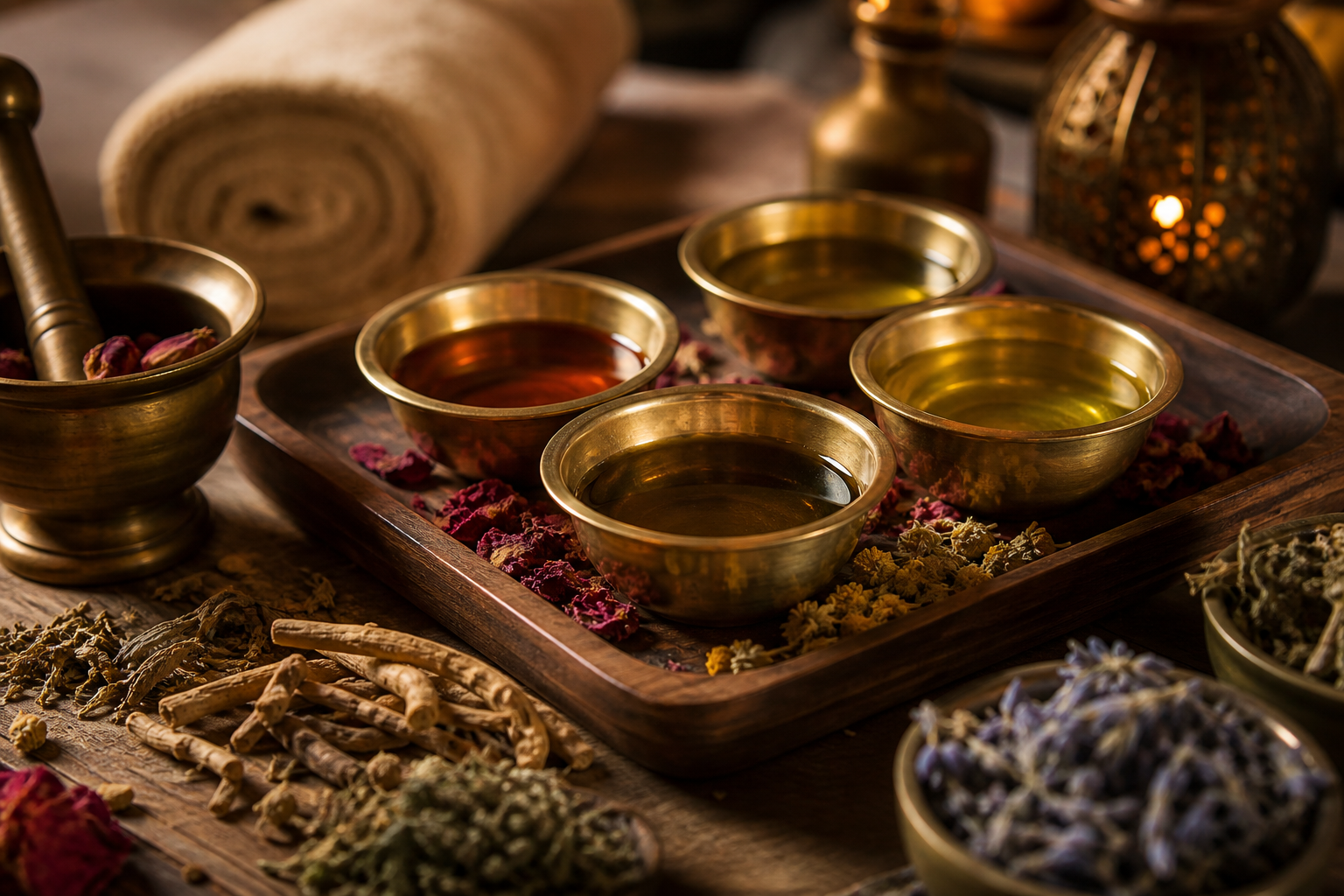
Ayurvedic treatment oils are selected based on your dosha and current imbalances, not just scent preference.
3. Treatment Goals Go Beyond Relaxation
Regular spa: The primary goal is relaxation and temporary stress relief. You might also target muscle tension or skin appearance. The results are real but usually short-lived, lasting a day or two before your baseline stress level returns.
Ayurvedic spa: Relaxation happens, but it's a side effect, not the goal. Ayurvedic treatments aim to correct specific imbalances. Shirodhara (a steady stream of warm oil poured on the forehead for 45-60 minutes) targets the nervous system directly. It's prescribed in Ayurvedic medicine for insomnia, anxiety, and chronic headaches. At Shanti Dhara Wellness, clients often report sleep improvements lasting 5-7 days after a single Shirodhara session.
Podikizhi uses heated herbal boluses (cloth bundles filled with medicinal herbs) pressed rhythmically against the body. The target isn't relaxation; it's inflammation reduction in joints and muscles. Kati Vasti involves building a dough dam on the lower back and pooling warm medicated oil directly over the lumbar spine for 30-40 minutes. That's a specific therapeutic intervention, not a pampering ritual.
The difference shows up in how clients talk about the experience. Day spa clients say "I feel so relaxed." Ayurvedic clients say "My back pain is actually better" or "I slept through the night for the first time in weeks."
4. Session Structure Is Longer and More Intentional
Regular spa: A typical massage runs 50-60 minutes. You undress, lie on the table, receive the treatment, get dressed, and leave. Total time in the building: about 75 minutes. The session follows a standardized sequence that's roughly the same for every client.
Ayurvedic spa: Sessions run longer because the treatment protocol requires it. Abhyanga at Shanti Dhara ranges from 75 to 90 minutes of hands-on time, not including the consultation or rest period afterward. Shirodhara sessions are 60 minutes minimum. A combined Abhyanga + Shirodhara treatment fills nearly two hours.
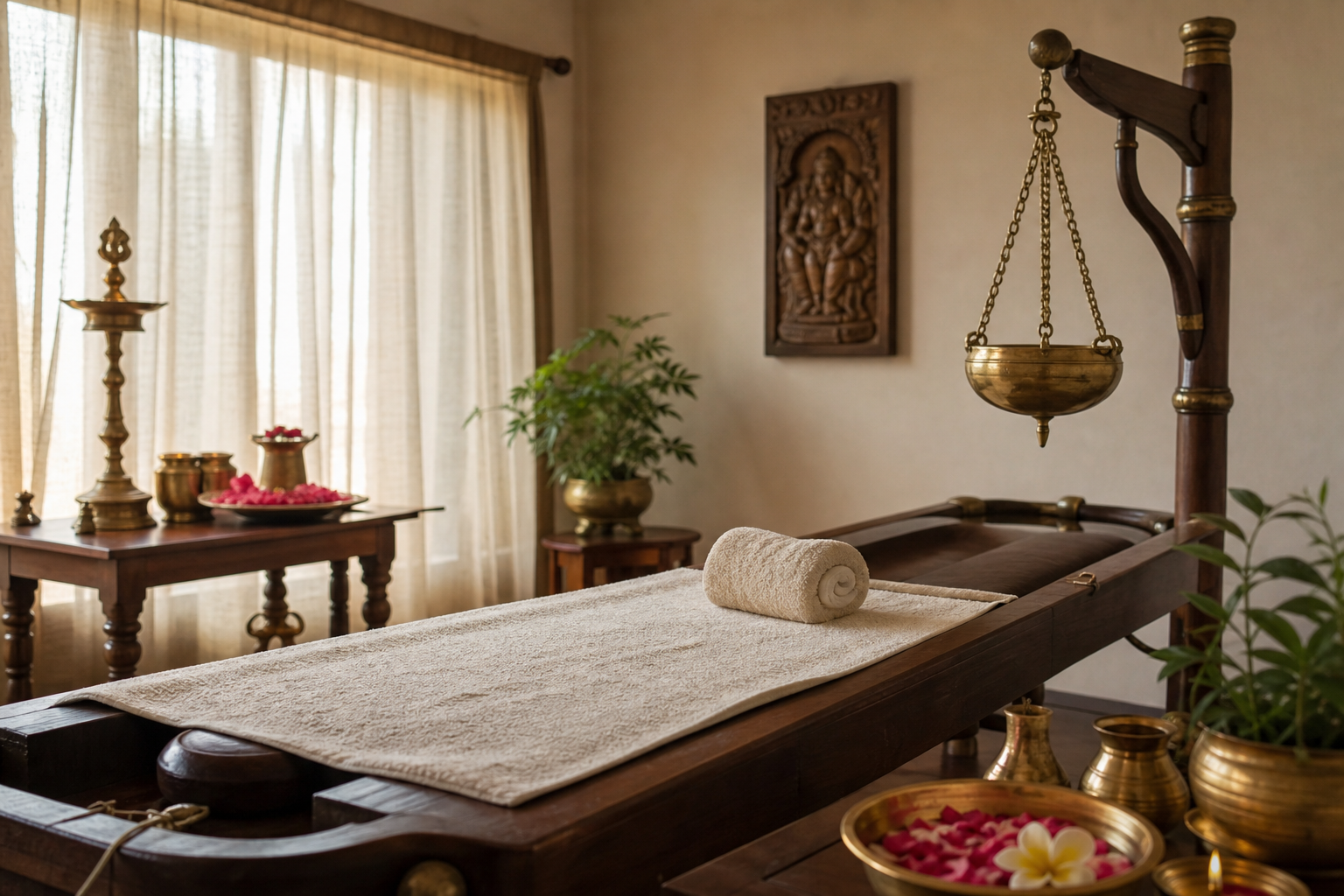
The pacing is also different. Ayurvedic treatments have distinct phases: oil warming, body preparation, the main treatment, and a rest period where you sit quietly and let the oil absorb. You aren't rushed off the table to make room for the next client. At Shanti Dhara, most treatments are limited to one guest at a time, which means the practitioner's full attention stays on you for the entire session.
Pricing reflects this structure. Shanti Dhara's treatments range from $38 for shorter sessions up to $358 for premium combined therapies. That's comparable to what you'd pay at a high-end day spa in Palo Alto, but you're getting a longer, more individualized experience.
5. The Practitioner's Training Is Fundamentally Different
Regular spa: Massage therapists in California need 500 hours of training to get licensed. Most programs cover Swedish massage, deep tissue, anatomy, and business ethics. It's a solid foundation for general bodywork, and good therapists add continuing education over their careers.
Ayurvedic spa: Ayurvedic practitioners study a 5,000-year-old medical system. A credentialed Ayurvedic practitioner (like those at Shanti Dhara) typically completes 1,000 to 2,000 hours of training in Ayurvedic theory, herbology, diet, pulse diagnosis, and specialized bodywork techniques. Many study in India at institutions like Kerala Ayurveda Academy or Arya Vaidya Sala.
The knowledge base is different. An Ayurvedic practitioner can look at your tongue, feel your pulse, and assess imbalances in your doshas (the biological energies that govern bodily functions). They might recommend dietary changes, daily routines (dinacharya), or herbal supplements alongside bodywork. This is closer to functional medicine than spa pampering. If you're working with chronic issues like digestive problems, poor sleep, or persistent anxiety, the practitioner's training lets them address root causes, not just symptoms.
6. You're Expected to Participate in Your Own Healing
Regular spa: Your job is to show up and relax. The therapist does the work. You leave feeling good, maybe book another session next month, and that's the full scope of your involvement.
Ayurvedic spa: Treatment is the beginning, not the full intervention. After your session, your practitioner might give you homework. This could include oil self-massage techniques to practice at home, specific foods to favor or avoid based on your dosha, breathing exercises (pranayama), or adjustments to your sleep schedule.
For example, after a series of Shirodhara sessions for insomnia, your practitioner might recommend a nightly routine: warm almond milk with cardamom, a 10-minute seated meditation, and lights out by 10 PM. These aren't generic wellness tips. They're tailored suggestions based on Ayurvedic principles for pacifying Vata dosha, which governs the nervous system.
This participatory model isn't for everyone. Some people just want an hour of being taken care of with no follow-up requirements. That's valid. But if you're dealing with something chronic that conventional approaches haven't fixed, the Ayurvedic model offers a path forward beyond passive treatment.
7. Results Show Up Differently Over Time
Regular spa: You feel great immediately after. The effects usually fade within 24 to 48 hours. If you go regularly (say, monthly massages), you maintain a baseline level of relaxation, but each session is discrete. The benefits don't compound much.
Ayurvedic spa: The first session might feel subtle. You're relaxed, but not drastically different than after a good massage. The cumulative effect is where Ayurvedic treatments separate themselves. Clients who commit to a series of sessions, say six Abhyanga treatments over six weeks, report changes that don't happen with one-off spa visits: sustained improvements in sleep quality, reduced joint pain, better digestion, more stable energy levels.
This pattern shows up in research. A 2020 study in Evidence-Based Complementary and Alternative Medicine followed participants receiving weekly Abhyanga for eight weeks. Sleep quality scores (measured by the Pittsburgh Sleep Quality Index) improved by 34% from baseline. Anxiety scores dropped by 28%. These weren't temporary post-massage effects. The improvements held at the two-month follow-up.
Ayurvedic practitioners describe this as "building ojas," which translates roughly to vitality or resilience. The idea is that consistent treatment, combined with supportive lifestyle changes, shifts your baseline health rather than just giving you temporary relief from symptoms.
Who Should Choose an Ayurvedic Spa Over a Regular One?
If you're looking for a pleasant, relaxing hour with no strings attached, a day spa is perfect. There's nothing wrong with that. It's what the industry was built for, and good day spas do it well.
Consider an Ayurvedic spa like Shanti Dhara Wellness if:
- You're dealing with a chronic issue (insomnia, anxiety, digestive problems, joint pain) that you haven't been able to fix
- You want a treatment plan customized to your specific body type and current health patterns, not a one-size-fits-all menu
- You're open to participating in your own healing through diet, routine adjustments, and at-home practices
- You're interested in a wellness system that addresses root causes rather than just managing symptoms
- You're willing to commit to a series of sessions rather than expecting one visit to solve everything
Ayurvedic treatments work best for people who see health as a long-term project, not a quick fix. That mindset shift is probably the biggest difference between an Ayurvedic spa and a regular one.
Common Questions About Ayurvedic vs. Regular Spas
Is Ayurvedic spa treatment covered by insurance?
Generally no. Most insurance plans don't cover Ayurvedic treatments because they're classified as alternative or complementary medicine rather than conventional physical therapy. However, if you have a Health Savings Account (HSA) or Flexible Spending Account (FSA), you can often use those funds for Ayurvedic services if you have a doctor's referral letter stating the treatment is for a specific medical condition like chronic pain, anxiety, or insomnia. Ask for an itemized receipt when you check out at Shanti Dhara so you can submit it to your HSA/FSA administrator.
Can I get Ayurvedic treatments if I don't believe in the philosophy?
Absolutely. You don't need to adopt Ayurvedic beliefs for the treatments to work. The physical techniques (warm oil massage, oil pooling therapy, herbal compresses) have measurable physiological effects regardless of your philosophical stance. Many clients at Shanti Dhara come from a purely pragmatic angle: they tried conventional approaches for their sleep problems or back pain, those didn't work, and they're willing to try something different. The treatments stand on their own without requiring you to embrace the broader Ayurvedic worldview.
How do I know if a spa is authentically Ayurvedic or just using the label for marketing?
Look for these markers: (1) A detailed intake consultation before your first treatment, including questions about digestion, sleep, energy patterns, and stress responses. (2) Practitioner credentials from recognized Ayurvedic institutions, not just massage therapy licenses. (3) Use of traditional Ayurvedic oils (Dhanwantaram, Ksheerabala, Brahmi) rather than generic massage oils with added scents. (4) Treatment names and descriptions that match classical Ayurvedic protocols: Abhyanga, Shirodhara, Podikizhi, Kati Vasti, rather than made-up fusion names. (5) A focus on correcting imbalances rather than just relaxation. At Shanti Dhara, all practitioners complete extensive Ayurvedic training and follow traditional protocols adapted for a Western clinical setting.
Are Ayurvedic treatments safe if I have a medical condition?
For most common conditions, yes, but always disclose your full medical history during the intake consultation. Ayurvedic treatments are generally contraindicated during active infections, fever, or acute injuries. If you're pregnant, some treatments are modified or avoided (particularly Shirodhara in the first trimester). If you have skin conditions, your practitioner will adjust the oil selection. If you're on blood thinners or have a clotting disorder, certain deep-pressure techniques might be avoided. The consultation exists specifically to identify these contraindications before treatment starts. When in doubt, bring a note from your doctor clearing you for massage and bodywork.
Do I need to commit to multiple sessions, or can I try just one?
You can absolutely try a single session. Many first-time clients at Shanti Dhara book one treatment to see if the approach resonates with them before committing to a series. You'll still get a consultation, a customized treatment, and immediate relaxation benefits from that single session. However, the deeper, lasting changes that Ayurvedic treatments are known for (improved sleep, reduced chronic pain, better stress resilience) typically require consistency. Think of it like physical therapy: one session helps, but a structured series produces the real results. If you decide Ayurvedic treatment is a good fit after your first visit, your practitioner can recommend a treatment plan tailored to your specific goals.
About the author
Ruby
Owner, Shanti Dhara Wellness
Owner of Shanti Dhara Wellness, a MedSpa in Palo Alto, CA offering traditional Ayurvedic treatments including Abhyanga body treatments, Shirodhara, and herbal scalp therapies.