Five Ways to Slow Down, From an Ayurvedic Menu
Ayurvedic stress relief, as offered at a spa, is a set of body therapies, oil treatments, and meditative practices rooted in Ayurveda, which the U.S. National Center for Complementary and Integrative Health describes as one of the world's oldest medical systems. What these treatments have in common is pace: warm oil, steady rhythm, sound, and quiet time in which nobody needs anything from you.
If you work in tech, finance, or biotech along the Peninsula, you probably know the feeling of a week that doesn't leave room to stop. These sessions are one way to schedule that stop. They are not a treatment for anxiety or any medical condition, and they differ mainly in what you experience: Shirodhara is a steady stream of warm oil across the forehead, Abhyanga is long, rhythmic strokes with warm oil, singing bowl sessions use sound and vibration as a focus for meditation, and the crystal session is something you make with your hands. Which one appeals is a matter of personal preference.
At Shanti Dhara Wellness on Middlefield Road in Palo Alto, five kinds of treatment on the menu fit that description. Here's what each one is, what the session includes according to the menu, and what it costs.
1. Shirodhara: A Steady Stream of Warm Oil
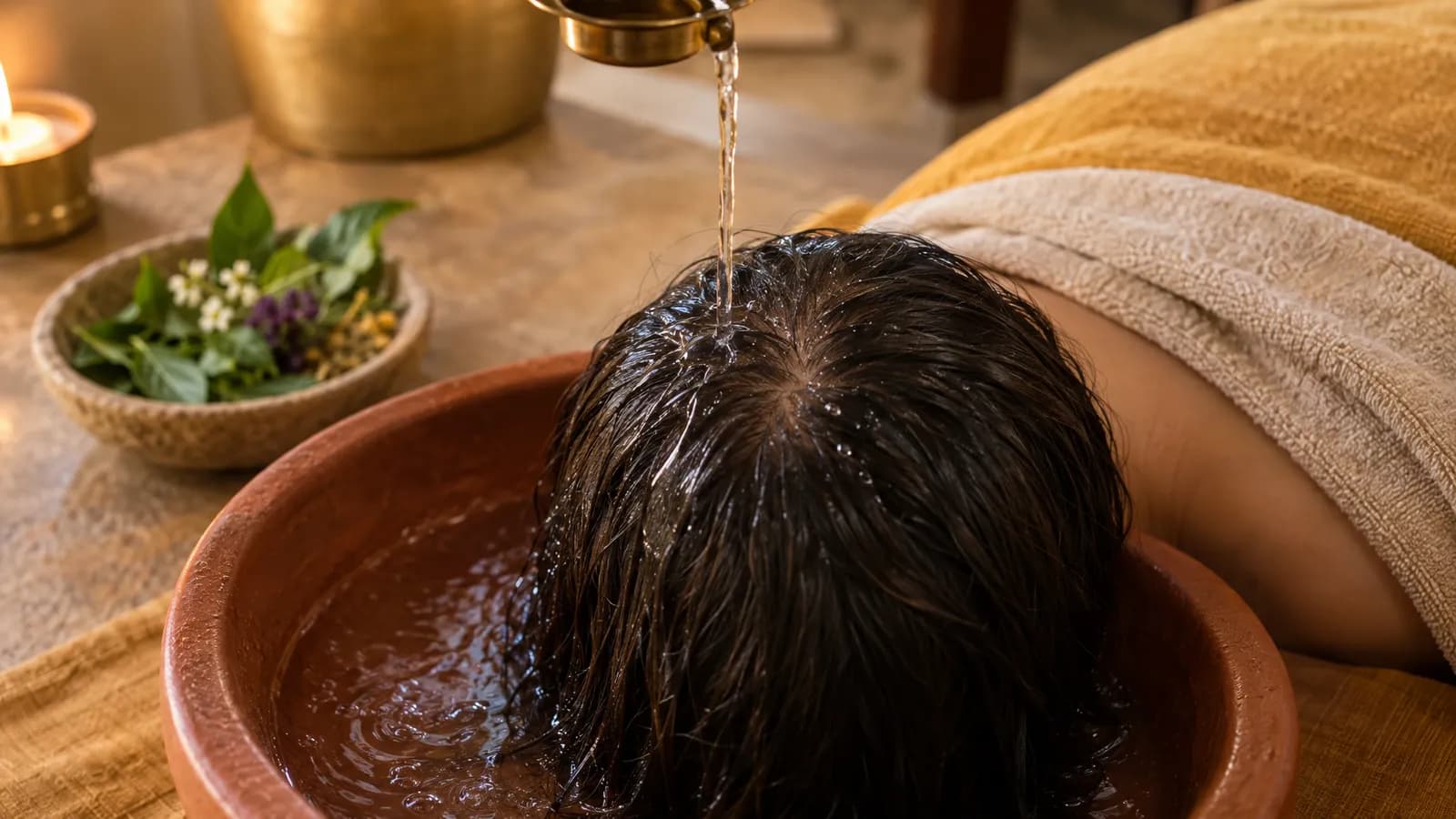
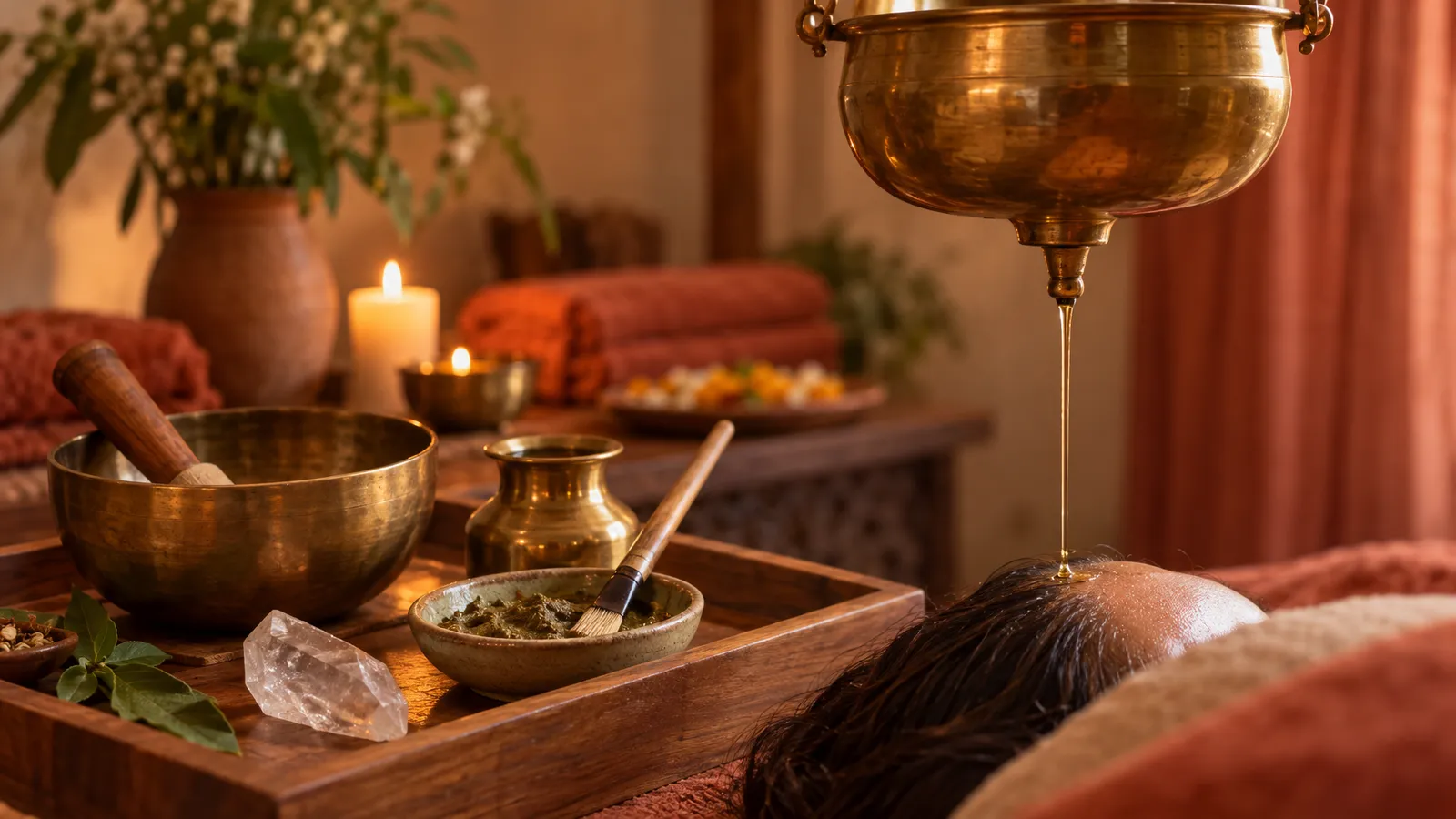
Shirodhara is a thin, continuous stream of warm herbal oil poured across the forehead, directed over the "third eye" area (the Ajna point). Some people find the steady warmth settling; others would rather not have oil on the forehead and hair, which is worth knowing before you book.
You might like it if: you enjoy quiet, still sensations and don't mind oil in your hair.
At Shanti Dhara Wellness, Shirodhara comes in two formats, with a related scalp ritual alongside them:
- Sacred Shirodhara Therapy ($288, 75 min) — the traditional treatment, with gently heated herbal oil flowing steadily onto the Ajna Chakra (third eye)
- Sacred Shirodhara Therapy – The Full Experience ($328, 90 min) — adds a deeper head massage and scalp and hair care
- Ethereal Chakra Drip ($268, 75 min) — a flow of botanical essence over the scalp, a water ritual rather than an oil stream
In Ayurvedic practice, oils are chosen to suit a person's constitution (dosha), so ask your therapist which oil they'll use and mention any skin sensitivities or allergies when you book. For a full walkthrough, see our Shirodhara in Palo Alto page.
Shirodhara uses a continuous warm oil stream across the forehead. Photo by Charanjeet Dhiman on Unsplash.
2. Abhyanga: Full-Body Warm Oil Massage
Abhyanga is a warm-oil, full-body massage. Rather than focusing on digging into knotted muscle, as a deep-tissue massage does, it uses long, rhythmic strokes with generous amounts of warm herbal oil. If you have a pressure preference, or want to know how much oil is left on the skin at the end, ask the studio before your session.
The oil is part of the treatment, not just a lubricant. Shanti Dhara's menu describes Abhyanga as a flowing warm herbal oil massage that balances the doshas and supports lymph flow in the Ayurvedic tradition; those are traditional descriptions rather than tested medical effects. What you'll notice directly is simpler: warmth, steady rhythm, and an hour or more of quiet.
You might like it if: you enjoy full-body massage and warm oil, and want a longer, unhurried session.
Shanti Dhara Wellness offers Abhyanga in two session lengths:
- 75-minute Abhyanga Body Treatment ($228) — full-body warm herbal oil massage
- 90-minute Abhyanga Body Treatment ($268) — the same treatment in a longer session; ask the studio how the extra time can be used, for example on an area you'd like more attention on
You can also combine Abhyanga with Podikizhi (herbal poultice therapy) or Kati-Vasti (lower back oil pooling) in a single visit. The 75-minute combinations are $258, and the 90-minute combinations are $298. More detail is on our Abhyanga massage in Palo Alto page.
3. Singing Bowl Therapy: Sound as a Focus for Meditation
Singing bowl therapy uses metal bowls struck or circled at the rim to produce sustained, resonant tones. In a typical session you rest and listen while the tones sustain and fade.
The research is early. A 2017 observational study in the Journal of Evidence-Based Complementary & Alternative Medicine followed 62 adults through an approximately 60-minute Tibetan singing bowl meditation. Afterward, participants reported significantly less tension, anger, fatigue, and depressed mood, and their sense of spiritual well-being rose. Participants new to this type of meditation showed a significantly greater drop in tension. The study had no control group, so it shows an association rather than proof of cause, and it did not test the sessions described below.
You might like it if: you find silent meditation hard and would rather have something to listen to.
At Shanti Dhara Wellness, singing bowls are part of two scheduled sessions (see how sound baths and singing bowl sessions differ in our sound bath vs singing bowl guide):
- Relax Therapy (60 min, 12:30 PM, $158) — for up to 2 guests, including meditation, singing bowl therapy, and Veda-Tea
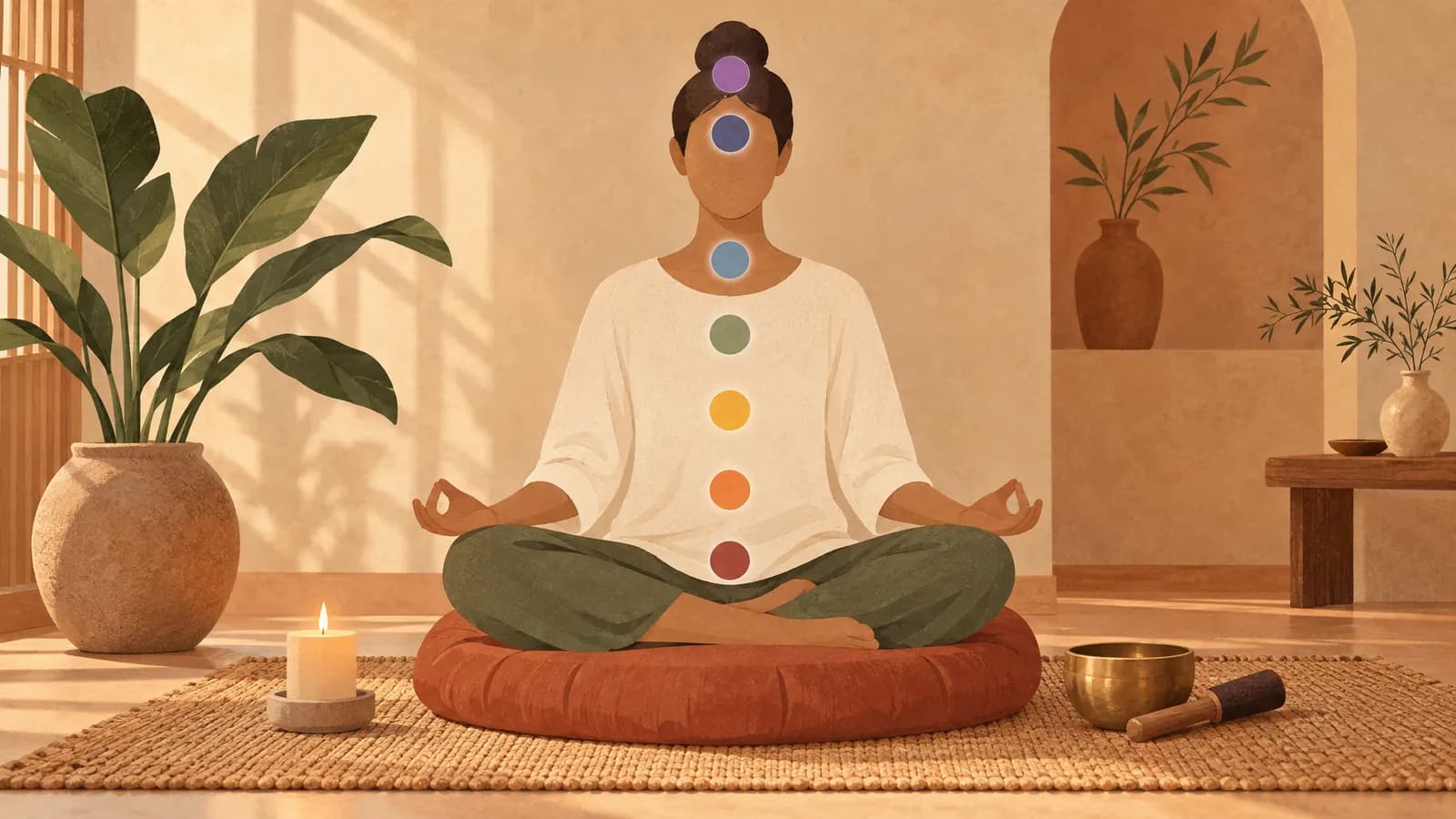
- Chakra Therapy (75 min, 2:00 PM, $198) — for 1 guest only, including meditation, singing bowl therapy, and Veda-Tea
Separately, the menu lists a Nap Break (30 min, 8:30 AM, $98) for up to 3 guests. The menu gives only the time and capacity, so ask the studio what the half hour includes.
These scheduled sessions are shorter or lower-priced than the 90-minute oil treatments, so they are an easy way to try the studio without committing to a long session.
4. Experience Crystal Energy: A Hands-On Pause
Crystals are a less mainstream option on this list, and at Shanti Dhara they take a different form from what people sometimes expect. Experience Crystal Energy is a 30-minute hands-on session ($38, max 4) where you pick crystals and make your own energy jewelry, designed around your personal energy. The menu lists it as free for members.
It isn't a healing treatment, and clinical trials haven't shown that crystals themselves have health effects. What it offers is a short half hour of choosing, sorting, and making something with your hands.
You might like it if: you want a light, low-commitment visit, you're booking with friends, or you're curious about crystals and would rather make something than sit through a long session. For more on what happens in the session, see our guide to your first crystal session.
5. Herbal Essence Facial: Hands-On Care With Sound
If you'd rather have attention on your face than your whole body, the Herbal Essence Facial ($258, 75 min) uses herbal essence oils together with sound bowl and music healing, with techniques the menu describes as balancing the doshas, relieving tension, and revitalizing skin.
The longer Herbal Essence Facial – The Full Experience ($298, 90 min) adds either a chest and arm herbal compress or eye and scraping care, which the menu describes as aimed at circulation, fatigue relief, and deeper relaxation.
You might like it if: you want the sound element of a singing bowl session combined with hands-on facial care. If you'd like to avoid oil in your hair, ask the studio how the facial is done before you book. See our Ayurvedic facial in Palo Alto page for details.
Which Treatment Should You Start With?
This is a guide to the kind of experience you'd enjoy, not a match between a treatment and a type of stress:
- You want stillness and warmth on the head → Shirodhara
- You want full-body massage with warm oil → Abhyanga
- You want sound, meditation, and tea → Relax Therapy or Chakra Therapy
- You want something short or hands-on → the Nap Break or an Experience Crystal Energy session
- You want facial care with sound → the Herbal Essence Facial
- You're not sure → call Shanti Dhara at (650) 283-9121 and ask which treatment fits.
The menu also has a combined option: the 120-minute Combo Package – Customized Design ($358), which is tailored to your dosha and combines facial and body therapies; ask the studio what can be included.
Pricing and Booking at Shanti Dhara Wellness
Shanti Dhara Wellness is at 2875 Middlefield Rd, Suite 8 (2nd floor), Palo Alto. Hours: Tuesday and Sunday 10 AM-4:30 PM, Wednesday-Saturday 10:30 AM-6 PM; closed Monday.
Prices range from $38 (Experience Crystal Energy) to $358 (the 120-minute Combo Package). Relax Therapy and Chakra Therapy are $158 and $198, the Nap Break is $98, and Abhyanga and Shirodhara treatments are $228-$328. You can book online through the menu or call the studio directly.
When you book, ask how early to arrive for your first visit. If you're booking an oil treatment (Shirodhara or Abhyanga), bring comfortable clothes for afterward and ask whether there's time or a place to wash off oil. For any session, including the sound and crystal sessions, ask the studio what to wear.
FAQ: Ayurvedic Stress Relief in Palo Alto
How often should I book treatments for stress relief?
There's no fixed rule, and no study has set a schedule for these sessions. Book as often as it fits your budget and calendar, and ask the studio what makes sense for the treatment you choose.
Do I need to know my dosha before booking?
The menu doesn't list knowing your dosha as a requirement, but ask the studio when you book whether any preparation or information about your constitution would help. If you're curious, tell your therapist about your lifestyle and what's bothering you; the Combo Package is the menu item described as tailored to your dosha type.
Can I combine treatments in one visit?
The menu has ready-made combinations: Abhyanga with Kati-Vasti or Podikizhi ($258 for 75 minutes, $298 for 90 minutes), and the 120-minute Combo Package – Customized Design ($358). For anything else, ask the studio when booking.
Will these treatments replace therapy or medication?
No. These are relaxation and wellness sessions, not medical care. If you're dealing with anxiety, depression, or another mental health condition, keep working with your clinician, and don't change prescribed treatment because of a spa session.
What if I fall asleep during a session?
Falling asleep during a quiet, restful session is nothing to worry about, and there's nothing you need to do to "keep up" with the treatment. If you'd prefer to stay awake, tell your therapist.